

Quick answer
Event venues reach organisers by creating a page for each event type they actually host, such as corporate meetings, social events or conferences, with capacity, layouts, facilities and a next step. Add accurate location and access details, earn genuine local references and honest reviews, and track site-visit enquiries by event type.
- Do not create pages for events you do not host, and avoid copying text between event pages.
- Give address, parking, public transport, accessibility and loading details, and add real photographs of the venue and its approaches.
- Seek genuine mentions from caterers, planners and accommodation providers; do not buy links or run link swaps at scale.
Organisers search by event type and area. Pages should reflect the events you host and where you are. This guide gives a page plan and covers references. It makes no ranking promise, and search platforms change their guidance, so check current official guidance before technical changes.
1. Map event types to pages
List the events you actually host, such as corporate meetings, conferences, workshops, parties or social gatherings, and create a page for each with relevant details: capacity, layouts, facilities and next step. Do not create pages for events you do not host.
2. Provide accurate location and access information
Give the address, parking, public transport, accessibility and loading details. Keep your Google listing and website consistent. Add real photographs of the venue and its approaches.
3. Build relevant local references
Genuine mentions from partners such as caterers, planners, accommodation providers and local associations are worth seeking by being a good partner. Do not buy links, run link swaps at scale or require reciprocal links. No outreach is authorised by this guide.
4. Use honest reviews
Ask hosts for honest reviews after events and respond politely. Never write or buy reviews.
5. Track site-visit enquiries
Count visit requests from search by event type and review monthly. See the event venue website guide and venue enquiry forms.
Event-type page plan
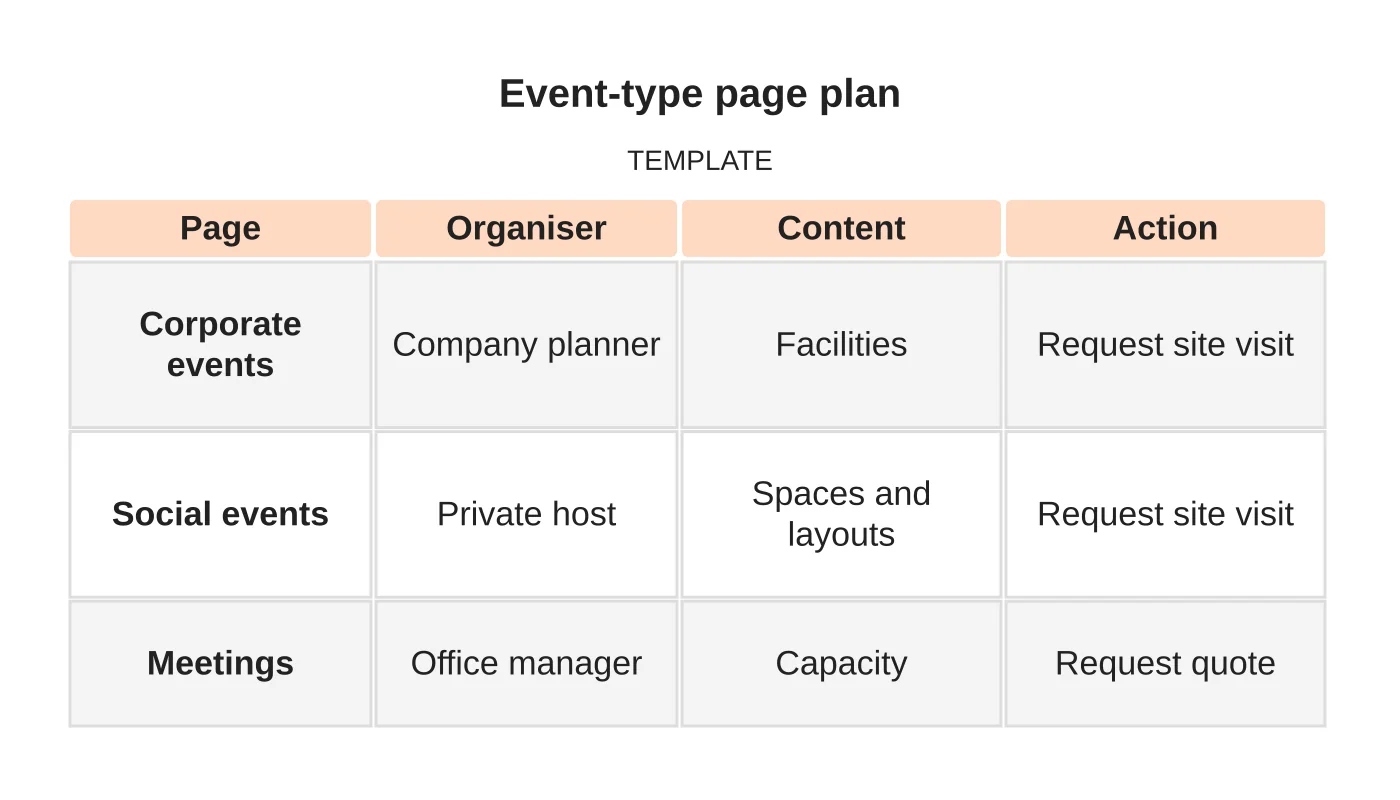
| Page | Organiser | Content | Action |
|---|---|---|---|
| Corporate events | Company planner | Facilities | Request site visit |
| Social events | Private host | Spaces and layouts | Request site visit |
| Meetings | Office manager | Capacity | Request quote |
Common mistakes
- Pages for events you do not host.
- Copied text between pages.
- Outdated access details.
- Purchased links.
- Counting all traffic as demand.
Questions venues ask
Do I need a page per suburb? Not unless you have distinct content. Focus on event types.
How long until results? There is no fixed time. Review enquiries over several months.
Next step
Discuss your target customers, service area and lead-generation priorities with Web Design Davao. Read about our digital marketing service or contact us.
Frequently asked questions
Does an event venue need a page for each suburb?
Not unless you have distinct content for it. Focus on event types you actually host, with a page for each covering capacity, layouts, facilities and a next step such as a site visit request. Near-identical pages with only the place name changed add little.
How should a venue get local references?
Seek genuine mentions from partners such as caterers, planners, accommodation providers and local associations by being a good partner. Do not buy links, run link swaps at scale or require reciprocal links, and never write or buy reviews.
How long until local SEO brings event enquiries?
There is no fixed time and no ranking promise. Count visit requests from search by event type and review them monthly, then judge results over several months. Do not treat all traffic as demand.
Sources and notes
Last updated 21 November 2026. This guide is general information based on Web Design Davao’s web design and digital marketing practice. It cites no statistics and makes no promise about rankings, enquiries or contracts. Web Design Davao is not licensed or certified in this industry, so check technical, safety, legal and regulatory matters with a suitably qualified professional. Examples are templates or illustrations, not client results.