

Quick answer
A commercial refrigeration case study works when it describes the customer’s need, the operating constraints such as trading hours and temperature-sensitive stock, the approved work and the handover evidence, and reports only verified outcomes. Do not publish without a real project, a baseline and written client permission, and avoid unsupported energy-saving or compliance claims.
- Describe constraints such as trading hours, access windows and keeping existing equipment running, and how you planned around them.
- Show handover evidence such as commissioning records and maintenance schedules, using sanitised samples only with permission.
- Check facts against project records and send the draft to the client for written approval before publishing.
Facilities teams worry about downtime and food safety. A case study can show how you plan around them, but only if the facts are real and approved. Do not publish a case study without a real project, a baseline and written permission. Web Design Davao does not supply case studies or results.
1. Describe customer requirements
State the customer’s need and sector in general terms: for example, a food service business that needed additional cold storage. Describe what they asked for and why. Leave out names and identifying details unless the client has approved their use.
2. Explain scope and operating constraints
Operating constraints are the heart of a commercial refrigeration story. Describe them: trading hours, temperature-sensitive stock, limited access windows, space limits or the need to keep existing equipment running during the work. Explain how you planned around them.
Related reading: SEO for Commercial Refrigeration Contractors: Reaching Facilities and Operations Managers.
3. Present approved work and handover evidence
Describe what was done and what was handed over, such as commissioning records, maintenance schedules and documentation provided. Use sanitised samples only with permission. Avoid refrigerant, performance or food-safety claims unless reviewed and supported.
4. Report only verified outcomes
Report outcomes the customer or your records support, such as completion within the agreed window. Avoid energy-saving or compliance claims without evidence. If no figure exists, describe the handover.
5. Interview the project lead
Ask:
- What did the customer need and by when?
- What constraints shaped the work?
- How did you keep operations running?
- What did you hand over?
- Would the customer approve this summary?
Check facts against project records and send the draft to the client for approval.
Project case-study interview template
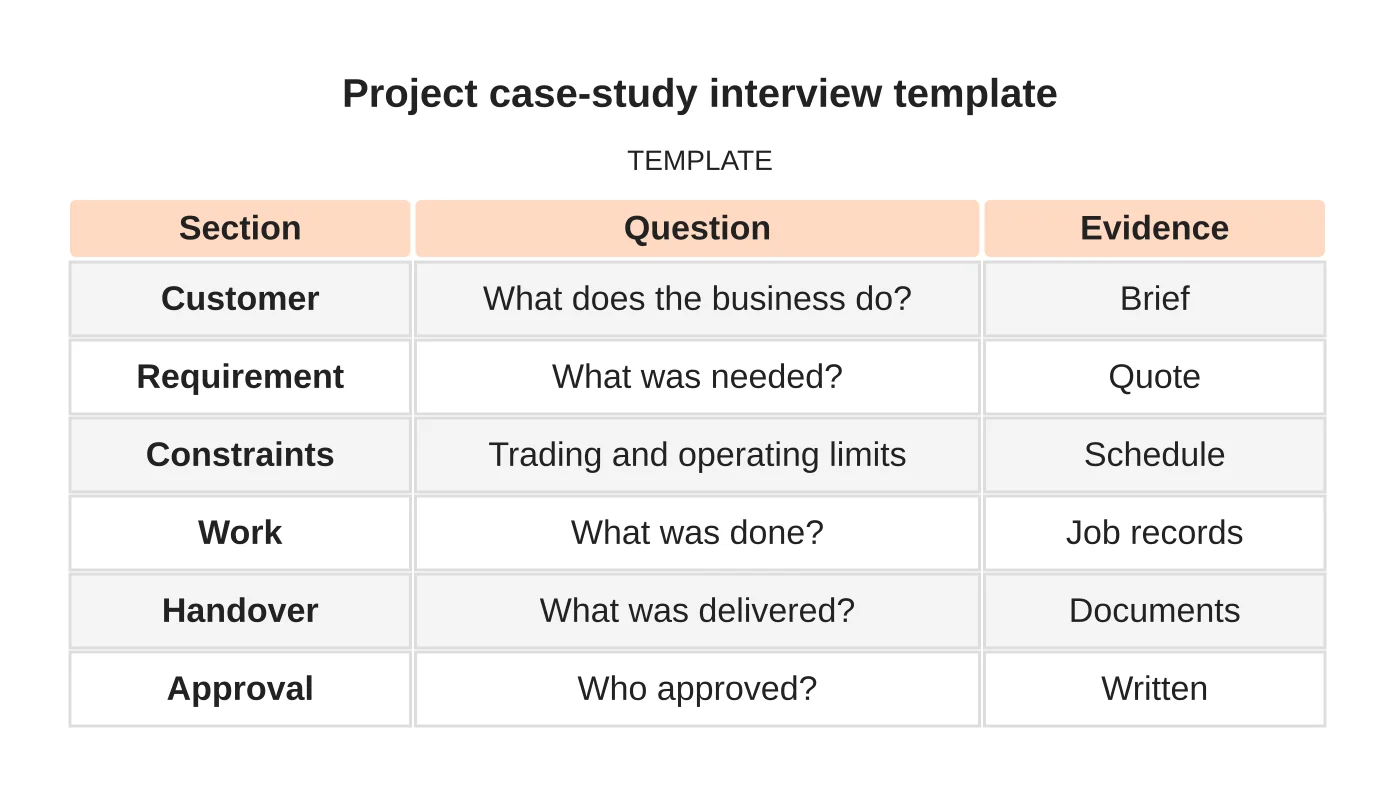
| Section | Question | Evidence |
|---|---|---|
| Customer | What does the business do? | Brief |
| Requirement | What was needed? | Quote |
| Constraints | Trading and operating limits | Schedule |
| Work | What was done? | Job records |
| Handover | What was delivered? | Documents |
| Approval | Who approved? | Written |
Common mistakes
- Publishing without written approval.
- Making savings or compliance claims without evidence.
- Showing equipment or site detail that identifies the client.
- Describing only the outcome and not the constraints.
- Reusing one case study as a template with changed names.
Link the finished case study from the main commercial refrigeration page and keep it current. See keeping a refrigeration website accurate.
Next step
Request a website review or discuss the pages and enquiry workflow your business needs. Read about our web design service or contact us.
Frequently asked questions
What do I need before publishing a refrigeration case study?
A real project, a baseline and written client permission. Check facts against project records and send the draft to the client for approval. Leave out names and identifying details unless the client has approved their use.
Which claims should a refrigeration case study avoid?
Avoid energy-saving, compliance, refrigerant, performance or food-safety claims unless they have been reviewed and supported by evidence. Report only outcomes the customer or your records support, such as completion within the agreed window.
What should the case study say about handover?
Describe what was delivered, such as commissioning records, maintenance schedules and documentation provided. Use sanitised samples only with permission. If no outcome figure exists, describe the handover instead of inventing a result.
Sources and notes
Last updated 21 November 2026. This guide is general information based on Web Design Davao’s web design and digital marketing practice. It cites no statistics and makes no promise about rankings, enquiries or contracts. Web Design Davao is not licensed or certified in this industry, so check technical, safety, legal and regulatory matters with a suitably qualified professional. Examples are templates or illustrations, not client results.


