

Quick answer
A hosting uptime commitment is a contract term with a definition, exclusions and a remedy that is often a small credit. It usually covers the provider’s network or servers, not your plugins or content. Check how availability is measured, over what period, what counts as downtime, what is excluded and how to claim.
- Convert a percentage into allowed downtime for the stated period, rather than trusting a headline figure.
- Compare definitions and exclusions, not just the number; fewer exclusions and clear support may matter more.
- Set up independent monitoring so you have evidence, and agree who responds when the site goes down.
A hosting plan says “99.9% uptime guarantee”. It sounds like a promise your site will stay online. In practice, it is a contract term with a definition, exclusions and a remedy that is often a small credit. This guide helps you read one, so you compare offers on substance.
It does not state what any provider’s SLA says, and it does not imply that Web Design Davao promises a specific SLA. The comparison is hypothetical. Read the actual terms of any offer.
What an uptime guarantee is
An uptime guarantee is a statement about availability over a period, with a remedy if the provider falls short. It usually concerns the provider’s network or servers, not your website’s code, a plugin or your content. A site can be broken while the host is “up”.
Questions to ask
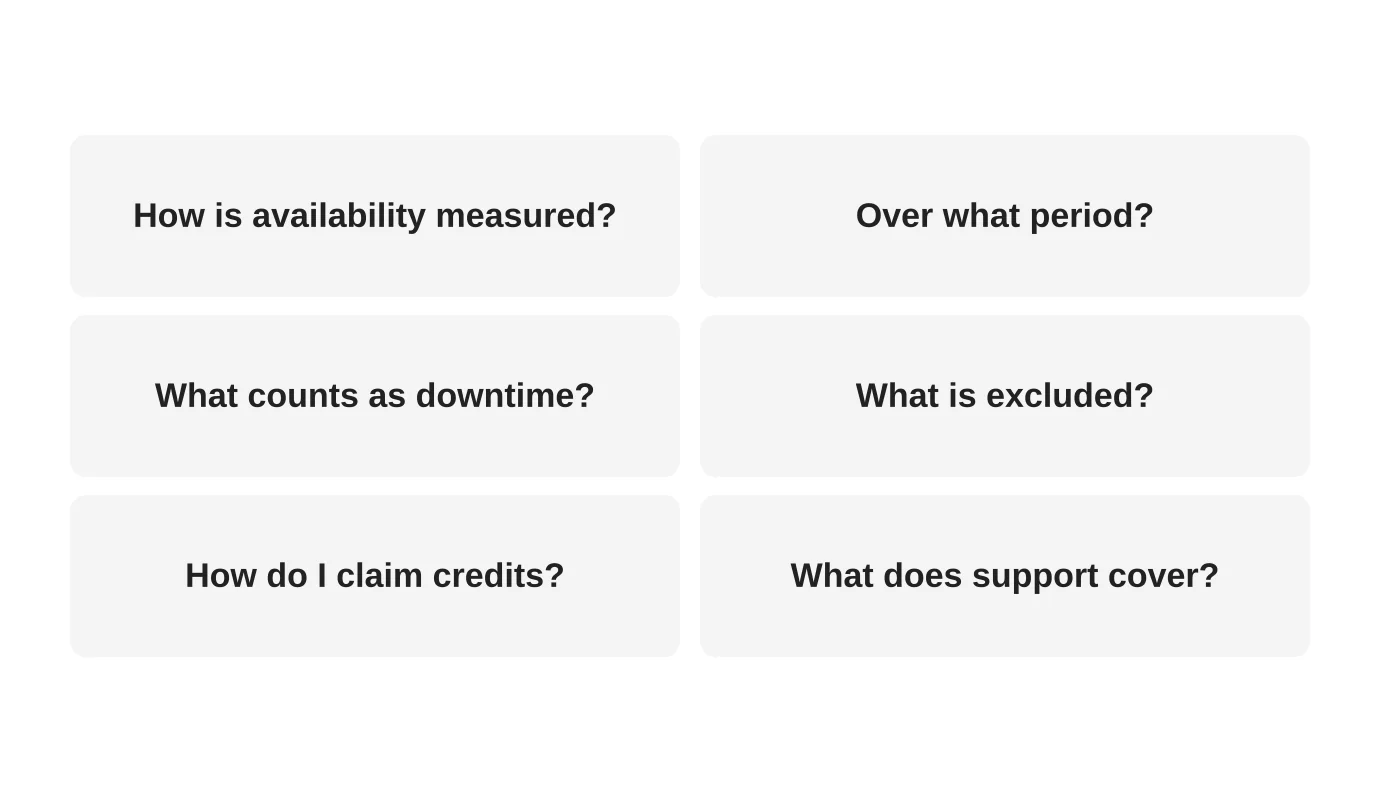
- How is availability measured, and by whom? The provider’s own monitoring is common.
- Over what period? Monthly and annual measures differ in how much downtime they allow.
- What counts as downtime? A full outage, a partial failure or slow performance?
- What is excluded? Planned maintenance, attacks, your own changes and third-party failures often are.
- How do I claim? There may be a deadline and a required process.
- What do I get? Often a service credit, not compensation for lost business.
Think in minutes
Convert a percentage into allowed downtime for the period, so you know what it means. Work it out yourself from the stated period, rather than trusting a headline figure. A single longer outage and many short ones may count differently.
Compare offers properly
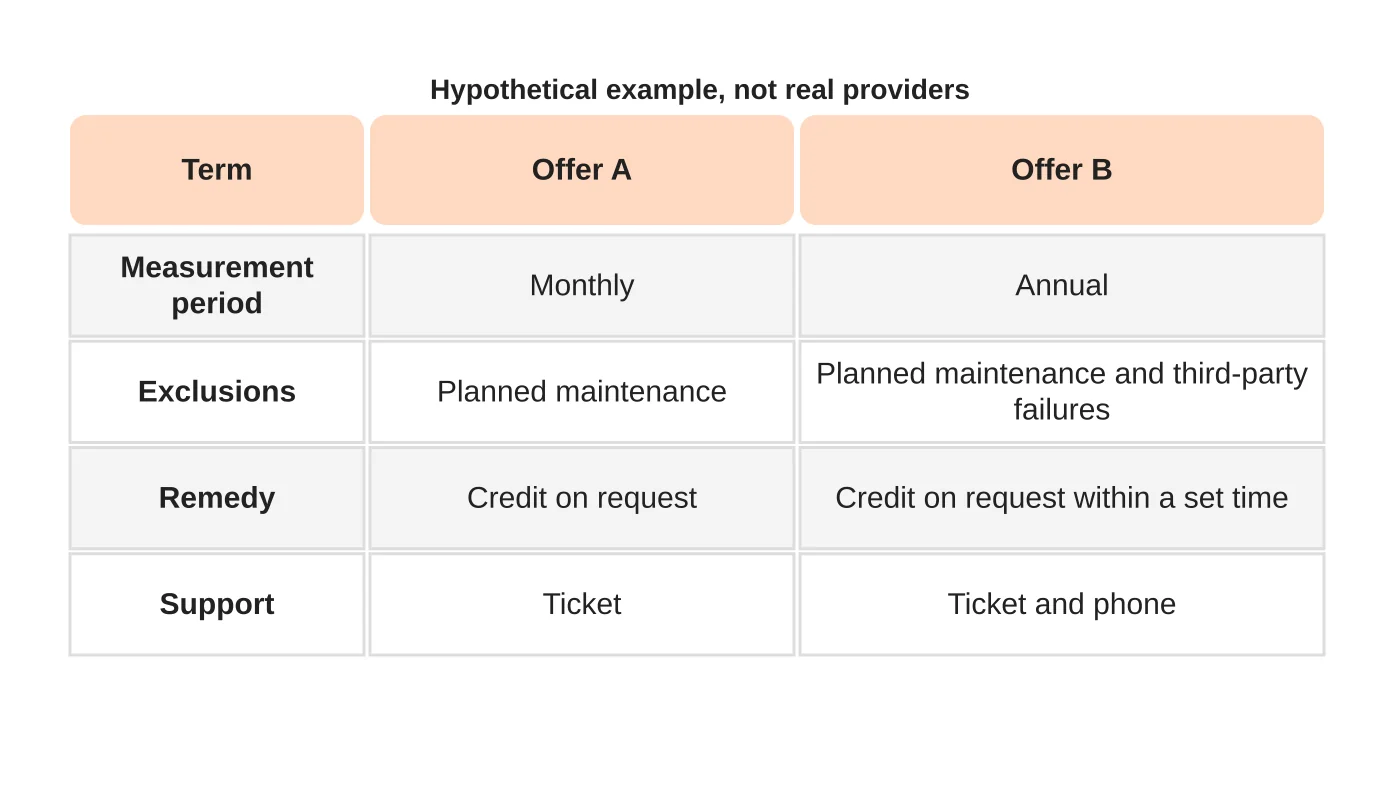
Compare the definitions, not just the number. A lower figure with fewer exclusions and clear support may serve you better than a higher one with broad exclusions. See secure web hosting providers and before you renew hosting.
Monitoring is not support
Your own monitoring tells you when the site is down. A contract tells you what the provider owes. Support tells you who fixes it and how fast. They are three different things. Set up independent monitoring so you have evidence. Then agree who responds. See who responds when your website breaks.
The business view
Work out what an hour of downtime costs you, then decide how much resilience to buy and where. See what a website outage could cost. A credit does not replace lost bookings.
Frequently asked questions
Is 99.9% good enough?
It depends on what it allows and what an outage costs you.
Can I get compensation for lost sales?
Usually not. Check the terms.
Does the guarantee cover my plugin errors?
Normally no. It covers the provider’s service.
Should I rely on the host’s status page?
Use it, but also monitor independently.
Sources
Read the terms with help
Web Design Davao’s hosting team can discuss what to look for when comparing hosting offers. Get in touch.


