

Quick answer
To promote an independent course, choose one audience and one offer per campaign, make the landing page support exactly what the ad says, set a modest test budget, define a conversion event such as registration, and judge by enquiries, enrolments and refund requests, not clicks. Test tracking before spending.
- Write down who the audience is and the problem the course addresses, then build one landing page for that offer.
- Make the page headline echo the ad, then show the curriculum, price and next step without overpromising outcomes.
- Fix the page or audience before raising spend if enquiries are poor, and compare results by campaign.
A campaign works when the ad, the landing page and the course agree. This guide covers planning with illustrative metrics only. It makes no result promise, and advertising platforms change their rules, so check current official guidance.
1. Choose one audience and offer
Pick one audience and one offer per campaign. A landing page that tries to serve everyone convinces no one. Write down who the audience is and the problem the course addresses.
2. Align ads and landing-page claims
The landing page must support what the ad says. Do not overpromise outcomes or use claims you cannot support. Make the page’s headline echo the ad’s promise, then give the curriculum, price and next step.
3. Define budget and conversion events
Set a modest test budget you can afford to lose and define what counts as a conversion, such as registration or an enquiry. Install tracking and test it before spending. Allow enough time before judging.
4. Review enquiry quality and sales
Compare enquiries, enrolments and refund requests by campaign, not only clicks. If enquiries are poor, adjust the audience or page before increasing spend. See the independent course website guide and enrolment journeys.
Campaign brief with illustrative metrics
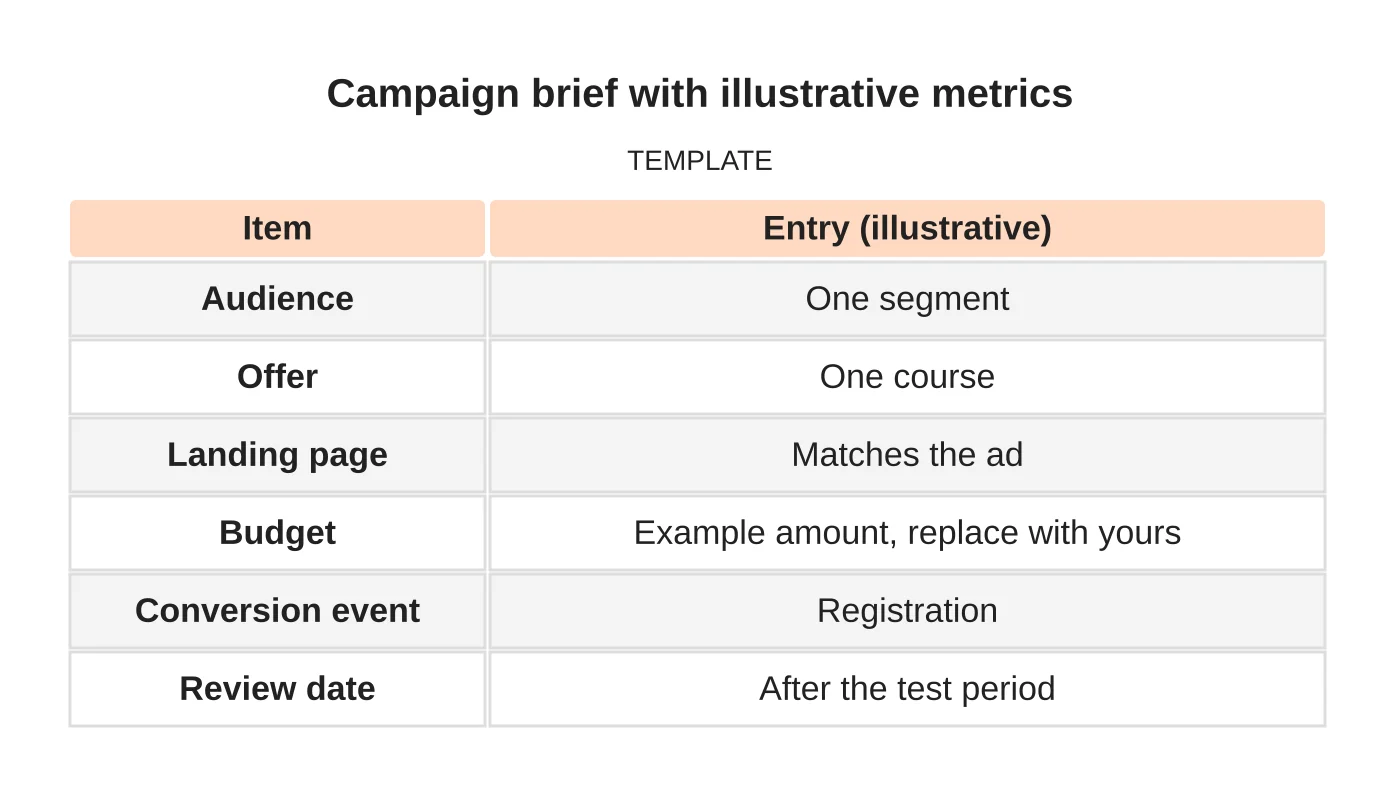
| Item | Entry (illustrative) |
|---|---|
| Audience | One segment |
| Offer | One course |
| Landing page | Matches the ad |
| Budget | Example amount, replace with yours |
| Conversion event | Registration |
| Review date | After the test period |
Common mistakes
- Many offers on one page.
- Ads that promise more than the page.
- Judging by clicks.
- Untested tracking.
- Raising spend before fixing the page.
Questions course creators ask
How much should I spend? Start with an amount you can afford to lose and learn from it.
Which platform? Where your audience already looks. Test one first.
Next step
Discuss your target customers, service area and lead-generation priorities with Web Design Davao. Read about our digital marketing service or contact us.
Frequently asked questions
How much should I spend on course ads?
Start with a modest test budget you can afford to lose, and learn from it. Define the conversion event, install and test tracking before spending, and allow enough time before judging the results.
Which advertising platform should I use for a course?
Use the platform where your audience already looks, and test one first. Advertising platforms change their rules, so check current official guidance before you run a campaign, and avoid claims about outcomes that you cannot support.
How do I know if a course campaign is working?
Compare enquiries, enrolments and refund requests by campaign, not only clicks. If enquiries are poor, adjust the audience or the landing page before increasing spend, and review the results after the test period you set.
Sources and notes
Last updated 21 November 2026. This guide is general information based on Web Design Davao’s web design and digital marketing practice. It cites no statistics and makes no promise about rankings, enquiries or contracts. Web Design Davao is not licensed or certified in this industry, so check technical, safety, legal and regulatory matters with a suitably qualified professional. Examples are templates or illustrations, not client results.


