Quick answer
Most resorts use both direct bookings and online travel agencies, so the question is what each is for. Agencies help guests discover and trust you, while your own website gives you the relationship, control and flexibility. Compare net contribution per stay using your own fees and costs, not commission alone.
- Count costs on both sides: platform and payment fees, marketing spend, staff time, cancellations and discounts offered for direct booking.
- Use a booking engine for many rooms and constant demand, and an enquiry form for few rooms, groups and events.
- Keep availability and rates in sync across your website and platforms, and name who is responsible.
Resort owners often ask whether to push direct bookings or rely on online travel agencies (OTAs). The honest answer is that most resorts use both, and the question is what each is for. This guide helps you decide what your website should do, using your own numbers rather than guesses.
It does not state standard commission rates, because those depend on your contract and change. Use your own agreements.
What each channel does well
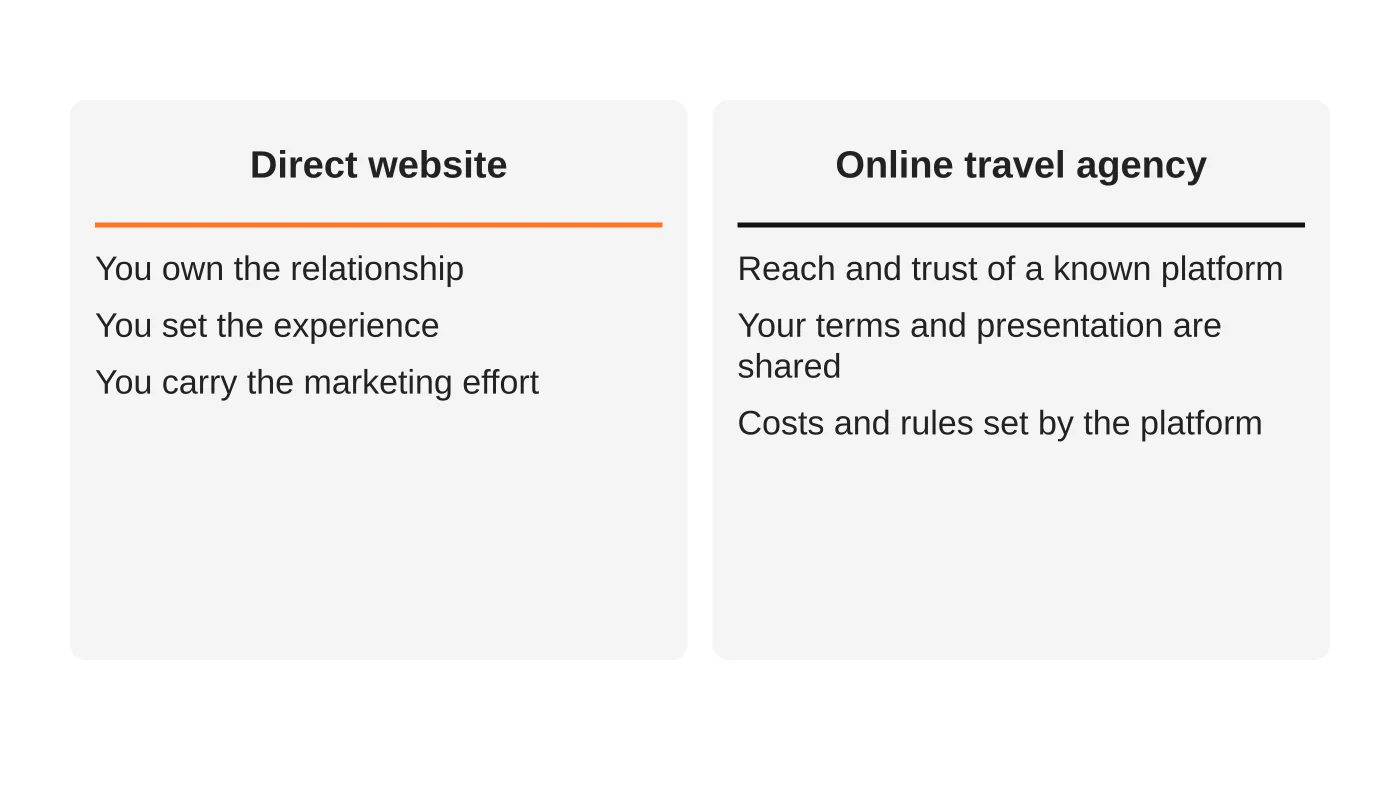
Online travel agencies
- Discovery: guests who do not know you can find you.
- Trust: a known platform with reviews reassures new guests.
- Convenience: familiar booking steps and payment.
Your own website
- Relationship: you hold the guest contact details, subject to privacy rules, and can welcome them back.
- Control: you set the story, packages and policies.
- Flexibility: you can offer packages and group arrangements that platforms handle poorly.
Neither is always better. A new resort may need platforms to be discovered. An established one may want to move repeat guests to direct booking.
Count the costs beyond commission
The visible cost is a platform fee. There are other costs on both sides.
- Platform bookings: fees, payment charges, rate parity requirements, ranking or promotion costs, and rules on cancellations and customer contact. Check your contract.
- Direct bookings: website and booking engine costs, payment processing, marketing, staff time to answer enquiries and no-show risk.
Add them up for your own business. Do not copy another resort’s figures.
A net contribution worksheet
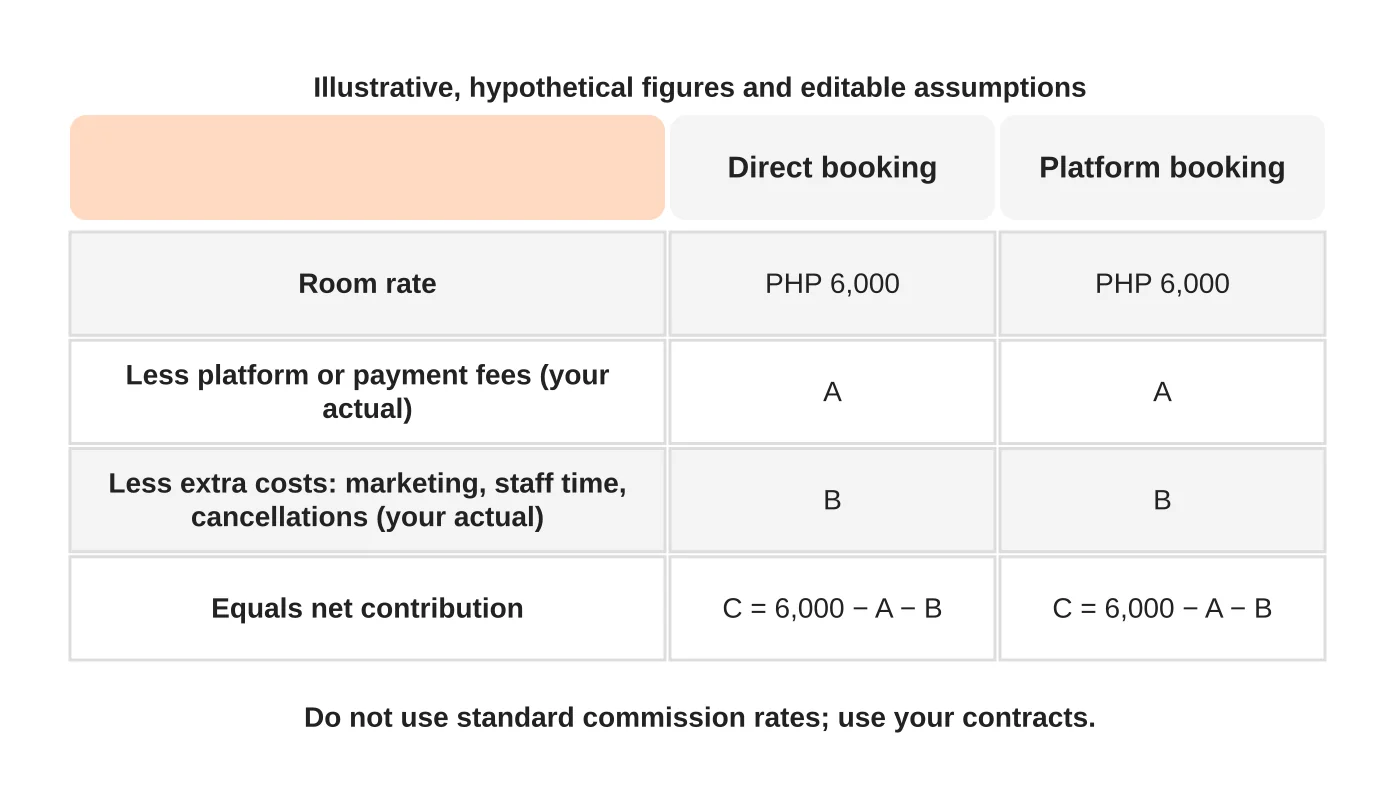
For a typical stay, fill in the table with your real numbers:
- Room revenue for the stay.
- Less platform and payment fees for each channel.
- Less other costs, such as marketing spend, staff time, cancellations and discounts offered to encourage direct booking.
- Equals net contribution.
The example in the diagram uses hypothetical amounts and placeholders. Treat it as a layout. Compare net contribution, not just commission.
Read next: From Data to Decisions: How to Turn Website Analytics into Real Marketing Results.
Booking engine or enquiry form?
Your site can take bookings in two ways.
- A booking engine shows live availability and rates and takes a deposit or payment. It needs accurate inventory, rate management and a link to your front desk system. Mistakes cause double bookings.
- An enquiry form collects dates and needs, and a person replies with availability and price. It is simpler but slower.
A simple property with few rooms may do well with enquiries. A property with many rooms and constant demand will usually need live booking. For group, wedding and event bookings, enquiry forms work better. See resort pages for groups and online booking tools for service businesses.
Make your site the best place to book
If you want direct bookings, give guests a reason to use your site:
- Clear, complete information that is at least as good as the platform listing. See the resort website checklist.
- Honest terms and flexible options where you can offer them, such as a package or a perk. Do not break your platform agreements. Check what you are allowed to advertise. This is general information, not legal advice. Check your situation with a qualified adviser.
- Fast replies.
- A smooth mobile experience. See the resort website checklist.
- Easy payment methods your guests use.
Manage inventory in one place
Whichever mix you choose, keep availability and rates in sync across your website and platforms. A channel manager or a clear daily routine prevents double bookings. Decide who is responsible.
Review quarterly
Record bookings by source, net contribution, cancellations and guest feedback. Adjust. Keep platforms where they bring guests you cannot reach otherwise, and grow direct for repeat and group business.
Frequently asked questions
Can I get rid of OTAs?
Some resorts reduce reliance over time. Check your volume, seasonality and cash flow first.
Can I offer a lower price on my own site?
It depends on your agreements. Check them.
Is a booking engine worth it?
If it fits your inventory and you can manage it, it can be. Compare tools before you commit.
Will SEO bring direct bookings?
It can bring enquiries from guests who search for you or your area. See local SEO for resorts in Davao.
Sources
Choose the right booking setup
Web Design Davao’s web design team can discuss the right booking setup for your accommodation business. Get in touch.