

Quick answer
A property management website should separate owner enquiries from tenant requests, explain what you manage and make it easy for an owner to start a conversation. State scope and exclusions, show only credentials you hold, use genuine feedback with permission, and offer a clear action such as requesting a management appraisal.
- Give owners and tenants separate navigation and route their enquiries to different people so tenant requests are not lost.
- Describe what you manage, what is included or extra and what you do not do, without promising returns.
- Track owner enquiries, appraisals and signed agreements separately from tenant traffic, noting the source and reasons given.
Property owners choose managers on trust and clarity. A website should separate owner enquiries from tenant requests, explain what you manage and make it easy for an owner to start a conversation. This guide covers structure, scope, evidence and enquiry design. It makes no promise about rankings or new management agreements.
Web Design Davao is not a licensed property professional. Licence, trust-account, fee and regulatory statements must come from, and be reviewed by, your licensed principal or lawyer.
1. Separate owner acquisition and tenant support
Owners and tenants need different pages and routes. Owners want to know how you manage, report and charge. Tenants want to log a maintenance request, find forms and contact someone. Give each their own navigation so neither is lost, and route their enquiries to different people.
2. Explain management scope
State what you manage, such as residential, holiday or commercial, and where. Explain what is included and what is extra, how you handle tenant selection, rent collection, inspections and maintenance, and how owners are kept informed. Say what you do not do. Avoid promising outcomes such as returns or vacancy rates.
3. Present verified credentials and evidence
Show licences, memberships and insurance only where you hold them, with the correct name and number if required. Use genuine owner feedback with permission and do not invent testimonials. Show your team and office so owners know who they will deal with.
4. Design landlord enquiry paths
Offer a clear action for owners, such as “Request a management appraisal” or “Talk to a property manager”. Ask the property type, location, current arrangements and goals. Acknowledge each enquiry and state when an owner will hear back. See property-owner intent, management service pages and property management admin tasks.
5. Measure owner enquiries
Track owner enquiries, appraisals and signed agreements separately from tenant traffic. Note the source and the reasons owners give for choosing or declining.
Owner-focused website plan
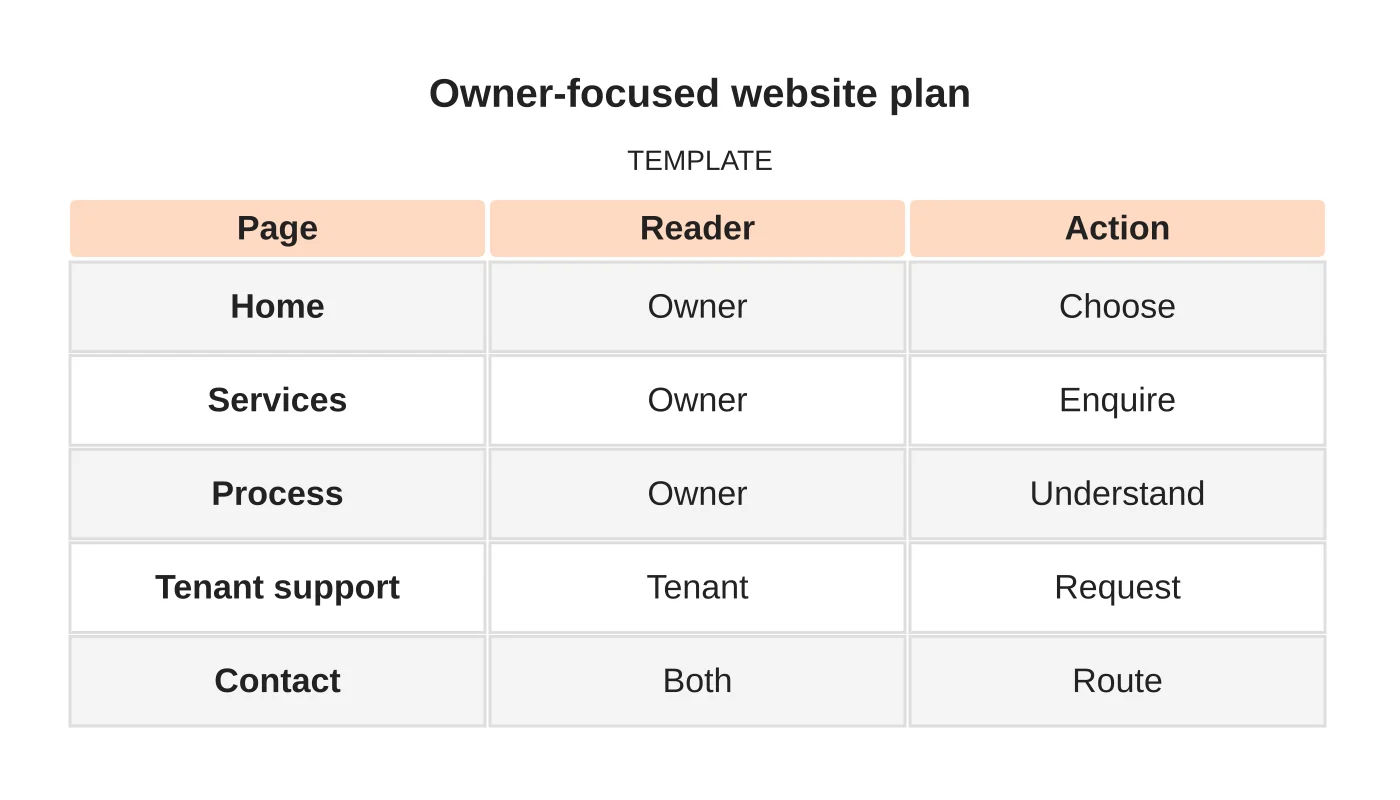
| Page | Reader | Action |
|---|---|---|
| Home | Owner | Choose |
| Services | Owner | Enquire |
| Process | Owner | Understand |
| Tenant support | Tenant | Request |
| Contact | Both | Route |
Common mistakes
- Mixing owner and tenant content.
- Showing a licence you do not hold.
- Vague scope.
- Promising returns.
- Tenant requests lost in the owner inbox.
Questions property managers ask
Should I publish fees? Only as your principal approves, with clear inclusions. Keep them current.
Do owners want a portal? Many value clear reporting. Choose tools you can support.
Related: growing service businesses.
Next step
Request a website review or discuss the pages and enquiry workflow your business needs. Read about our web design service or contact us.
Frequently asked questions
Why separate owner and tenant pages?
Owners want to know how you manage, report and charge, while tenants want to log a maintenance request, find forms and contact someone. Separate navigation means neither is lost, and enquiries can be routed to different people.
What should an owner enquiry form ask?
The property type, location, current arrangements and goals. Acknowledge each enquiry and state when an owner will hear back. Use a clear action such as requesting a management appraisal or talking to a property manager.
Should I publish management fees?
Only as your principal approves, with clear inclusions, and keep them current. Licence, trust-account, fee and regulatory statements must come from, and be reviewed by, your licensed principal or lawyer, not the web designer.
Sources and notes
Last updated 21 November 2026. This guide is general information based on Web Design Davao’s web design and digital marketing practice. It cites no statistics and makes no promise about rankings, enquiries or contracts. Web Design Davao is not licensed or certified in this industry, so check technical, safety, legal and regulatory matters with a suitably qualified professional. Examples are templates or illustrations, not client results.


