

Quick answer
A wedding supplier website should show real work with permission, explain packages and process, state how dates are held, and make enquiries easy to qualify. Define the bookings you want and who you are not right for, ask for date, venue, guest numbers, style and services needed, and count enquiries, consultations and bookings by source.
- Show your own work, credit venues and partner suppliers, and get permission before showing couples, guests or identifiable details.
- Explain booking as enquiry, consultation, proposal, deposit and confirmation, as your contract states, without implying a date is held early.
- Keep the enquiry form short, offer a phone option and acknowledge every enquiry.
Couples shortlist wedding suppliers from portfolios, then check availability, style and fit. A website should show real work, explain packages and make enquiries easy to qualify, so you spend time on couples who suit you. This guide covers the structure. It makes no booking promise.
1. Choose supplier category and ideal bookings
A photographer, planner, caterer, florist and celebrant have different journeys and different questions. Define the bookings you want: the size, style, season and budget range you serve best. Say who you are not the right fit for. Honest positioning attracts better enquiries than trying to appeal to everyone.
2. Present packages and genuine portfolio evidence
Show your own work and credit venues and partner suppliers. Get permission before showing couples, guests or identifiable details. Never use others’ images or stock photos as your portfolio. Explain what you did in each example, not only the result. See package pages.
3. Explain process and availability
Explain how booking works: enquiry, consultation, proposal, deposit and confirmation, as your contract states. Say how dates are held and for how long. Do not imply a date is held before confirmation.
4. Make enquiries easy to qualify
Ask for the date, venue, guest numbers, style and which services they need, and offer a phone option. Keep the form short and acknowledge each enquiry. See portfolio publishing and following up wedding enquiries.
5. Measure what matters
Count enquiries, consultations and bookings by source. Note which enquiries fit your ideal bookings and adjust wording if they do not.
Supplier-specific website brief
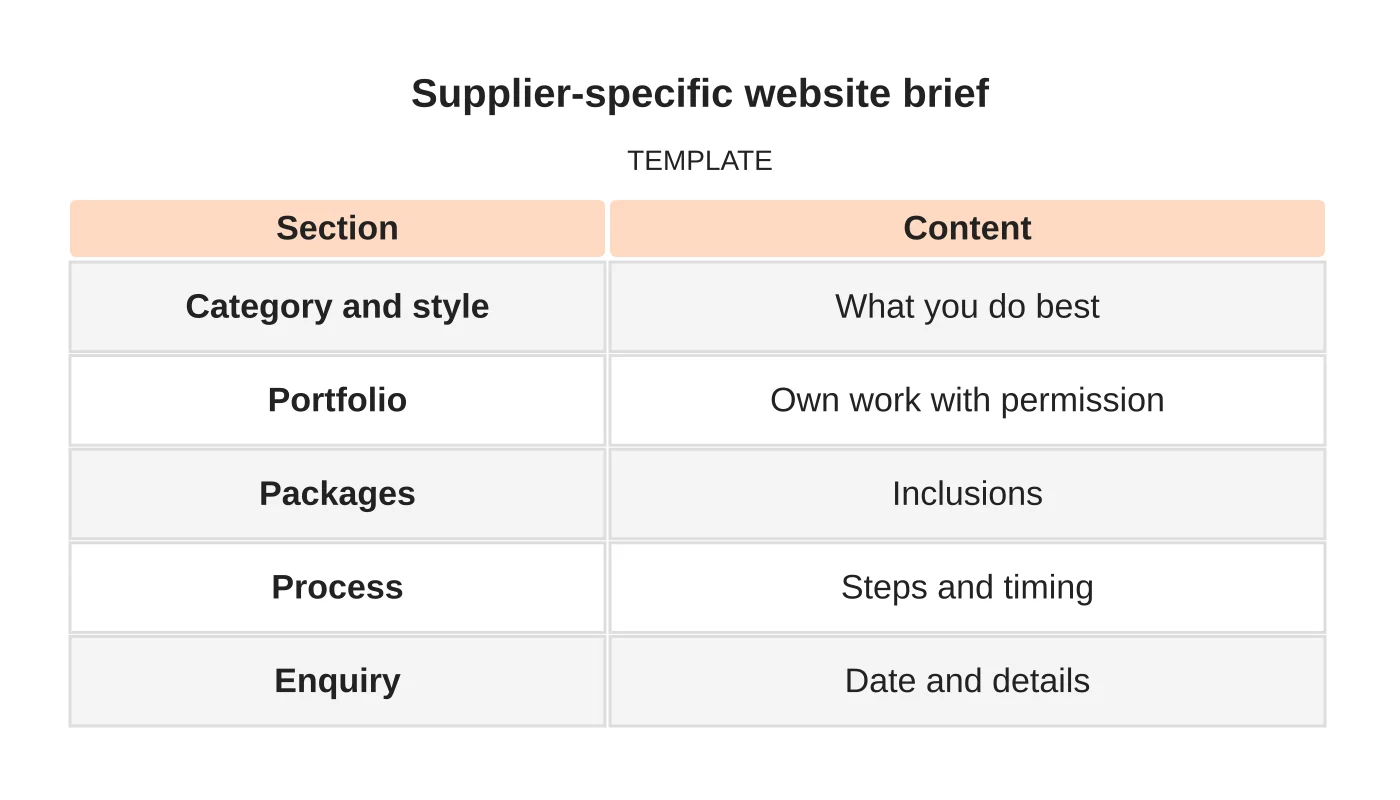
| Section | Content |
|---|---|
| Category and style | What you do best |
| Portfolio | Own work with permission |
| Packages | Inclusions |
| Process | Steps and timing |
| Enquiry | Date and details |
Common mistakes
- Using others’ images.
- Showing couples without permission.
- Vague packages.
- Implying a date is held.
- No way to qualify enquiries.
Questions suppliers ask
Should I publish prices? Many suppliers publish starting points or explain how they quote. Keep any figures current and state what they include.
Do I need a blog? Not necessarily. A strong portfolio and clear packages matter more.
Related: event venues.
Next step
Request a website review or discuss the pages and enquiry workflow your business needs. Read about our web design service or contact us.
Frequently asked questions
What should a wedding supplier show in a portfolio?
Your own work, with venues and partner suppliers credited, and permission before showing couples, guests or identifiable details. Never use others’ images or stock photos as your portfolio. Explain what you did in each example, not only the result.
Should I publish prices?
Many suppliers publish starting points or explain how they quote. Keep any figures current and state what they include. Vague packages are a common mistake, so describe the inclusions of each package clearly.
Do I need a blog?
Not necessarily. A strong portfolio and clear packages matter more. Put your effort into showing real work, explaining your process and availability, and making enquiries easy to qualify with date, venue, guest numbers, style and services needed.
Sources and notes
Last updated 21 November 2026. This guide is general information based on Web Design Davao’s web design and digital marketing practice. It cites no statistics and makes no promise about rankings, enquiries or contracts. Web Design Davao is not licensed or certified in this industry, so check technical, safety, legal and regulatory matters with a suitably qualified professional. Examples are templates or illustrations, not client results.


