
Quick answer
A website breach costs more than cleanup. Downtime, lost sales, lost trust, search damage and staff time often add up to more, and in the Philippines the Data Privacy Act adds duties to protect personal data and possibly notify the National Privacy Commission within 72 hours. This is general information, not legal advice.
- Estimate your own exposure using daily website revenue, days of disruption, cleanup fees, staff hours and customers likely to leave.
- In the first 24 hours, contain, preserve a copy, record times, identify affected data, reset credentials and involve your adviser.
- Collect only the personal data you need, keep it only as long as necessary and check your plugins and forms.
When people imagine the cost of a website breach, they picture a cleanup bill. In practice the cleanup is often the smallest line. The larger costs are the sales you lose while the site is down, the customers who stop trusting you, and in the Philippines, a legal duty to deal with personal data properly.
This guide explains how a breach unfolds, where the costs sit, and what the Data Privacy Act and the National Privacy Commission (NPC) expect. It is general information, not legal advice.
How a breach unfolds
Breaches rarely announce themselves. A typical sequence looks like this:
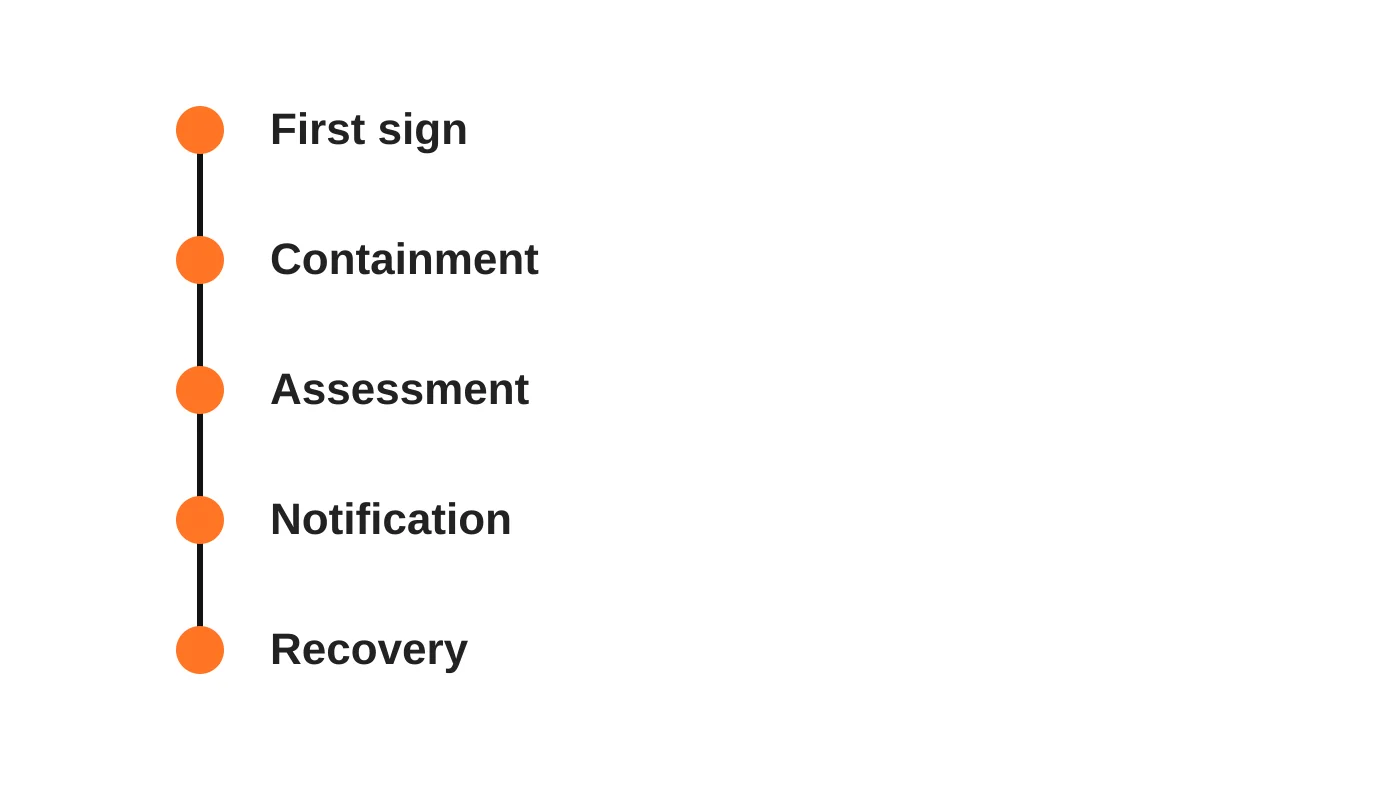
- Quiet entry. An attacker uses an outdated plugin or a stolen password. Nothing visibly changes.
- Silent period. They copy data, plant code or send spam. Days or weeks may pass.
- First sign. Often a customer emails to say something looks wrong, or a browser warns visitors away.
- Scramble. The business tries to work out what happened, who is affected and who needs to know.
- Fallout. Customers, partners, search engines and sometimes regulators react.
The newsletter issue The Day a Website Breach Costs a Business Everything walks through this from the first customer email. What matters for planning is that the damage compounds with every hour you do not know.
Direct and hidden costs
Costs you can see
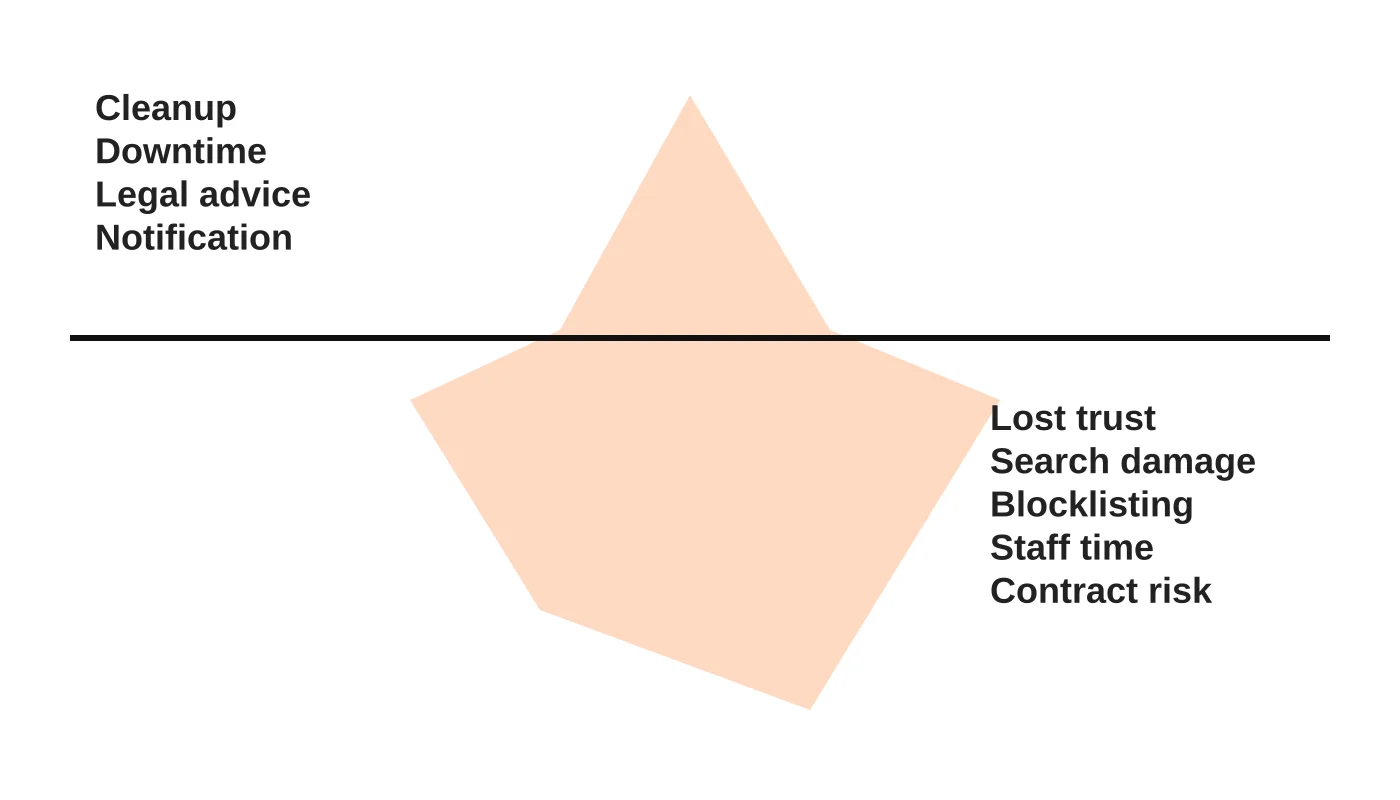
- Response and cleanup. Technical investigation, malware removal and restoring from backup.
- Downtime. Every hour the site or booking system is offline, you lose enquiries and sales. What would a website outage mean for your business shows how to estimate this.
- Professional advice. Legal and compliance support if personal data is involved.
- Notification. Staff time and communication costs to inform affected people.
Costs that hide below the surface
- Lost trust. Customers who learn their details were exposed may not return, and may tell others.
- Search damage. A site flagged as harmful can lose traffic and rankings until cleared. Building trust online explains the link between security and SEO.
- Blocklisting. Email providers and browsers may block your domain, so even legitimate messages fail.
- Staff time. Weeks of distraction from normal work.
- Contract risk. Clients who entrusted you with data may have rights under their own agreements.
A simple way to estimate your own exposure:
| Item | Your figure |
|---|---|
| Average daily revenue from the website | PHP ____ |
| Likely days of disruption | ____ |
| Cleanup and specialist fees | PHP ____ |
| Staff hours at your internal rate | PHP ____ |
| Value of customers likely to leave | PHP ____ |
| Estimated total | PHP ____ |
Complete it honestly once. Most owners find the total is well above what a maintenance plan costs. The related guide if your website went down tomorrow goes further.
The Philippine context: the Data Privacy Act and the NPC
The Data Privacy Act of 2012 (Republic Act 10173) protects personal data held by both government and the private sector. Three points matter most to a business owner with a website.
You must protect the data you hold
The law requires personal information controllers to put reasonable and appropriate organisational, physical and technical security measures in place. A website that collects enquiries, bookings or customer accounts is holding personal data, so its security is part of your compliance, not only an IT matter. Under NPC Circular 16-03, organisations must also have a security incident management policy.
You may have to notify the NPC and the people affected
The NPC’s rules say the Commission must be notified within 72 hours of knowledge, or reasonable belief, that a personal data breach has occurred. The rule applies to breaches involving sensitive personal information, or other information that may be used to enable identity fraud, where it is reasonably believed to have been acquired by an unauthorised person. Affected data subjects must also be notified, and the obligation stays with the controller even when processing is outsourced. That matters if a web agency or host runs your site for you.
The Commission can be notified based on available information even if the full extent of the breach is not yet known. Reports cover the facts of the incident, its effects and the remedial action taken. Notification can only be delayed in limited circumstances, and exemptions or postponements must be requested from the NPC rather than assumed. Recent NPC guidance also states that filing through its Data Breach Notification Management System does not pause your obligations under Circular 16-03.
Concealment and negligence carry consequences
The Act’s implementing rules list offences that include unauthorised access, concealment of security breaches involving sensitive personal information, and unauthorised disclosure under Rule XIII on penalties. Exact penalties and how they apply to a given case are a legal question, so seek advice rather than rely on a summary.
If you serve Australian customers
Many Davao businesses support Australian clients. Australia’s Notifiable Data Breaches scheme requires organisations covered by the Privacy Act to notify affected individuals and the regulator about eligible data breaches. An eligible breach is one likely to result in serious harm. An entity that suspects one must take all reasonable steps to complete an assessment within 30 calendar days and, if it has reasonable grounds to believe an eligible breach occurred, notify promptly. Whether the scheme applies to you or your client depends on your circumstances, so confirm it with an adviser and check your contracts.
Your first 24 hours checklist
- [ ] Contain: take the site or affected feature offline if visitors or data are at risk.
- [ ] Preserve: take a forensic copy of the site, database and logs before cleaning.
- [ ] Record: write down when you learned of it and every action taken, with times.
- [ ] Identify: work out what personal data was stored and who could be affected.
- [ ] Reset: change all credentials and remove unknown accounts.
- [ ] Decide: ask whether the breach involves sensitive personal information or identity-fraud risk, which starts the 72-hour clock.
- [ ] Inform: involve your data protection officer or legal adviser and notify the NPC and affected people as required.
- [ ] Communicate: prepare a plain-language message to customers, with what happened and what to do.
If you are not sure whether something is notifiable, treat the clock as running and get advice quickly. Our guide to the signs your website has been hacked covers the technical first hour.
How to lower the risk
Prevention is far cheaper than response. Start with a layered approach, as set out in the five layers of website security, and put a routine in place using our monthly security audit checklist. Collect only the personal data you need, keep it only as long as necessary, and check what your plugins, forms and integrations do with it.
Frequently asked questions
Does the Data Privacy Act apply to my small business?
It applies to organisations that process personal data, with some exceptions set out in the law. If your website collects names, emails or phone numbers, you are almost certainly processing personal data. Confirm your obligations with a qualified adviser.
How fast do I have to report a breach?
The NPC’s rules call for notification within 72 hours of knowledge or reasonable belief of a notifiable breach. Check the current circular and advisories, because procedures have been updated over time.
What if my web agency was hosting the site?
The legal responsibility generally stays with the business that controls the data. Make sure your contract says who does what during an incident.
Is a small breach still reportable?
That depends on the type of data and the risk to the people affected. The rules turn on factors such as sensitive personal information and identity-fraud risk, not only on business size.
What does it cost to prevent a breach?
Pricing depends on your site and what you need. Contact us for a quote.
From the Wired for Growth newsletter
This article extends The Day a Website Breach Costs a Business Everything from Duarne Bernhagen’s LinkedIn newsletter, Wired for Growth, by adding the Philippine compliance layer. A companion issue, Your Website Could Be Hacking Your Customers, looks at how sites can quietly harm their own visitors.
Reduce the risk before it becomes a cost
Web Design Davao’s website maintenance and security plans include monitoring, tested backups and incident response. Book an incident-readiness review and we will check how ready your site is.
This article is general information and is not legal advice. Laws, circulars and procedures change, so confirm current requirements with the NPC or a qualified lawyer.
Sources
- NPC Circular 16-03: Personal Data Breach Management, National Privacy Commission
- Notification within 72 hours, National Privacy Commission
- Data Breach Management guidance, National Privacy Commission
- Implementing Rules and Regulations of RA 10173, National Privacy Commission
- Philippines data breach notification procedure further clarified, Baker McKenzie, June 2026
- Quick reference guide for responding to data breaches, Office of the Australian Information Commissioner


