
Quick answer
Make a Philippine, Australian or US time-zone split work by mapping real working hours, agreeing a regular overlap window, ending each shift with a short handover note and defining what counts as urgent. Do not rely on a fixed hour difference, because daylight saving dates differ and the Philippines does not observe it.
- Write handover notes covering what was done, in progress, blocked, needing a decision and urgent, in one consistent place.
- Put recurring meetings in one stated reference time zone and avoid expecting routine late-night work.
- Keep a shared calendar for each location’s public holidays, and review delays in the arrangement monthly.
A Philippine team serving an Australian or US client can have working hours that barely overlap. Work handed over badly means a day lost. Handed over well, the time difference becomes an advantage. This guide gives a worksheet and handover note for AU and US clients with teams in the Philippines.
Do not rely on a fixed number of hours’ difference. Australian states and the US observe daylight saving on different dates, while the Philippines does not, so offsets change through the year. Verify them for the dates you need. For why structure matters, see why Australian and US companies build offshore teams.
Step 1: map real working hours
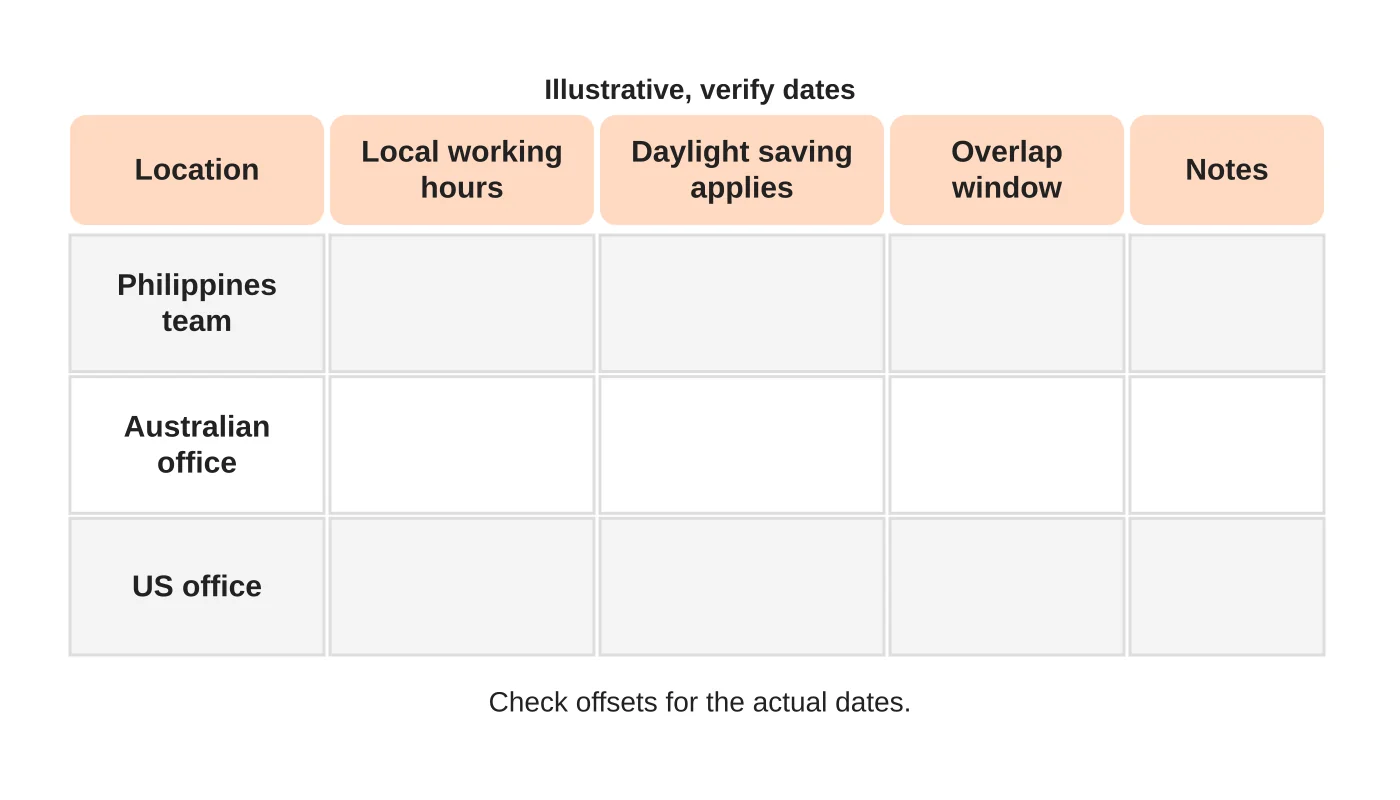
Write each person’s local working hours, including lunch and public holidays. Note which locations observe daylight saving and when it changes. Use a calendar tool that shows several time zones, and check the dates around clock changes, since overlaps shift. Be explicit about whose time is flexed and how it is recognised.
Step 2: choose the overlap
Decide a regular overlap window for live conversation, even if short. Use it for priorities, questions and decisions. Put recurring meetings in one reference time zone and say which. Protect rest: avoid expecting routine late-night work. If flexed hours are needed, agree them in writing. See how to delegate to a virtual assistant for sharing work clearly.
Step 3: define handover notes
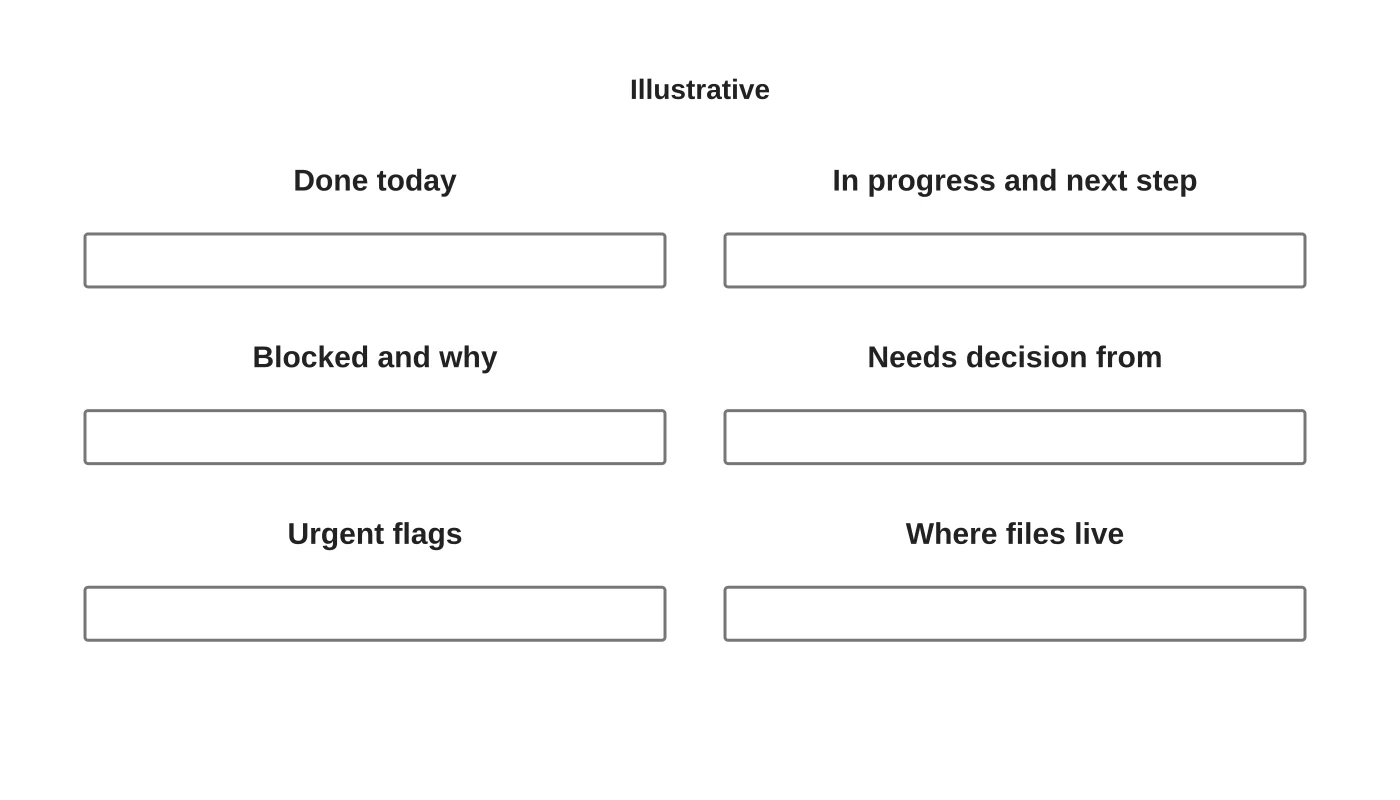
At the end of each shift, the person writes a short note: what was done, what is in progress, what is blocked, what needs a decision and what is urgent. Keep it in a consistent place. The next person starts from the note, not from a hunt through messages. Keep the form short enough that people actually use it.
Step 4: handle changes and urgent escalation
Decide what counts as urgent and how to reach someone out of hours, if at all. Agree who decides when a client needs something outside the overlap. Document what can wait until the next shift. Do not expect instant replies across time zones unless agreed. See client communication and escalation.
Step 5: build continuity
Use shared documents, task boards and written procedures so the work does not depend on live talk. See backup coverage when a VA is away. Review the arrangement monthly: where do delays occur and what could change.
Frequently asked questions
How much overlap do I need?
Enough for priorities and questions. It depends on the work.
Who adjusts their hours?
Agree it openly, with fair recognition.
What about public holidays?
Keep a shared calendar for each location.
Do I need real-time chat?
Often not. Clear written handover reduces it.
Sources
Plan your handover
Web Design Davao’s outsourced staffing team can discuss working-hours arrangements for your offshore team. Get in touch.