

Quick answer
To delegate to a virtual assistant, write a briefing note covering the task, why it matters, the desired outcome, deadline, steps, tools and access, standards, decisions the assistant can make and when to escalate. Set an ownership level for each task, start at the lower levels, and give specific feedback early and often.
- Start most new tasks at do this exactly or research and recommend, then move up as quality is shown.
- Check the first three examples of any new task closely, and update the documentation each time you correct something twice.
- Agree overlap hours and channels, say what you want and by when, and invite questions rather than relying on hints.
Delegation fails less often because the assistant is poor and more often because the handover was thin. A one-line message and an expectation of mind-reading is not a brief. A virtual assistant (VA) cannot read your mind, and the better you are at saying what you want, the more they can do without you.
This guide gives you a briefing note you can copy, a way to decide how much ownership to hand over, and a simple feedback routine.
Why delegation fails
Four causes cover most of it.
- Missing context. The VA is told what to do but not why or what good looks like.
- Invisible standards. You know the rules in your head, but nobody has written them down. The issue Your VA Can’t Read Your Mind (And Shouldn’t Have To) makes the point that a VA cannot read your mind.
- No ownership. Every task needs your approval, so the VA waits and you become the bottleneck. The First Time I Let My VA Own Something (And Didn’t Take It Back) describes what changes when you let a VA own something.
- No feedback. Problems are fixed quietly by you, so the same mistake repeats.
A useful way to see a first outsourced hire is as a decoder: they turn the messy way you work into clear, written steps, which is the theme of Your First Outsourced Hire Shouldn’t Be a Doer. It Should Be a Decoder.. Done well, delegating improves your own processes.
A good start matters, so use this 30-day virtual assistant onboarding plan.
Related reading: What to Delegate to an Administrative Virtual Assistant in Your First Month.
The briefing note
A good brief takes ten minutes to write and saves hours. The newsletter issue The Note I Started Writing to My VA Before Delegating Anything New talks about the note written before delegating. Here is a version you can copy.
Briefing note template
| Section | What to write |
|---|---|
| Task name | One clear line |
| Why it matters | The purpose and who benefits |
| Desired outcome | What “done” looks like, with an example if possible |
| Deadline and priority | Date and time, in your time zone and theirs |
| Steps | Numbered steps, or link to a recorded video |
| Tools and access | Which systems, where logins are stored (never in plain text) |
| Standards | Tone of voice, naming, formats, quality checks |
| Decisions the VA can make | What they can decide without asking |
| Escalate when | Situations that need you, and how to reach you |
| Check-in | When you will review, and how feedback will be given |
A short worked example
Task: Weekly client enquiry follow-up.
Why it matters: Replies within one business day convert more enquiries into meetings.
Outcome: Every enquiry from the previous week has a personal reply, logged in the CRM, with a call booked where appropriate.
Steps: (1) Export last week’s enquiries. (2) Check the CRM for duplicates. (3) Send the matching template, personalised with the person’s name and question. (4) Log it. (5) Flag anything unusual.
Decisions the VA can make: Choose which template fits; offer any of the three standard time slots.
Escalate when: The enquiry mentions a complaint, a legal issue or a deal larger than the agreed threshold.
If your assistant speaks to clients, agree what to answer and when to escalate.
Ownership levels
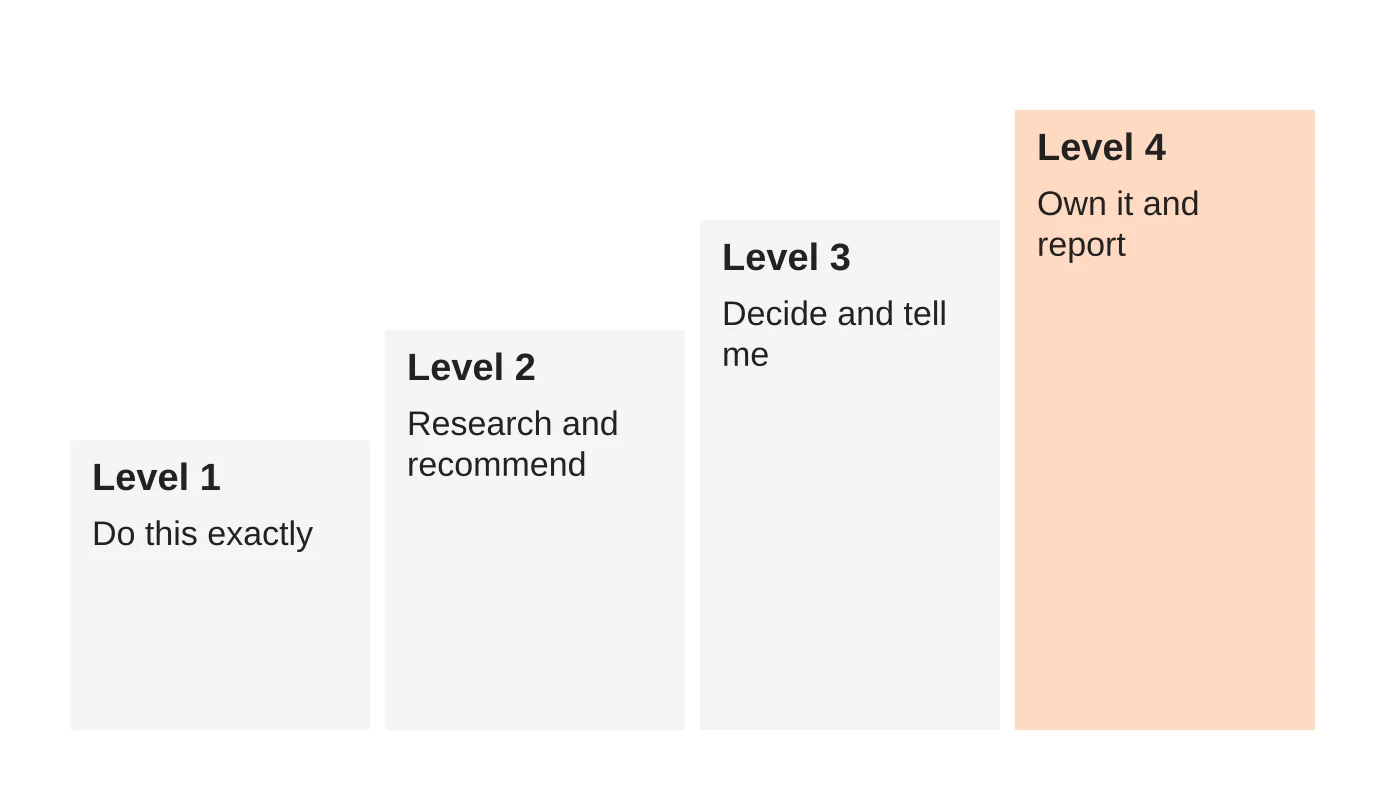
Agree the level of ownership for each task, so neither of you is guessing.
- Do this exactly. Follow my steps and report when finished.
- Research and recommend. Gather the options and tell me what you suggest.
- Decide and tell me. Choose, act, then let me know what you did.
- Own it and report. Run this process, and I only want a regular summary and exceptions.
Start most new tasks at level 1 or 2. Move them up as quality proves itself. Leaving everything at level 1 forever keeps you in the middle.
The feedback loop
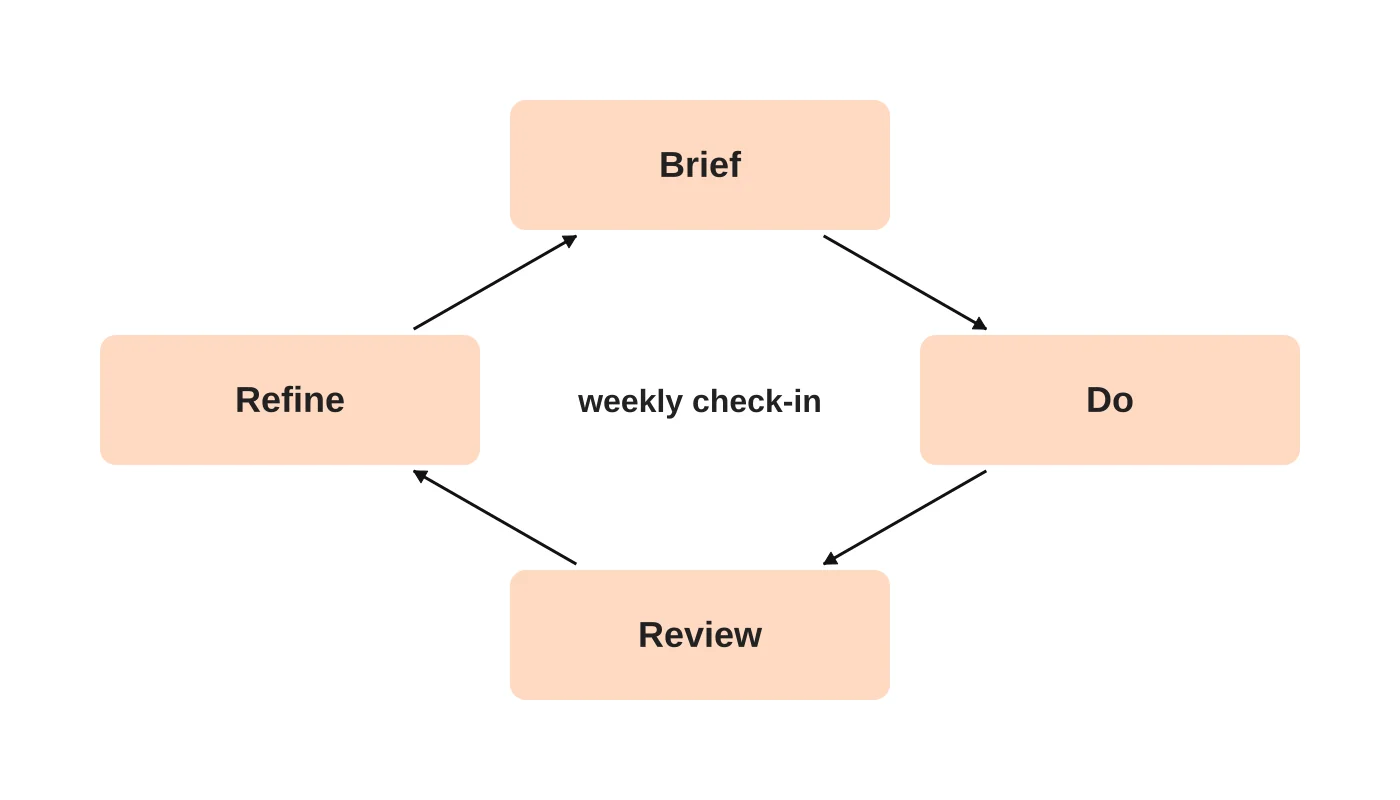
- Review early and often at first. Check the first three examples of any new task closely.
- Be specific. “The tone is too formal. Here is a version I would send” teaches more than “make it better.”
- Praise what is right. People repeat what is noticed.
- Update the documentation each time. If you correct something twice, add it to the brief.
- Hold a short weekly check-in to review what is done, what is coming and what is stuck.
- Ask for improvements. The VA is closest to the work and often sees faster ways.
Tools that help
You do not need a lot of software. A few simple tools are enough:
- A shared task list so everything has one home.
- A password manager for safe access. Read our offboarding checklist for a secure setup and exit process.
- Screen-recording software for walkthroughs.
- A shared document library for briefs, templates and standards.
Working with Filipino teams: practical communication tips
These come from common working practice, not formal research, so adapt them to your own team.
- Be explicit about expectations. Do not rely on hints. Say what you want and by when.
- Invite questions. Some people hesitate to question a senior person, so make it normal and welcome.
- Give feedback privately and kindly, and give it promptly.
- Agree overlap hours and communication channels, especially across Australian or US time zones.
- Respect local holidays and plan coverage.
- Share the “why”. People who understand the goal make better decisions.
If your team spans countries, set up a clear time zone handover plan.
Frequently asked questions
How detailed should a brief be?
Detailed enough that a smart new person could do the task without asking you anything basic. Use the template and expand where mistakes occur.
What if my VA keeps asking questions?
That is normal at the start. Record the answers in the brief so they are asked once, not every time.
How much should I let a VA decide?
Start with narrow decisions and widen them as quality is proven. Use the ownership levels.
What if the work comes back wrong?
Check whether the brief was clear first. Then give specific feedback and update the documentation.
How long until delegation feels easy?
Most owners see a difference within the first month once briefs and routines are in place.
From the Wired for Growth newsletter
This how-to draws on several issues of Duarne Bernhagen’s LinkedIn newsletter, Wired for Growth: The Note I Started Writing to My VA Before Delegating Anything New, The First Time I Let My VA Own Something (And Didn’t Take It Back), Your VA Can’t Read Your Mind (And Shouldn’t Have To) and Your First Outsourced Hire Shouldn’t Be a Doer. It Should Be a Decoder..
Managed virtual assistants with onboarding support
Web Design Davao’s virtual staffing service includes onboarding support to help you brief, review and improve from the first week. Talk to us about a managed VA. For where to begin, see before you hire a virtual assistant, and for how AI is changing the role, read from task-takers to strategy-makers and the 10 essential AI skills every modern virtual assistant needs.