

Quick answer
Event venues turn visitors into site visits by separating corporate, social and private events, stating capacity by layout, adding practical information such as parking and access, showing approved real event examples and making Arrange a site visit the main action. Keep the form short, route it to the person who handles bookings, and measure visits and confirmed bookings.
- Give corporate, social and private events their own pages, and let the home page route visitors in one click.
- State capacities by layout, such as seated, standing and meeting style, accurately, because planners compare against guest numbers.
- Count enquiries, site visits and confirmed bookings by event type and source, not enquiries alone.
Event planners shortlist venues from websites before they ever visit. A site should show capacity, layouts, location and how to book a visit, in the planner’s terms. This guide covers separating event types, presenting practical information and routing enquiries to site visits. It makes no booking promise.
1. Separate corporate, social and private events
Each audience needs different information. Corporate planners want facilities, capacity, equipment and access. Social hosts want atmosphere, packages and examples. Private clients want clarity on what is included and how booking works. Give each its own page, and let the home page route visitors in one click.
2. Present capacity and practical information
State capacities by layout, such as seated, standing and meeting style, along with parking, access, accessibility features and facilities. Be accurate: planners will compare against their guest numbers, and a wrong figure costs trust.
3. Show approved event examples
Use real events with client permission and no identifying details unless approved. Describe the event type, guest numbers, layout and what the venue provided. Use your own photographs. Avoid claims about outcomes or satisfaction you cannot support. See local SEO for event venues.
4. Route enquiries to site visits
Make “Arrange a site visit” the main action, with “Check a date” as a secondary one. Keep the form short and route it to the person who handles bookings. See venue enquiry forms and managing venue enquiries.
5. Measure what matters
Count enquiries, site visits and confirmed bookings by event type and source. A few visits from well-matched planners matter more than many vague enquiries.
Venue buyer journey
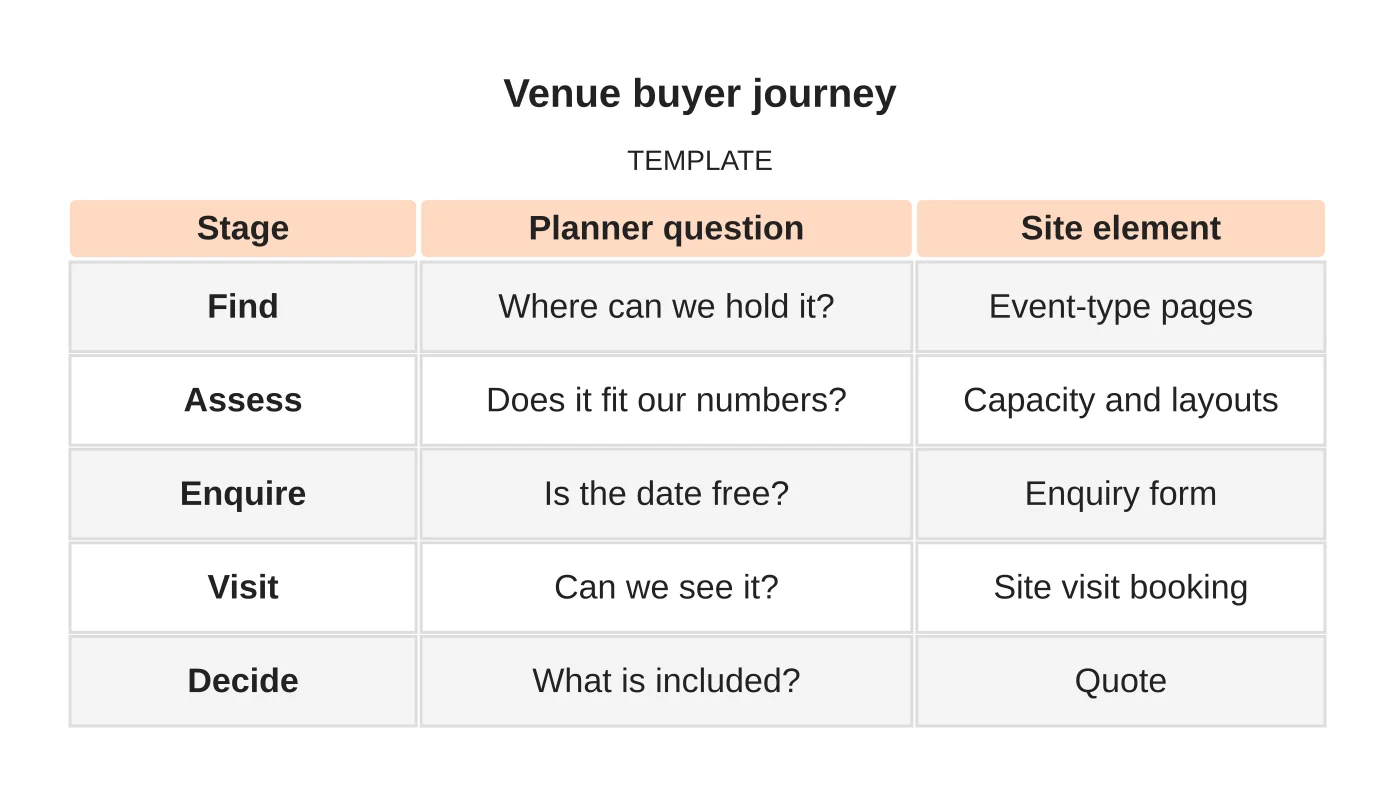
| Stage | Planner question | Site element |
|---|---|---|
| Find | Where can we hold it? | Event-type pages |
| Assess | Does it fit our numbers? | Capacity and layouts |
| Enquire | Is the date free? | Enquiry form |
| Visit | Can we see it? | Site visit booking |
| Decide | What is included? | Quote |
Common mistakes
- One page for all event types.
- Inaccurate capacity figures.
- Stock photos of other venues.
- No site-visit action.
- Slow replies.
Questions venues ask
Should I publish prices? Many venues explain how they quote because costs vary. Publish figures only if you can keep them current.
Do I need a virtual tour? It can help but is not required. Good photos and clear layouts matter more.
Related: wedding suppliers.
Next step
Request a website review or discuss the pages and enquiry workflow your business needs. Read about our web design service or contact us.
Frequently asked questions
What capacity information should a venue publish?
Capacities by layout, such as seated, standing and meeting style, along with parking, access, accessibility features and facilities. Be accurate, because planners compare figures against their guest numbers and a wrong figure costs trust.
Should an event venue publish prices?
Many venues explain how they quote because costs vary. Publish figures only if you can keep them current. Whatever you choose, say what is included so planners understand what a quote covers.
Do I need a virtual tour?
It can help but is not required. Good photographs, ideally your own, and clear layouts matter more. Show real events with client permission, and avoid stock photos of other venues.
Sources and notes
Last updated 21 November 2026. This guide is general information based on Web Design Davao’s web design and digital marketing practice. It cites no statistics and makes no promise about rankings, enquiries or contracts. Web Design Davao is not licensed or certified in this industry, so check technical, safety, legal and regulatory matters with a suitably qualified professional. Examples are templates or illustrations, not client results.


