

Quick answer
Property managers attract owners by building pages around the situations that lead owners to look for a manager, such as a new investment property, moving overseas or an unhappy experience with a current manager. State your real coverage area, explain onboarding and reporting, and track owner enquiries separately from tenant traffic.
- Ask recent owners how they described their need when they first called, then group the situations into a few themes.
- Do not disparage competitors or make promises about their contracts; suggest owners check their own agreement.
- Avoid pages for areas you do not manage; one clear coverage page beats many near-identical ones.
Owners search for a manager when they buy a property, move away, or are unhappy with a current one. Pages should reflect those situations in the owner’s words. This guide gives an intent map and covers coverage and measurement. It makes no ranking promise, and search platforms change their guidance.
1. Identify owner search intent
List the situations that lead an owner to look for a manager: a new investment property, moving overseas, becoming a first-time landlord, a poor experience with the current manager or a vacant property. Ask recent owners how they described their need when they first called, and check with your appraisers. Group them into a few themes.
2. Explain real geographic coverage
State where you actually manage. Avoid pages for suburbs or cities you do not serve. If you work across several areas, one clear coverage page is better than many near-identical ones. Keep your Google listing consistent with the website.
3. Build useful management pages
For each situation, explain what you do, how onboarding works, what reporting the owner receives and how to start. Use real, approved examples without identifying owners or tenants.
4. Handle switching sensitively
Owners changing managers need practical information: notice periods, handover of records and keys and how you manage the transition. Do not disparage competitors and do not make promises about their contracts. Suggest owners check their agreement.
5. Track owner enquiries separately from tenant traffic
Measure owner enquiries, appraisals and agreements separately. Review which pages and situations produce suitable owners. See the owner-focused website guide and service pages.
Property-owner intent map
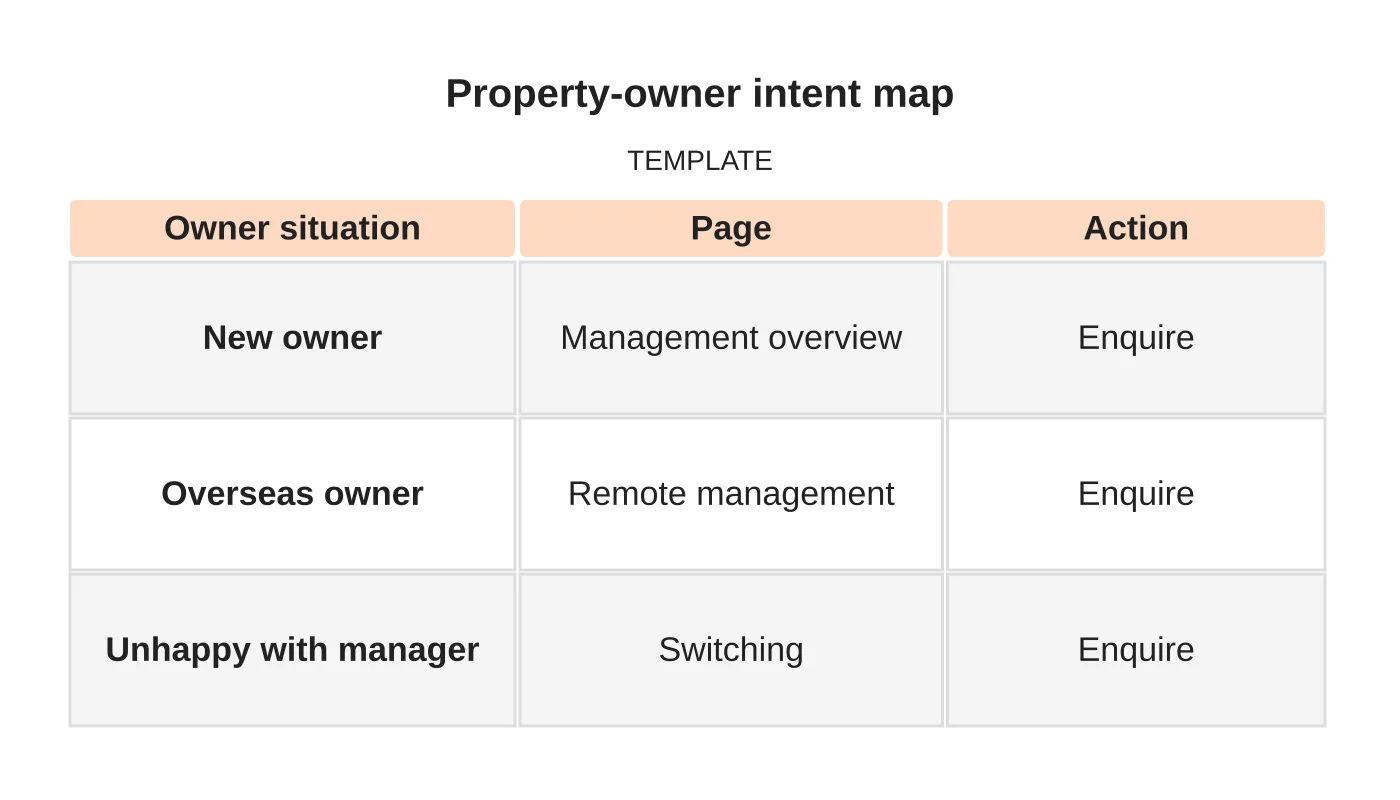
| Owner situation | Page | Action |
|---|---|---|
| New owner | Management overview | Enquire |
| Overseas owner | Remote management | Enquire |
| Unhappy with manager | Switching | Enquire |
Common mistakes
- Pages for areas you do not manage.
- Tenant and owner traffic mixed in reports.
- Disparaging other agencies.
- Unapproved fee statements.
- Copying text between area pages.
Questions property managers ask
Which terms matter? Those your owners use, confirmed from your enquiries and Search Console data.
How long before results? There is no fixed time. Review owner enquiries over several months.
Next step
Discuss your target customers, service area and lead-generation priorities with Web Design Davao. Read about our digital marketing service or contact us.
Frequently asked questions
What situations lead owners to search for a property manager?
Typical situations include buying a new investment property, moving overseas, becoming a first-time landlord, having a poor experience with a current manager or owning a vacant property. Ask recent owners how they described their need when they first called, and group the answers into themes.
How should a manager write for owners switching agencies?
Give practical information: notice periods, handover of records and keys, and how you manage the transition. Do not disparage competitors or make promises about their contracts, and suggest owners check their agreement.
How long before local SEO brings owner enquiries?
There is no fixed time, and no ranking is promised. Review owner enquiries, appraisals and agreements separately from tenant traffic over several months, and use that to see which pages and situations produce suitable owners.
Sources and notes
Last updated 21 November 2026. This guide is general information based on Web Design Davao’s web design and digital marketing practice. It cites no statistics and makes no promise about rankings, enquiries or contracts. Web Design Davao is not licensed or certified in this industry, so check technical, safety, legal and regulatory matters with a suitably qualified professional. Examples are templates or illustrations, not client results.