
Quick answer
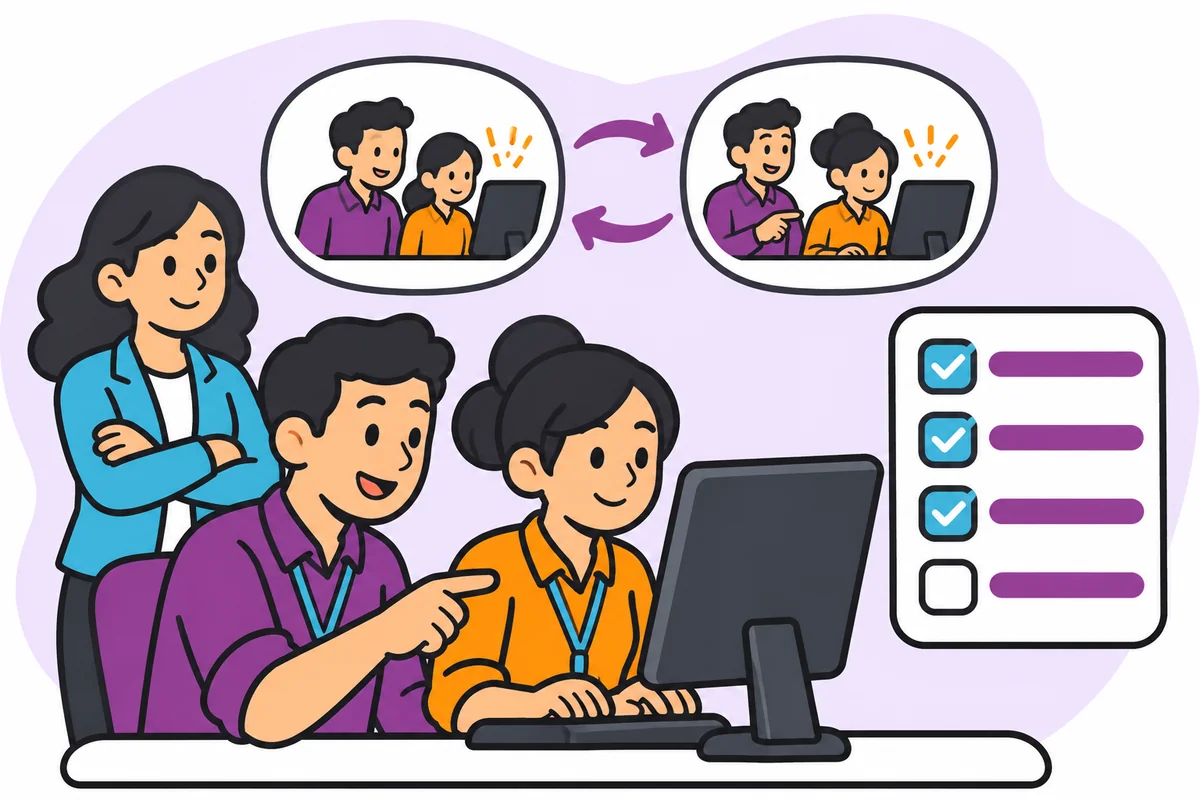
A new help desk analyst learns by shadowing an experienced colleague, then reverse shadowing, where the analyst acts while the colleague observes and gives feedback. Readiness is signed off task by task against agreed evidence, such as three supervised attempts that met the checklist, rather than signing off the whole role at once.
- Set a specific objective for each shadowing session and ask the analyst to describe what they saw afterwards.
- In reverse shadowing, let the analyst decide within approved scope and step in only when something is unsafe.
- Record feedback and evidence for each task, and agree beforehand what counts as enough and who signs.
A new analyst learns by watching experienced staff, then doing supervised tasks, before working alone. This article shows how to set observation objectives, supervised practice and readiness evidence. It is written for international it providers and technical leads and ends with the decision, owner and next step to record.
An illustrative scenario
This is a hypothetical example, not a Web Design Davao client case.
Situation. A new analyst watches experienced staff and then completes supervised tasks before working independently.
What happens. A new analyst shadows an experienced colleague for five tickets, then handles the next five with the colleague watching, and is signed off task by task. The team lead records the evidence for each sign-off and does not sign off the whole role at once.
Observation objectives
Set a specific objective for each shadowing session, such as being able to explain how a ticket is triaged and why. Use the task and observed example fields. Ask the analyst to describe what they saw afterwards, because watching alone does not show understanding. Keep sessions short and focused on one task type.
Supervised practice
Move to reverse shadowing, where the analyst acts while the experienced person observes and gives feedback afterwards. Use the supervised attempt and feedback fields. Let the analyst make decisions within the approved scope, and step in only when something is unsafe or outside it. Record what went well and what to repeat.
Readiness evidence
Record readiness evidence and sign off per task. Use the readiness evidence and sign-off fields. An analyst may be ready for password resets but not for account changes, and the record should say so. Agree what evidence is enough, such as three supervised attempts that met the checklist, and who signs.
Analyst readiness checklist
Use this at the point described above. The workflow owner completes it and a named reviewer checks it. A completed row shows that the information, owner and next step are recorded; it does not prove the outcome. Keep it somewhere the team can edit, and keep it free of passwords, tokens and real client records.
Blank copy
| Task | Observed example | Supervised attempt | Feedback | Readiness evidence | Sign-off |
|---|---|---|---|---|---|
Illustrative completed row (hypothetical)
| Task | Observed example | Supervised attempt | Feedback | Readiness evidence | Sign-off |
|---|---|---|---|---|---|
| Triage a new ticket | Observed with a senior analyst | Supervised attempt completed | Feedback recorded | Three supervised tickets correct | Team lead |
Working through the completed row
The example lets the analyst observe triage with a senior, attempt it under supervision, receive feedback, show three correct supervised tickets and be signed off by the team lead.
Common mistakes
- Signing off the whole role at once.
- Skipping feedback.
- Having no evidence standard.
Questions to settle before you rely on it
- Which tasks are shadowed first?
- What counts as readiness?
- Who signs off?
How you know it is complete
The checklist is complete when each task has an observation, supervised attempt, feedback, evidence and sign-off. Record who reviewed it and the date.
Where you may not have the answer
An attempt does not meet the standard. Repeat supervised practice and note what changed. The handoff, not a guess, is the correct next step.
Your next action
List the first five tasks and set sign-off criteria.
Discuss this role, required skills, working hours and review responsibilities with Web Design Davao. Outsourced staffing arrangements are agreed individually; nothing here assumes a particular service, role or timing is already available.
How Web Design Davao works
- Enquiries are generally answered within four hours during support hours (Monday to Friday, business hours), with after-hours help for emergency requests. Scope is agreed individually.
- Web Design Davao employs and manages its Davao-based staff, including HR administration and payroll, and provides them as an outsourced service to companies overseas. See how staff are managed and how staff are hired.
Frequently asked questions
What is the difference between shadowing and reverse shadowing?
In shadowing, the new analyst watches an experienced colleague work. In reverse shadowing, the analyst performs the task while the experienced person observes and gives feedback afterwards. One illustrative example uses five observed tickets, then five handled with the colleague watching.
How do you know a new analyst is ready to work alone on a task?
Agree the evidence in advance, such as three supervised attempts that met the checklist, and name who signs. Sign off per task, because an analyst may be ready for password resets but not for account changes, and the record should say so.
What should happen if a supervised attempt does not meet the standard?
If an attempt does not meet the standard, repeat the supervised practice and note what changed. Do not sign off the task until the evidence meets the standard you agreed. Feedback after each attempt shows the analyst what went well and what to repeat.


