
Quick answer
A cold storage or warehouse website should publish a verified facility fact sheet covering space, storage type, temperature zones and ranges, capacity, loading docks, vehicle access, operating hours, security and current certifications. Add what you can and cannot store, how the process works, real photos and a short space request form. Every figure must be verified by you.
- Use a table in text for the fact sheet, not only a PDF, and include only what you can verify.
- State product categories you accept and those you do not, and mention handling requirements and customer responsibilities.
- Assign an owner and review date, since capacity, ranges and certifications change, and remove claims you cannot support.
Someone looking for storage is trusting you with stock they cannot easily replace. They need specifics before they call: what you can store, how cold, how much space, how goods move in and out and how to reach you.
This guide shows what to publish on a cold storage or warehouse website. It is not food safety, regulatory or legal advice. Every figure on your pages must be verified by you. The fact sheet shown uses placeholders, not real numbers.
Start with the buyer’s questions
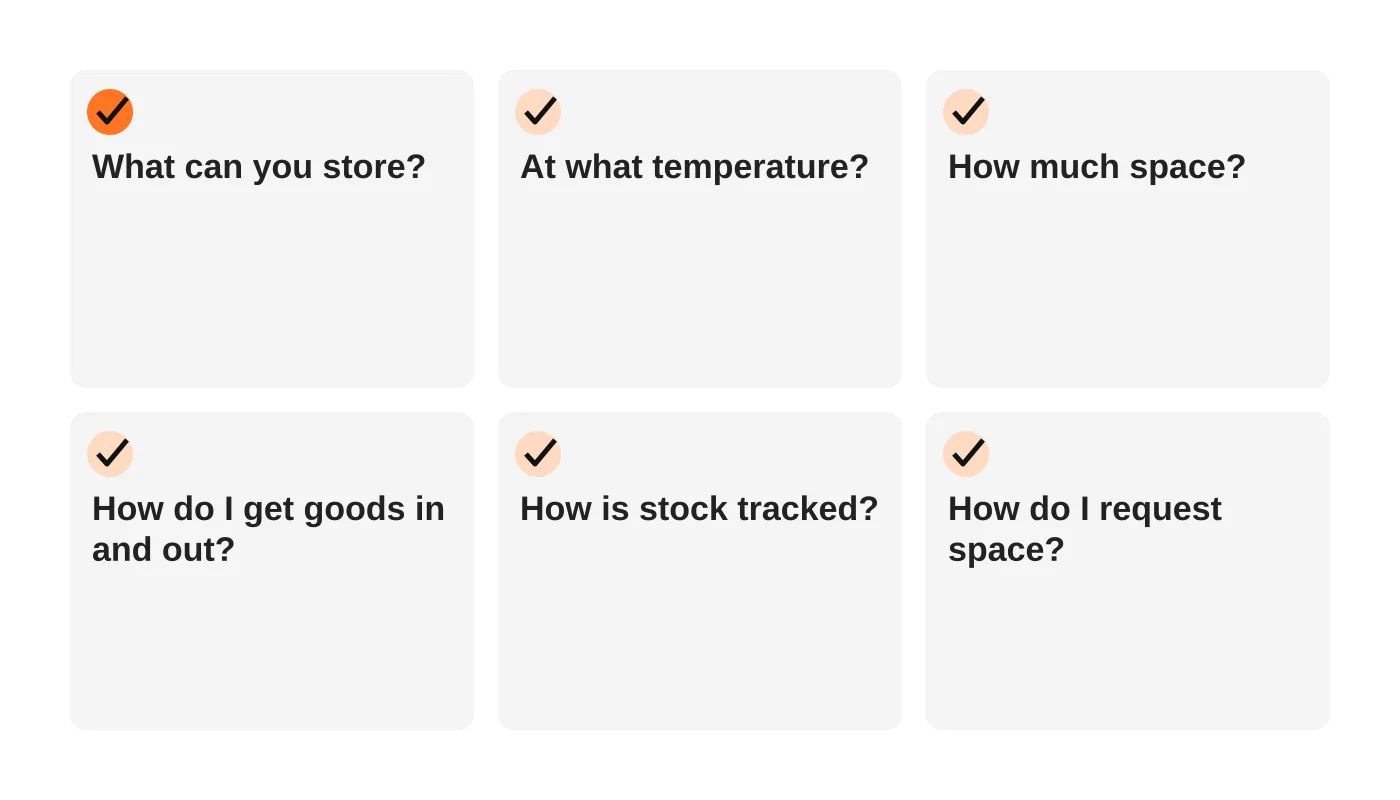
Ask your sales team for the questions they hear. Common ones are listed above. Build your page around the actual list.
Read next: Website Development: What You Need to Know Before You Begin.
Publish a facility fact sheet
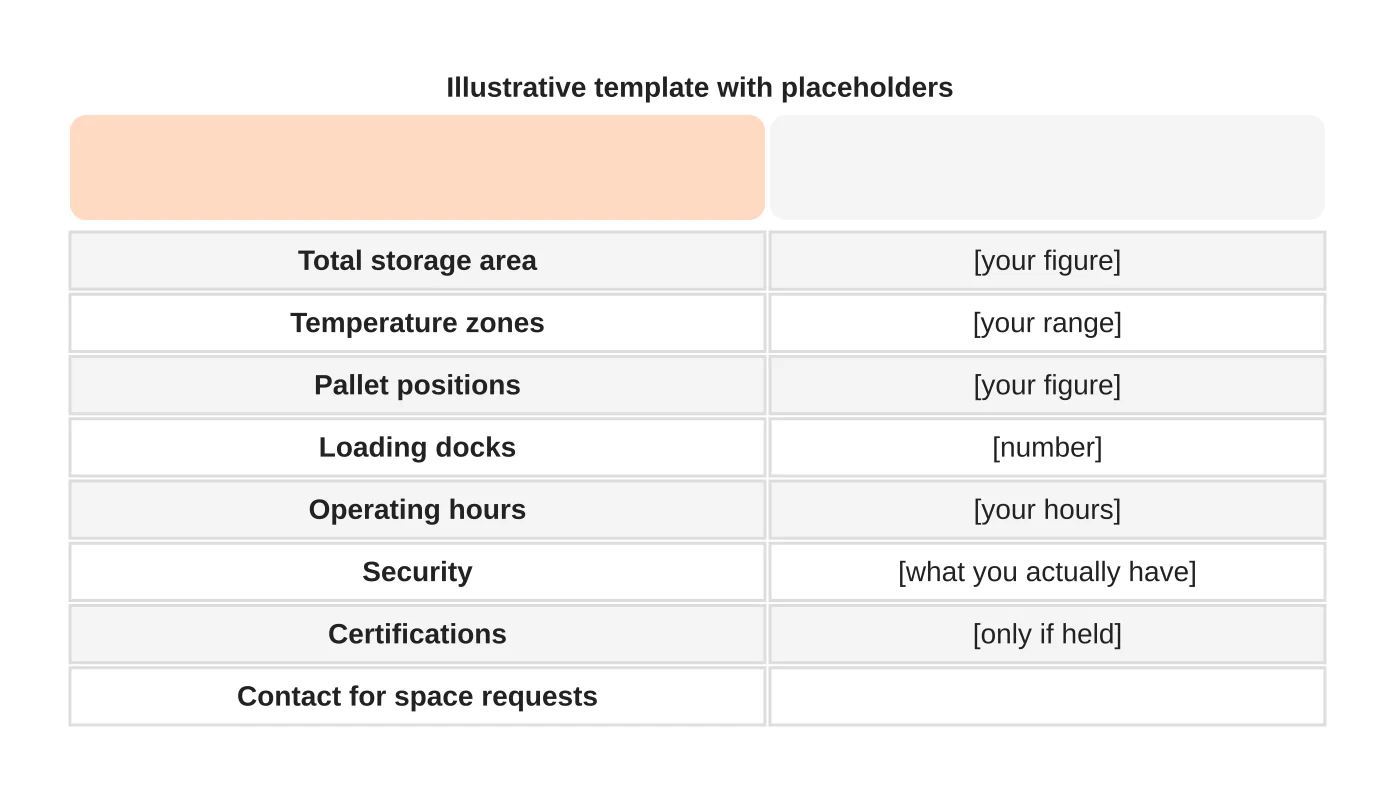
A clear fact sheet answers many questions at once. Use a table in text, not only in a PDF. Include only what you can verify:
- Total space and storage type: pallet racking, bulk, bins or floor storage.
- Temperature zones and ranges, and how you monitor them.
- Capacity, with how you measure it.
- Loading docks and vehicle access, including vehicle size limits.
- Operating hours, including after-hours arrangements.
- Security and safety features you actually have.
- Certifications and permits, only if held and current.
Explain what you can and cannot store
State the product categories you accept and those you do not. Mention handling requirements and any customer responsibilities such as packaging and labelling. Do not suggest you handle regulated goods unless you are permitted to. This is general information, not legal advice. Check your situation with a qualified adviser.
Describe how it works
Buyers want to picture the process:
- Enquiry and space check.
- Agreement and onboarding.
- Receiving and put-away.
- Inventory visibility and reports, if offered.
- Order picking and dispatch.
- Invoicing and review.
Only describe services you actually provide. If you offer a system for stock visibility, explain what customers can see and how often it updates.
Read next: Why Your Website Copy Attracts the Wrong Customers (and How to Fix Your Positioning).
Photos and video
Show real photos of the facility with scale, racking, docks and, where relevant, cold rooms. Do not use stock images that suggest a different facility. Do not show customer goods or branding without permission. Do not show details that weaken security.
Make requesting space easy
Provide a short form asking for product type, temperature needs, space or pallet count, start date and contact. See freight quote form fields, which uses the same logic. Say who replies and when. Offer a visit option where possible.
Be found locally
Add your facility location to your Business Profile with accurate hours and categories, and match your website. See the Business Profile guide. Ensure address and access directions are in text.
Keep it current
Capacity, ranges and certifications change. Assign an owner and a review date. Remove claims you cannot support.
Link to the wider site
Connect this page to your services, coverage and company profile. See the logistics website guide, the logistics marketing guide and the logistics marketing guide.
Frequently asked questions
Should I list rates?
Only if they are stable. Otherwise explain what affects storage pricing and how to request a quote.
Can I mention the brands I store for?
Only with written permission.
Do I need a 3D tour?
No. Clear information and real photos come first.
Should I show security cameras and access controls?
Describe your security measures in general terms without revealing details that weaken it.
Sources
Plan your facility pages
Web Design Davao’s web design team can help plan clear facility pages for your storage business. Get in touch.