Quick answer
Query fan-out is a technique Google says AI Overviews and AI Mode may use: issuing several related searches across subtopics and data sources to build one answer. Pages with depth, clear sections and unique detail have more chances of being picked, even for questions the user never typed.
- List the follow-up questions a careful customer would ask, such as cost, time and privacy, and mark gaps.
- Link related pages with descriptive anchor text and put key information in readable text, not only images or PDFs.
- Avoid mass-producing near-identical pages and never invent facts to fill gaps; if you lack a price, explain how pricing works.
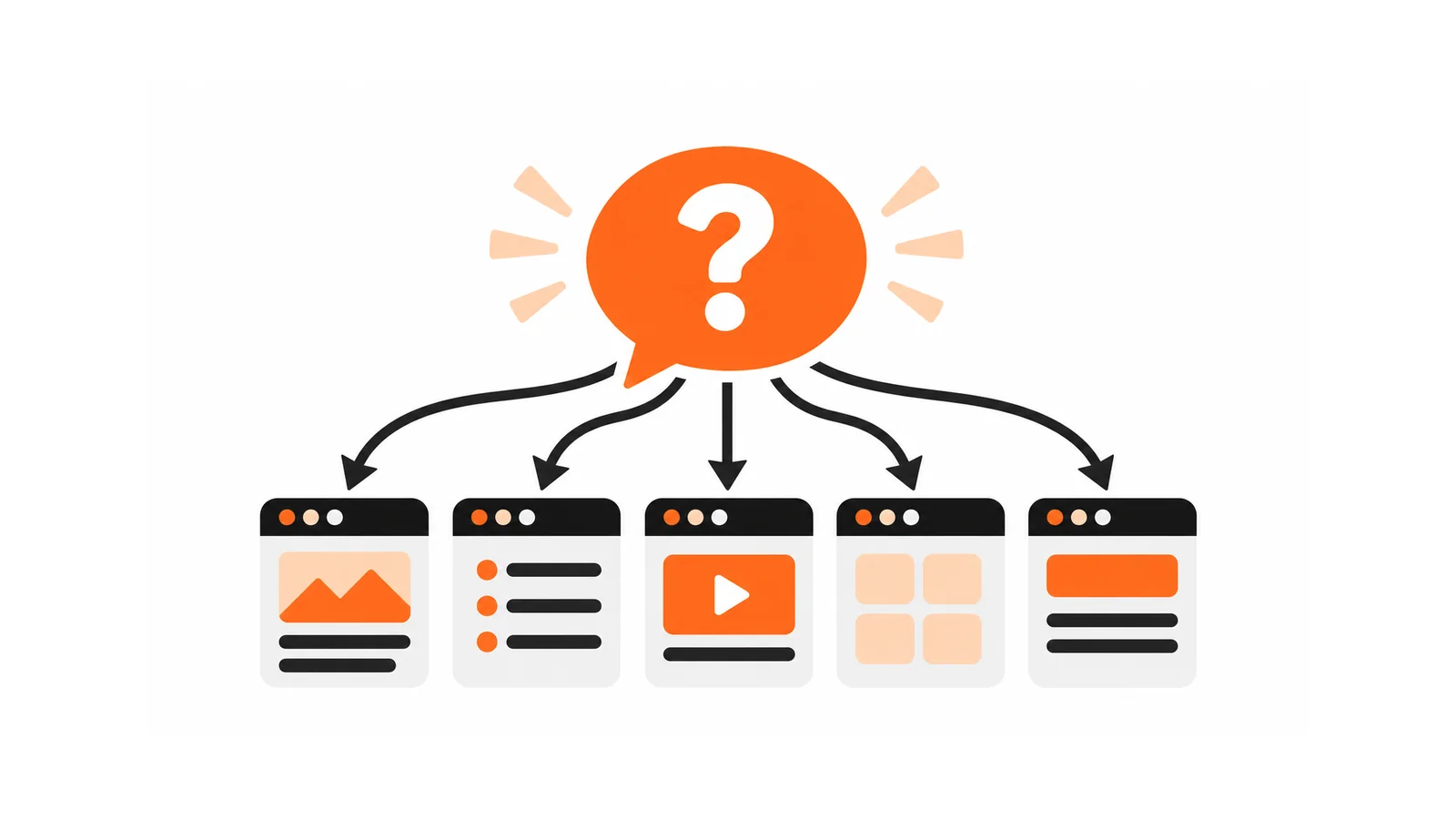
When someone types a long question into an AI search tool, the tool usually does not search for that one sentence. It breaks the question into smaller searches, gathers results and writes one answer. Google calls this technique “query fan-out”. Understanding it explains why some pages get cited and others do not.
Your AI Research Assistant That Cites Its Sources looked at AI research tools that cite their sources. This guide explains how those sources get chosen, in terms a business owner can act on.
What query fan-out means
Google’s guidance says both AI Overviews and AI Mode may use a query fan-out technique, which means issuing multiple related searches across subtopics and data sources to develop a response. Other AI search tools describe similar behaviour, though they use their own methods.
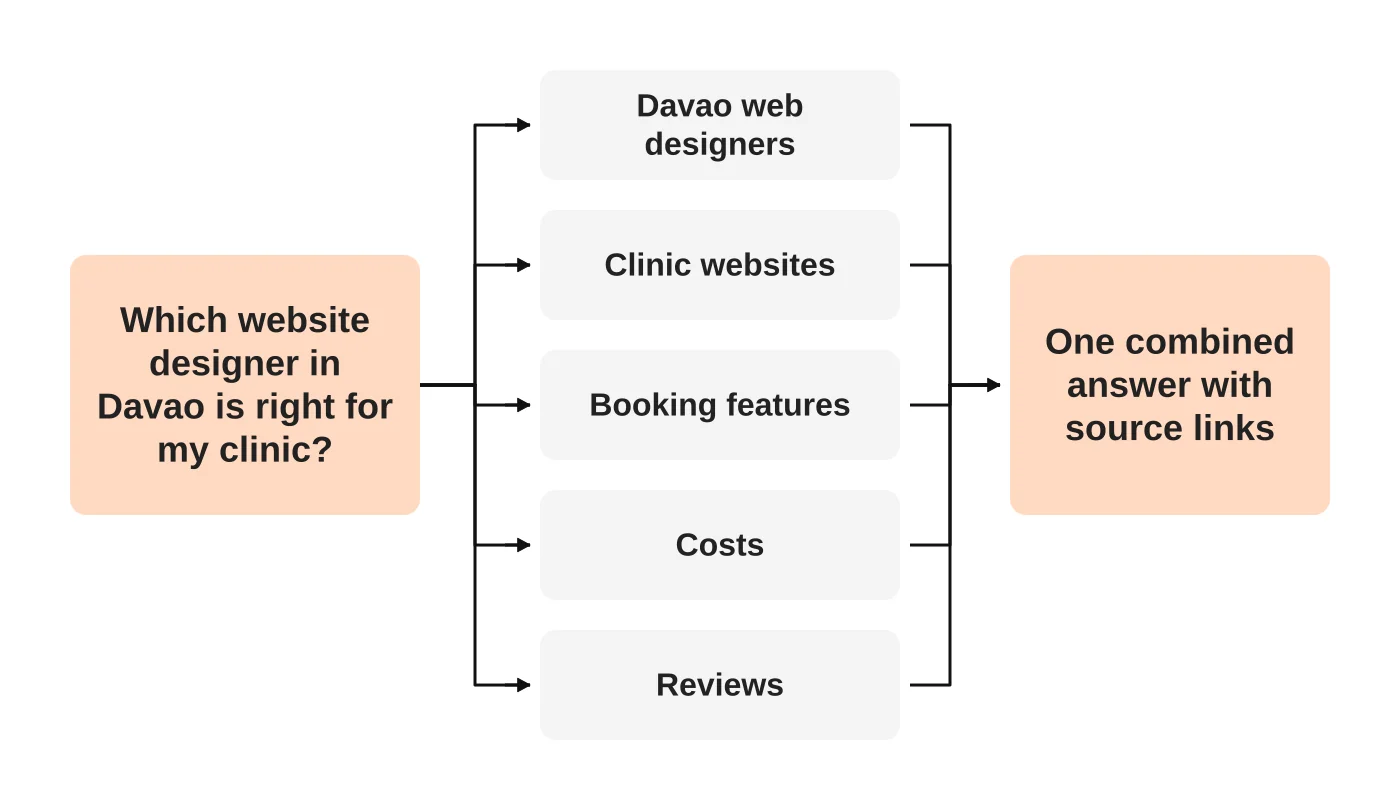
The practical effect is that your page may be pulled in for a question the user never typed. A page about “website design for clinics” might be used to answer a sub-search about booking features.
Related reading: Should You Opt Out of AI Overviews? The Search Console Setting Explained.
What this means for a website
- Depth beats a thin overview. A page that answers the obvious follow-up questions has more chances to be picked.
- Clear sections help. If a page has a distinct section for cost, another for timelines and another for risks, each part can answer a different sub-search. Google says content does not need to be chopped into tiny pieces, so write for readers and keep sections clear.
- Related pages work together. A cluster of linked, consistent pages covers more sub-questions than one page. See how to audit your content.
- Unique detail wins the pick. If ten pages say the same thing, the one with a real local example is more useful.
How to map the sub-questions
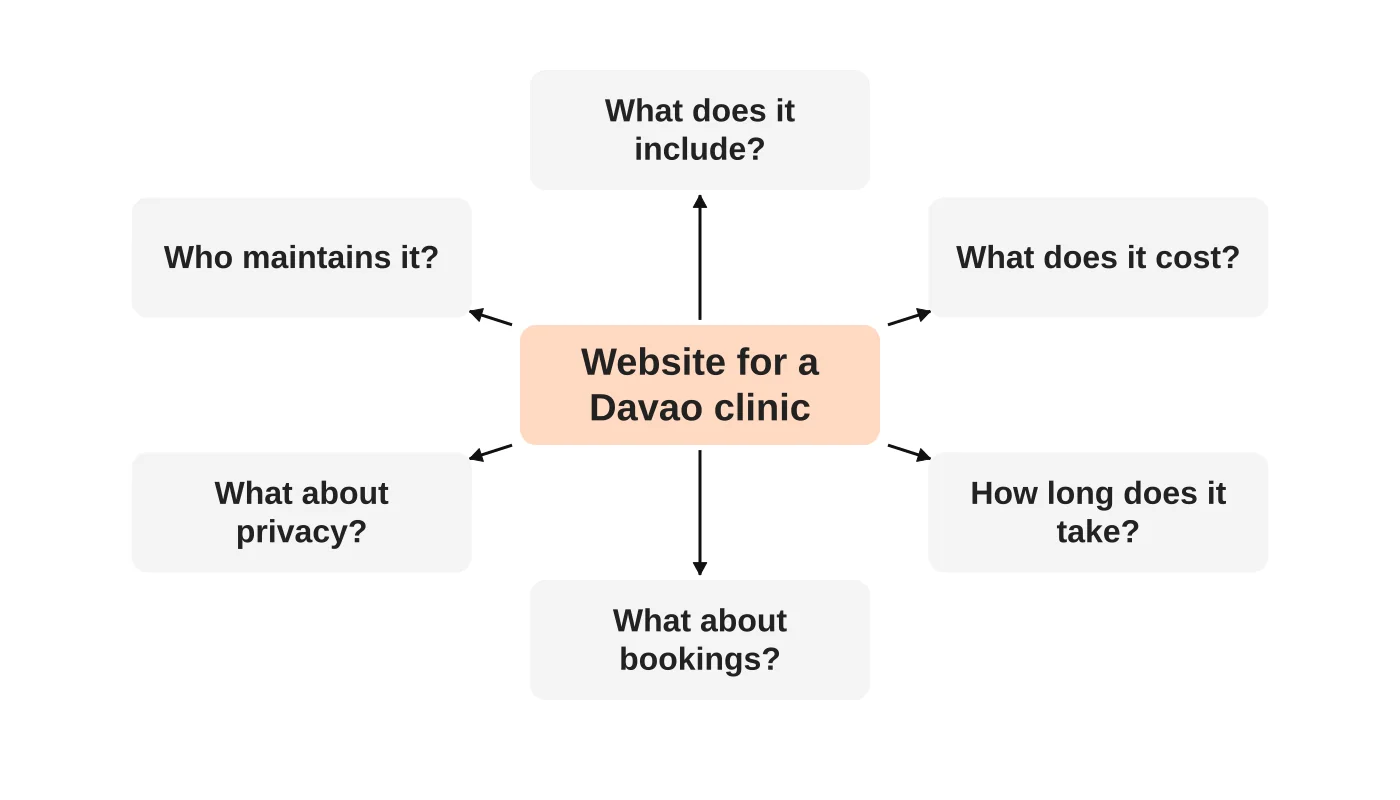
- Write the main question your customer asks: “Which website designer is right for my clinic?”
- List every follow-up a careful person would ask: cost, time, bookings, privacy, maintenance, results.
- Check which of these your site answers well. Mark the gaps.
- Add sections or pages to fill the gaps with real information.
- Link the pages together using descriptive anchor text.
You can find real questions in your own inbox, your sales calls and Search Console queries. Answer-first pages and real FAQs explains how to write them.
What not to do
- Do not publish dozens of near-identical pages targeting every variation. Google’s guide warns against mass-producing pages to manipulate AI responses.
- Do not invent facts to fill gaps. If you do not have a price, say how pricing works.
- Do not hide answers in images or PDFs only. Put key information in readable text.
How to see it in action
Try this once a month. Ask an AI search tool a long, specific question about your service as a customer would. Note which sources appear and which sub-topics the answer covers. The 30-minute audit gives a repeatable method. Remember that answers vary between tools, between runs and between locations, so treat one result as a sample.
Frequently asked questions
Can I see the sub-searches an AI ran?
Not in Google’s tools today. Bing Webmaster Tools shows the grounding queries behind citations for Copilot and Bing AI. See Bing AI Performance.
Do I need a page for every sub-question?
No. Cover the important ones well, on the right page, in plain language.
Does a longer page get more citations?
Google says there is no ideal page length. Be complete, not long.
Is this different from normal SEO?
It extends it. Topic coverage and internal links were already good practice.
From the Wired for Growth newsletter
This guide builds on Your AI Research Assistant That Cites Its Sources from Duarne Bernhagen’s LinkedIn newsletter, Wired for Growth.
Sources
- AI features and your website, Google Search Central
- Optimizing your website for generative AI features on Google Search, Google Search Central
Map your topic coverage
Web Design Davao’s SEO and content team can map the questions your customers ask and fill the gaps on your site. Ask for a content map.