
Quick answer
Roofing contractors generate qualified inspection enquiries by describing repair, replacement and maintenance separately, showing real project evidence with permission and making Request an inspection the main action. Ask for the roof type, concern and address area, state what the inspection includes, and route requests to a named person with a reply time you can meet.
- Tell customers not to climb onto their roofs, and ask only for photographs they can take safely from the ground.
- Use your own project photographs and genuine reviews, never stock or manufacturer images presented as your work.
- Record each enquiry’s status and follow-up owner, and send technical questions to a qualified roofer, not the office.
A homeowner with a roof problem is worried and often cannot judge the work being proposed. A building manager with a ageing roof is thinking about budget and disruption. A roofing website earns trust by being specific and honest, and by making an inspection easy to request. This guide covers the structure of a roofing website, the evidence that supports it and how to design the enquiry path. It makes no promise about rankings or bookings.
Web Design Davao is not a roofing provider. Statements about materials, methods, safety and warranties must come from, and be reviewed by, your own qualified people.
1. Explain repair, replacement and maintenance scope
Customers arrive with different questions, so describe each service separately.
- Repairs: leaks, damaged sections, flashing and gutters, for example, but only what you do.
- Replacement or re-roofing: what is involved, the stages and what the customer needs to decide.
- Maintenance and inspections: what an inspection covers and why customers book one.
- Commercial or larger roofs, if you serve them.
For each, say how you quote. Most roofing jobs need an inspection first, so say so and explain what it includes. Do not give instructions for roof work or encourage customers to climb on their roofs. A line such as “Please do not climb onto your roof. Request an inspection and we will assess it safely” is both honest and protective.
2. Show real project evidence
Roofing is hard for customers to judge, so evidence matters.
- Use your own project photographs, taken safely from the ground or with approved access, and with the owner’s permission.
- Write short project stories describing the problem, the agreed scope, the work and the result, without personal details. See a roofing project story template.
- Show genuine reviews written by customers. Never write or buy them.
- Do not use manufacturer or stock images as if they were your work.
Be careful with before-and-after claims. A photo shows what it shows; do not imply durability or performance that you cannot demonstrate.
3. Organise location and service pages
Customers look for a roofer who works in their area and does their kind of job. Create pages for services and areas you genuinely cover, and link them to approved examples without repeating the same text. Keep your Google listing, website and social pages consistent on name, phone, hours and service area. For planning pages by customer intent, see a roofing service-page content matrix.
4. Design inspection enquiry paths
The central action is “Request an inspection”. Design it so that a worried homeowner can complete it quickly on a phone.
- Ask for the roof type, the concern, the address area and photographs the customer can take safely from the ground.
- State what the inspection includes, whether it is free or charged, and when the customer will hear back.
- Provide a phone number for people who prefer to call.
- Route the request to a named person with a reply time you can meet.
State guarantee or warranty wording exactly as your business offers it, and have it reviewed.
5. Keep track of quotes after the inspection
Many roofing jobs are decided after the quote. Record each enquiry’s status, assign a follow-up owner and follow up a limited number of times. Technical questions go to a qualified roofer, not to the office. See a roofing quote pipeline for a simple tracker.
6. Measure enquiries and booked inspections
Count inspection requests, quotes sent and jobs accepted, by source if you can. Ask customers how they found you. After a few months, check which pages and channels bring the work you want, and adjust.
Roofing website conversion checklist
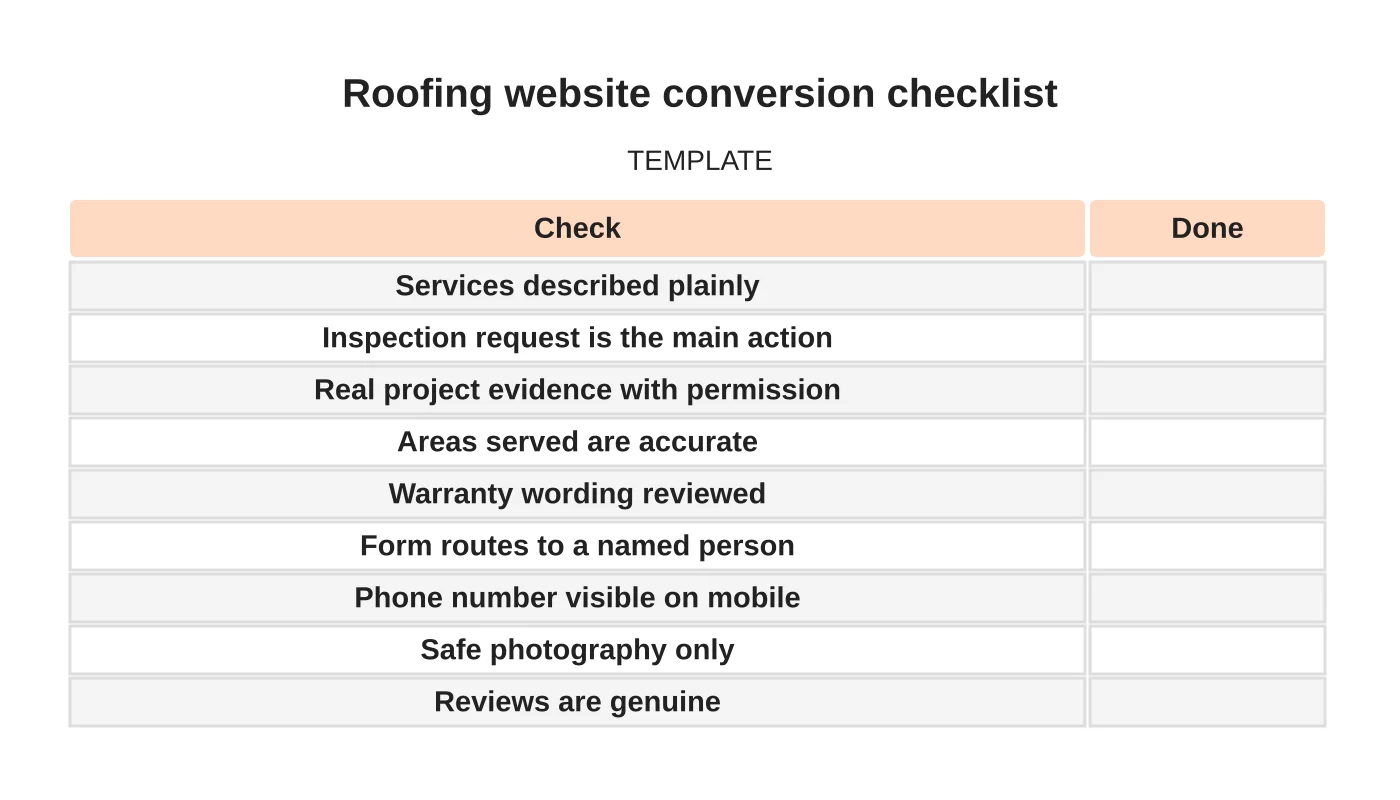
| Check | Done |
|---|---|
| Services described plainly | |
| Inspection request is the main action | |
| Real project evidence with permission | |
| Areas served are accurate | |
| Warranty wording reviewed | |
| Form routes to a named person | |
| Phone number visible on mobile | |
| Safe photography only | |
| Reviews are genuine |
Common mistakes
- Encouraging customers to inspect the roof themselves.
- Using stock or manufacturer photographs as your own work.
- Vague warranty claims.
- No clear inspection request.
- No follow-up after the quote.
Questions roofers ask
Do I need to publish prices? Roofing prices depend on the roof, so most contractors explain how they quote. State the approach and what affects the price.
How do I show quality? Through specific project stories, real photographs, genuine reviews and honest explanation of what you do.
Should I mention materials and brands? Only if you are authorised and a qualified person has reviewed the wording. Never imply endorsement.
Will a better website bring more jobs? It can make it easier for suitable customers to request an inspection. It cannot guarantee jobs, and outcomes depend on your area, season and reputation.
Next step
Request a website review or discuss the pages and enquiry workflow your business needs. Read about our web design service or contact us.
Frequently asked questions
Do roofing websites need to publish prices?
Roofing prices depend on the roof, so most contractors explain how they quote. State the approach and what affects the price. Most jobs need an inspection first, so say what the inspection includes and whether it is free or charged.
How can a roofer show quality online?
Through specific project stories, real photographs taken safely and with the owner’s permission, genuine reviews and an honest explanation of what you do. Do not use manufacturer or stock images as your own work.
Will a better website bring more jobs?
It can make it easier for suitable customers to request an inspection. It does not promise jobs, and outcomes depend on your area, season and reputation. Count inspection requests, quotes sent and jobs accepted to see what is working.
Sources and notes
Last updated 21 November 2026. This guide is general information based on Web Design Davao’s web design and digital marketing practice. It cites no statistics and makes no promise about rankings, enquiries or contracts. Web Design Davao is not licensed or certified in this industry, so check technical, safety, legal and regulatory matters with a suitably qualified professional. Examples are templates or illustrations, not client results.


