

Quick answer
International SEO means writing for the markets you actually serve, in the terms buyers there use, with a clear structure. Choose one or two supported markets, research buyer terminology, have a fluent reviewer check translations, avoid near-identical country pages and measure qualified enquiries by country and product rather than traffic alone.
- Rank markets by evidence such as past orders, enquiries and relationships, and start with one or two.
- Ask existing buyers and distributors how they name your products, and note differences in spelling, units and standards.
- Create a market page only when you have distinct, useful content, such as relevant products, terminology or buyer questions.
International SEO is not copying a page for every country. It means writing for the markets you serve, in the terms buyers use there, and keeping the structure clear. This guide covers planning: choosing markets, researching terminology, handling translation and avoiding thin country pages. It makes no ranking promise, and search platforms change their guidance, so check current official guidance before making technical changes such as language versions.
1. Choose actual served markets
List the markets where you have sold or can credibly supply, ranked by evidence: past orders, enquiries and relationships. Do not create content for markets you cannot serve. Start with one or two and add others when you can support them.
2. Research buyer terminology
Buyers in different countries may use different names for the same product, or search in different languages. Ask existing buyers how they describe your products. Look at how distributors and importers in the market name them. Note differences in spelling, units and standards. Build a short glossary and use the terms buyers use.
3. Plan translated content with qualified review
If you translate pages, have a fluent reviewer check product and trade terms for accuracy. Machine translation without review can produce embarrassing or misleading errors. Decide whether to translate the whole site or key pages, and keep translated pages updated when the original changes.
4. Avoid thin country-copy pages
Do not create near-identical pages for each country with only the name changed. Create a market page only when you have distinct, useful content for it, such as relevant products, terminology, shipping information as approved or buyer questions specific to that market.
5. Keep technical foundations simple
Use a clear structure, and check current official search guidance before adding language or regional versions. Keep contact details and company information consistent across versions.
6. Measure by qualified enquiries
Track enquiries by country, product and quality, and whether they became samples or orders. Use Search Console data where available, and do not assume demand from traffic alone. See the export business website guide and export product catalogues.
Related reading: Administrative Support for Export Enquiries and Buyer Documentation.
Market-language content worksheet
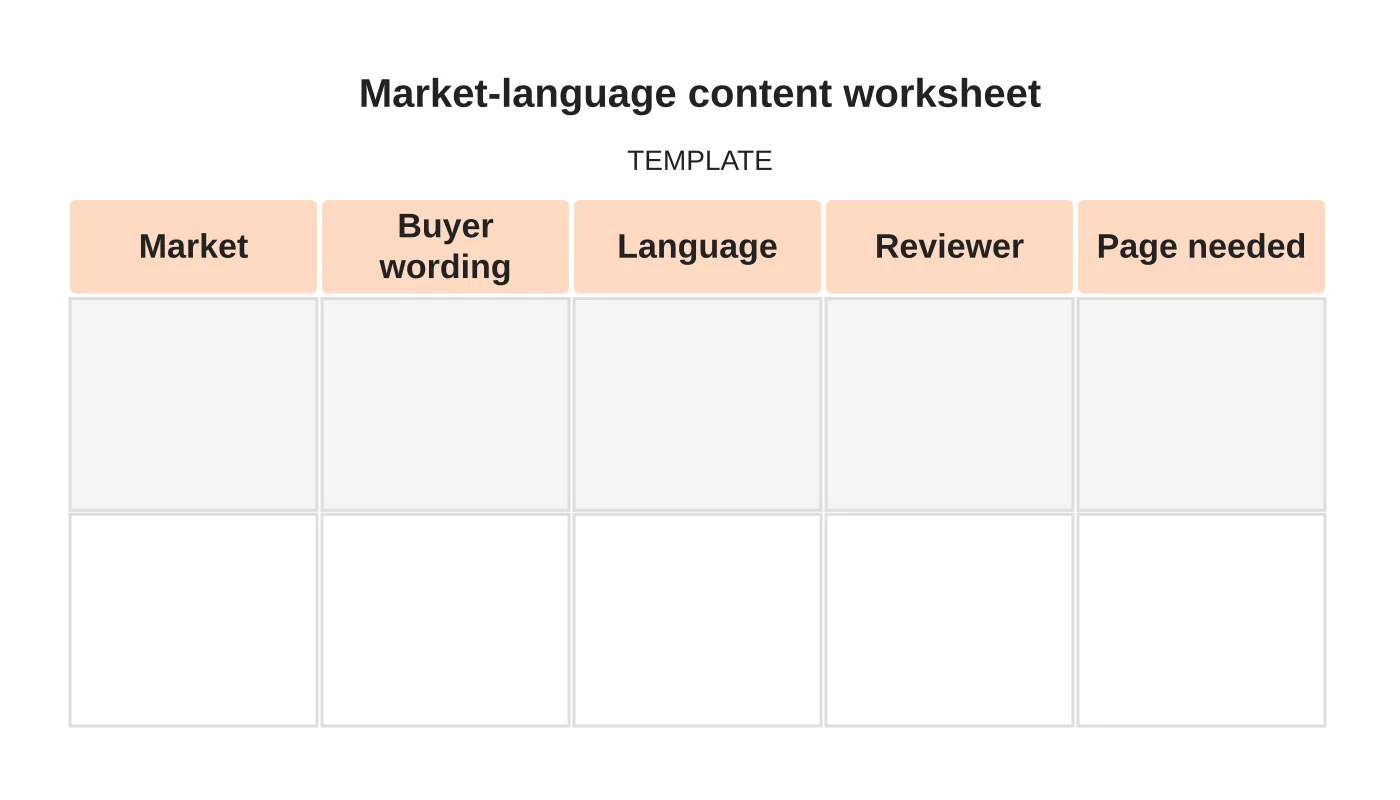
| Market | Buyer wording | Language | Reviewer | Page needed |
|---|---|---|---|---|
Common mistakes
- Pages for markets you cannot serve.
- Unreviewed machine translation.
- Near-identical country pages.
- Using your own product names only.
- Treating traffic as demand.
Questions exporters ask
Which language first? The language of your strongest existing markets, as shown by your own enquiries.
Do I need separate domains? Not necessarily. Seek technical review before choosing a structure.
Next step
Discuss your target customers, service area and lead-generation priorities with Web Design Davao. Read about our digital marketing service or contact us.
Frequently asked questions
Which language should an exporter translate into first?
Start with the language of your strongest existing markets, as shown by your own enquiries. Have a fluent reviewer check product and trade terms, because machine translation without review can produce embarrassing or misleading errors.
Do I need separate domains for each country?
Not necessarily. Seek technical review before choosing a structure, and check current official search guidance before adding language or regional versions. Keep contact details and company information consistent across all versions.
How do I avoid thin country pages?
Do not copy one page for every country with only the name changed. Create a market page only when you have distinct, useful content, such as relevant products, terminology, approved shipping information or buyer questions specific to that market.
Sources and notes
Last updated 21 November 2026. This guide is general information based on Web Design Davao’s web design and digital marketing practice. It cites no statistics and makes no promise about rankings, enquiries or contracts. Web Design Davao is not licensed or certified in this industry, so check technical, safety, legal and regulatory matters with a suitably qualified professional. Examples are templates or illustrations, not client results.