Quick answer
Offshore help desk escalation works when the technician knows when to stop. Define severity and priority separately, verify identity and permission before any account change, set plain escalation triggers including a time-based one, write handover notes that can be acted on, and keep the client relationship with the MSP.
- Severity describes impact; priority describes how soon you act, depending on contract, client and time. Train on written examples.
- Handover notes cover what happened, what was checked, what is unknown, who owns it now and the next client update.
- Run a drill with a fictional ticket, such as an out-of-hours outage, and fix where the handover broke.
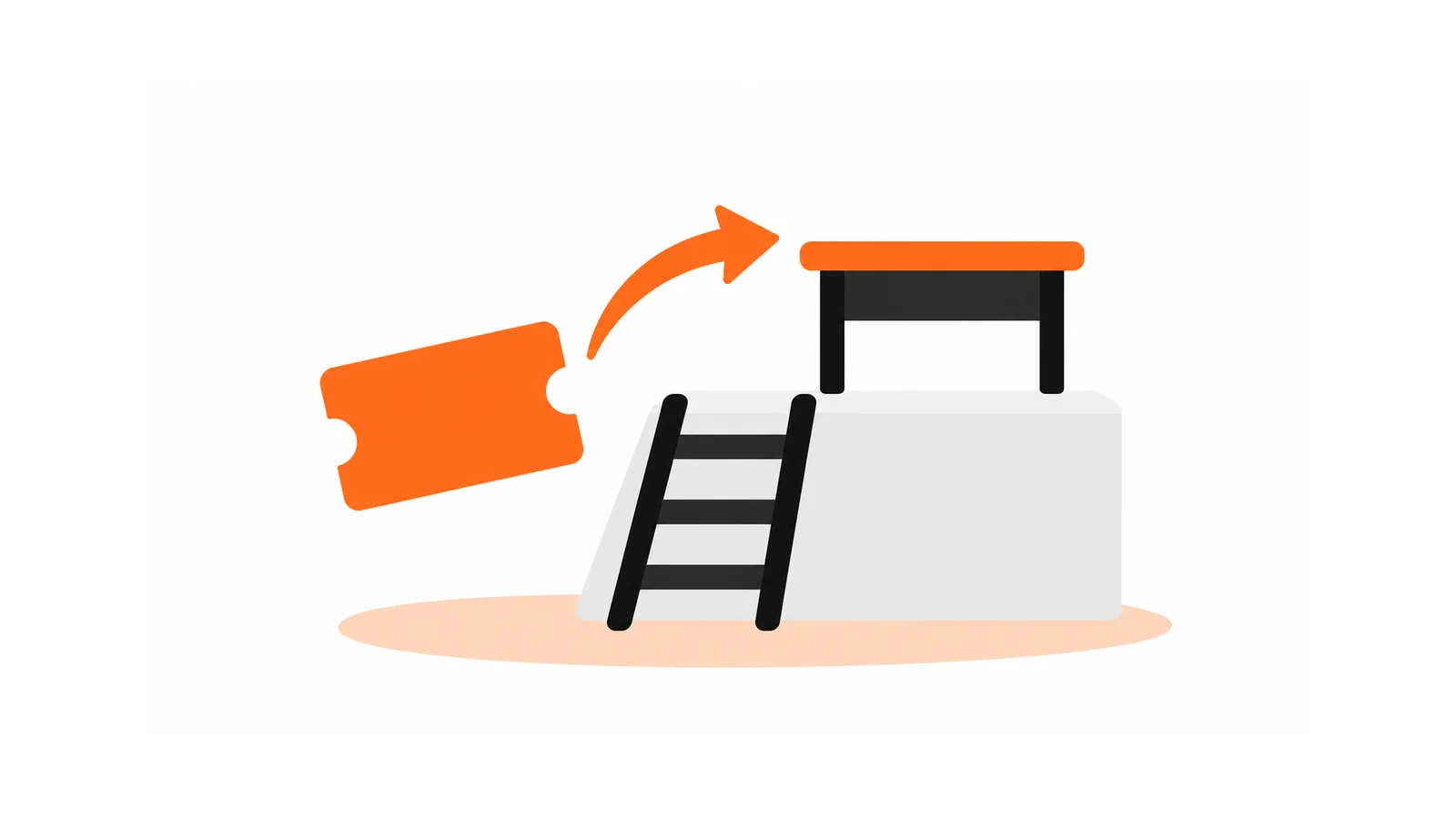
An offshore help desk helps most when it knows when to stop. The risk for an MSP is not that tickets are escalated, but that they are escalated late, without information or without anyone owning the client conversation.
This guide covers severity and priority, identity and permission checks, escalation triggers, handover notes and who may speak to the client. It extends the delegation matrix.
Severity and priority are different
Severity describes the impact: how many users and which business function are affected. Priority describes how soon you will act, which depends on severity and also on the contract, the client and the time. Write both definitions down and train on examples. Confusing them is why a minor fault for a key client gets ignored and a major one gets treated like routine.
Identity and permission checks come first
Before any account or access change, the technician verifies the requester using your procedure, and checks that the request is within permission. Where the procedure is not met, the technician does not act and escalates. This protects clients from social engineering. Record the check on the ticket. See assessing technicians on identity checks.
Escalation triggers
Define triggers in plain terms so no one has to guess:
- Suspected security incident or data exposure.
- Outage affecting several users or a critical system.
- Request outside the permitted actions.
- A fix needing change approval.
- A client asking for something outside contract scope.
- The technician is unsure after a defined effort or time.
Give a time-based trigger too, so tickets do not stall. Escalate early when unsure. A good escalation is a sign of good judgement.
Write handover notes that can be acted on
A handover note answers: what happened, what was checked, what was done, what is unknown, who owns it now and when the next client update is due. The receiving engineer should not need to ask the same questions again.
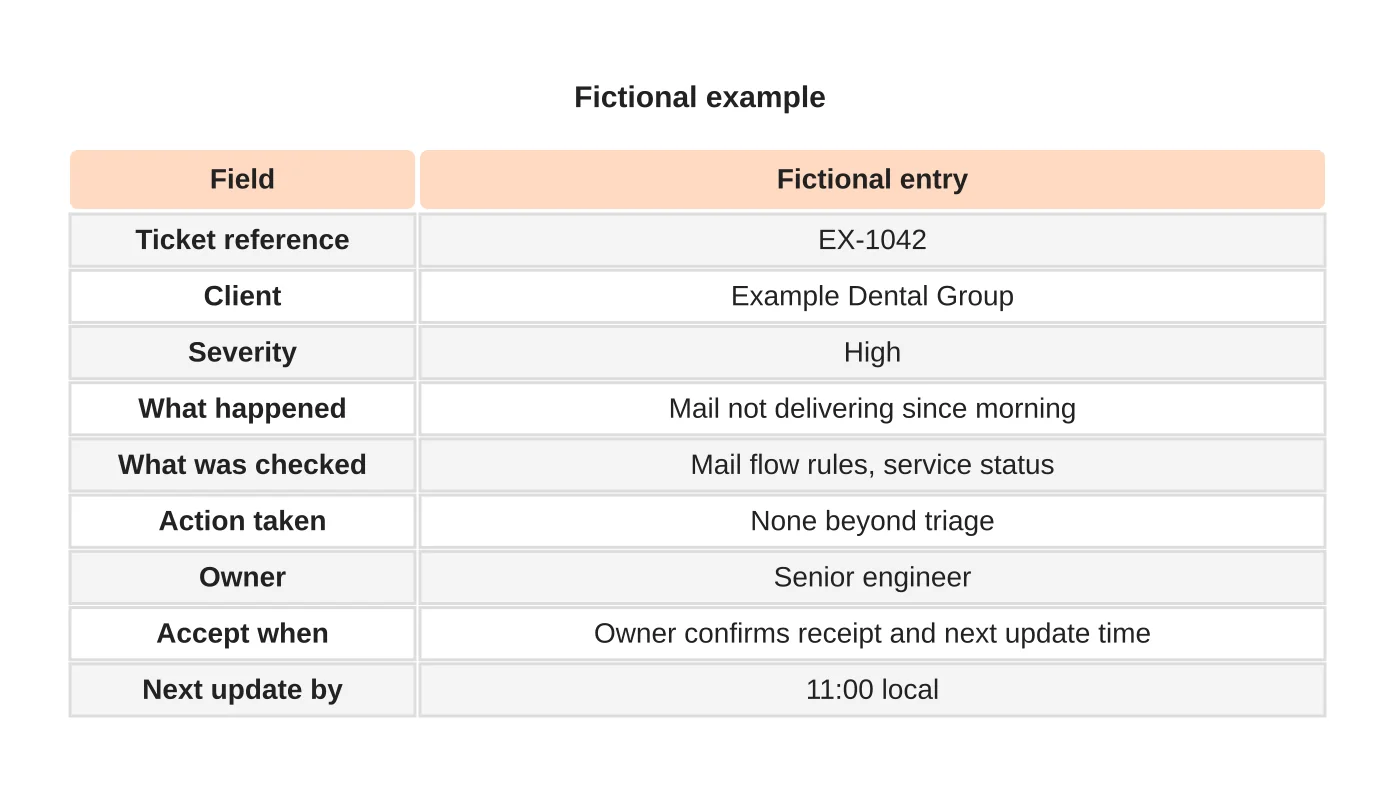
Define acceptance: the engineer confirms receipt and the next step. Until then, the technician still owns the ticket. This prevents tickets being “escalated” into a void.
Decide who speaks to the client
Make it explicit what the offshore technician may tell clients: routine updates, status, next steps. What needs a senior voice: apportioning blame, commercial matters, incident explanations and anything about contract scope. Give scripts for holding messages. The MSP keeps the client relationship and the accountable contact. See client communication rules for virtual assistants for a related authority matrix.
Test the process
Run a drill with a fictional ticket: out-of-hours outage, suspicious email, access request from an unverified person. See where the handover broke. Fix the procedure. Review escalations monthly with the team; see measuring offshore service desk performance.
Related reading: Dedicated Offshore Technicians vs an Outsourced Help Desk Service.
Time zones and coverage
Escalation depends on who is awake and available. Agree who covers which hours and what happens when the escalation owner is unavailable. See planning extended support hours.
Frequently asked questions
When should an offshore technician escalate a ticket?
Triggers include a suspected security incident, an outage affecting several users or a critical system, a request outside permitted actions, a fix needing change approval, an out-of-scope client request, or the technician being unsure after a defined effort or time. Escalate early when unsure.
What is the difference between severity and priority?
Severity describes the impact, meaning how many users and which business function are affected. Priority describes how soon you will act, which depends on severity and also on the contract, the client and the time. Confusing them is why a minor fault for a key client gets ignored.
Who should speak to the client about an escalated issue?
Routine updates, status and next steps can come from the technician. Blame, commercial matters, incident explanations and anything about contract scope need a senior voice. The MSP keeps the client relationship and the accountable contact, and holding-message scripts help.
Sources
Talk through the role
Send us your ticket categories, tool stack, required hours and escalation structure so we can discuss the role. Learn about our outsourced staffing service or get in touch.
Related guide: Designing Shift Handover Notes for an MSP Supporting Multiple Time Zones