

Quick answer
Enterprise-grade means little without detail. Hardware has capabilities, but protection comes from how it is configured, who looks after it and how that is checked. Ask what is switched on, who verified it and when, how networks are separated, who administers it, who applies updates, and what dated evidence exists.
- Ask whether staff devices, guest access and building systems are separated, how that is enforced and who can change it.
- Ask who applies firmware updates, how quickly security fixes go on, what is monitored and who sees alerts.
- Request a dated configuration check summary, update record and incident process; be wary of broad claims without documents.
“Enterprise-grade” is a phrase on a lot of data sheets. For a client assessing an offshore staffing office, it means very little without detail. Hardware has capabilities. Protection comes from how it is set up, who looks after it and how that is checked.
Our office uses enterprise-grade networking equipment. This article explains what that should mean and what a buyer should ask.
Capability is not protection
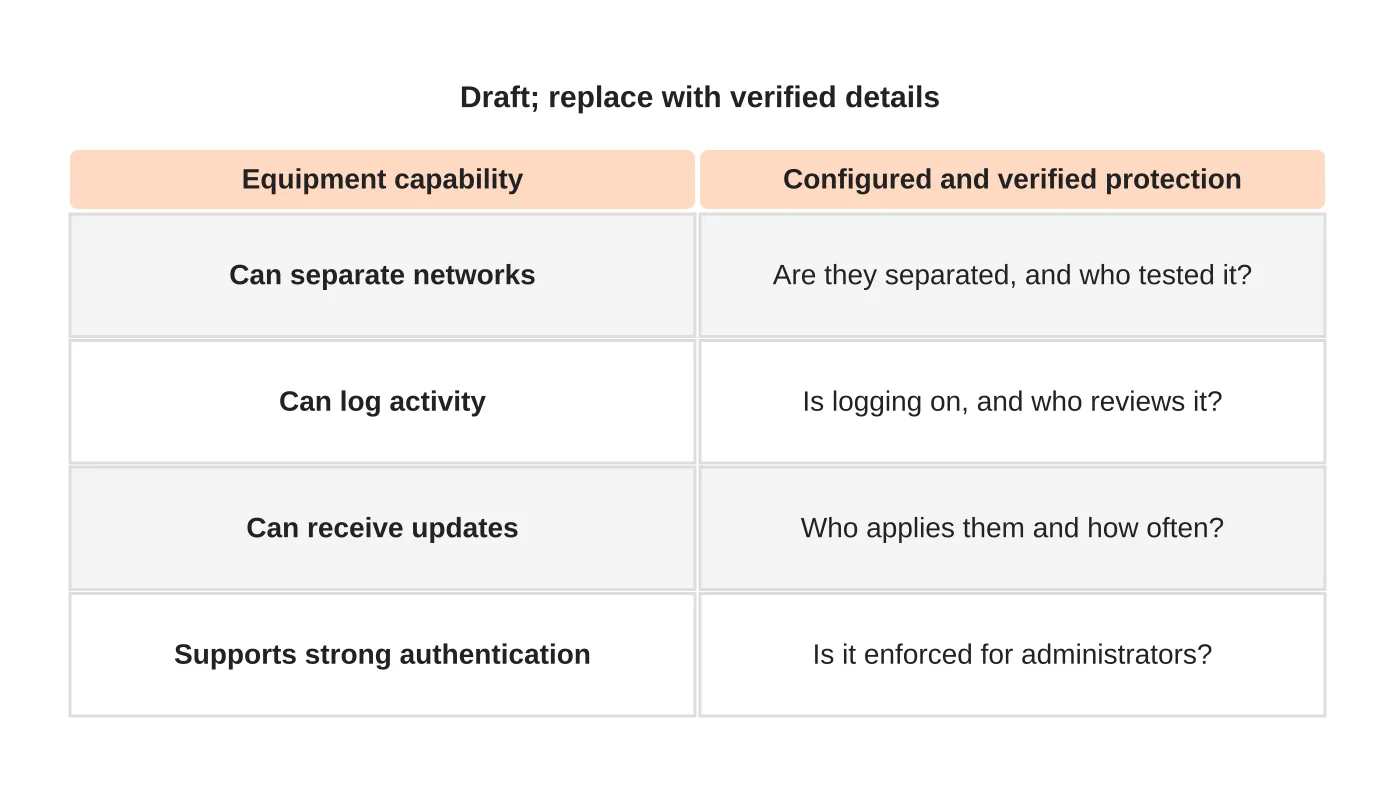
A device that can separate networks does not do so until someone configures it. A device that can log activity helps only if logging is enabled, retained and reviewed. Treat the brand as a starting point. Ask what is switched on, who verified it and when.
Network separation and administration
Good practice usually separates systems of different trust, such as staff work devices, guest access and building systems. Ask whether this applies, how it is enforced and who can change it. Ask who administers the network: a named role, with strong authentication, and what happens when that person leaves. Do not ask for diagrams to be published or sent casually. A controlled review under confidentiality is more appropriate.
Firmware and monitoring responsibilities
Equipment needs updates, and unattended devices become a weakness. Ask who is responsible for applying updates, how quickly security fixes are applied and how the team learns about vulnerabilities. Ask what is monitored, who sees alerts and what they do about them.
Assurance evidence
Useful evidence includes a dated summary of configuration checks, a record of recent updates, the incident process and a statement of what is and is not covered. Be wary of broad claims with no document. A certification, if one exists, should be shown with scope and date. Not holding one is not a failing in itself, but claiming one without it would be. This is general information, not legal advice. Check your situation with a qualified adviser.
Where networking fits in the whole
The office network is one layer. Controls on your own systems, such as least-privilege accounts, remain the primary protection. See combining office access controls with client system permissions. For the office overview, see inside our Davao staffing office, and for connectivity, redundant connectivity.
Frequently asked questions
What does enterprise-grade networking actually mean?
On its own, very little. A device that can separate networks or log activity only does so once someone configures it, enables it and reviews it. Treat the brand as a starting point and ask what is switched on, who verified it and when.
What evidence should a client ask an offshore office for?
Useful evidence includes a dated summary of configuration checks, a record of recent updates, the incident process and a statement of what is and is not covered. A certification, if one exists, should be shown with scope and date. Be wary of broad claims with no document.
Should an office publish its network diagrams?
No, diagrams should not be published or sent casually. A controlled review under confidentiality is more appropriate. Also ask who administers the network, which should be a named role with strong authentication, and what happens when that person leaves.
Sources
Request a discussion
Request a discussion of our office arrangements and the evidence relevant to your staffing requirements. Learn about our outsourced staffing service or get in touch.