
Quick answer
Secure offshore working needs physical and system controls together. Controlled entry and CCTV protect the building, but they do not stop a legitimate user with too much access. Combine them with least-privilege named accounts, approved devices, a full account lifecycle, agreed incident handling and clear accountability on both sides.
- Remove accounts the same day someone leaves, and reconcile the list of accounts with the list of people regularly.
- Agree in advance what counts as an incident, how it is reported, who tells the client and how quickly.
- Ask which controls are enforced technically and which are policy only, and what recent evidence is available.
A secure office is not the same as a secure engagement. Controlled entry and CCTV protect a building. They do not stop a legitimate user with too much access from doing damage. Real protection comes from combining physical measures with permissions on the systems the team uses.
This article explains how the layers fit together.
What controlled entry and CCTV are for
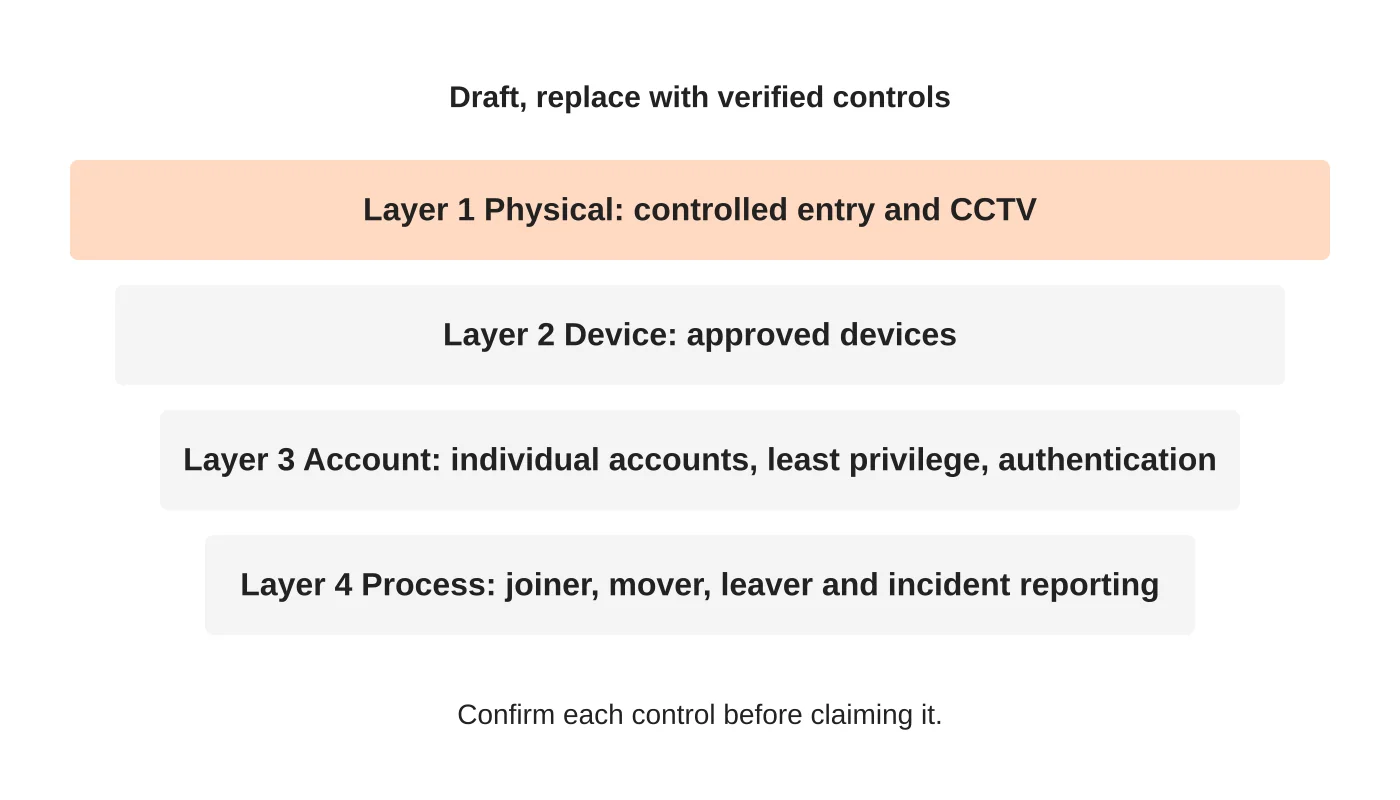
Entry control limits who is in the working area. CCTV records activity in covered places to deter misconduct and support review. They address physical risks such as unauthorised visitors, device theft and shoulder surfing. They do not address account misuse, malware or a customer’s weak passwords. See inside our Davao staffing office for what each does and does not show.
Least privilege and approved devices
On the client side, give each person the minimum access for their role, in individual named accounts you control. Decide which devices may be used and how they are managed. Block copying data to personal devices and services. For accountants, see secure access to client records. For MSPs, see onboarding into PSA and RMM tools.
Account lifecycle
Control the whole lifecycle: creation with approval, review when roles change and removal the same day someone leaves. Record each step. Reconcile the list of accounts with the list of people regularly. A forgotten account is a common weakness.
Incidents and accountability
Agree in advance what counts as an incident, how it is reported, who tells the client and how quickly. Define who is accountable for which control, on both sides. A shared responsibility table prevents gaps. Test the process with an exercise. Keep records. This is general information, not legal advice. Check your situation with a qualified adviser.
What buyers should ask
- How do physical and system controls link? For example, does leaving the building end access?
- Which controls are enforced technically and which are policy only?
- What evidence is available and how recent is it?
- What do you expect us to control on our side?
The full list is in an offshore staffing provider due-diligence checklist. For network matters, see what to ask about enterprise-grade networking. For a general role-based approach, see a role-based access checklist.
Frequently asked questions
What are controlled entry and CCTV actually for?
Entry control limits who is in the working area, and CCTV records activity in covered places to deter misconduct and support review. They address physical risks such as unauthorised visitors, device theft and shoulder surfing, but not account misuse, malware or a customer’s weak passwords.
What is least privilege and why does it matter for offshore teams?
Least privilege means giving each person the minimum access their role needs, in individual named accounts you control. It matters because a legitimate user with too much access can do damage that building security cannot prevent. Also decide which devices may be used and block copying data to personal devices.
What should buyers ask an offshore provider about security?
Ask how physical and system controls link, for example whether leaving the building ends access. Ask which controls are enforced technically and which are policy only, what evidence is available and how recent it is, and what you are expected to control on your own side.
Sources
- Essential Eight, Australian Cyber Security Centre
- Data Privacy Act of 2012, National Privacy Commission (Philippines)
Request a discussion
Request a discussion of our office arrangements and the evidence relevant to your staffing requirements. Learn about our outsourced staffing service or get in touch.


