

Quick answer
Test a virtual assistant candidate with a short, paid work sample that reflects real work. Use fictional materials and synthetic data, state the task, time allowed, deliverable and scoring in a written brief, score every candidate on the same criteria, review judgement and communication as well as completion, and give each candidate feedback.
- Do not use applicants to complete real client work, and never share real customer data or credentials.
- Build in a small gap or ambiguity to see whether the candidate asks sensible questions.
- Define strong, acceptable and weak results beforehand, and have two reviewers score separately where possible.
A good interview does not show how someone works. A work sample does, if it is fair. The risk is turning candidates into unpaid labour or testing skills the role does not need. This guide shows how to design a short, paid, representative sample that tells you about judgement and communication.
It is practical guidance, not legal advice. Employment and contractor rules differ by arrangement and country. This is general information, not legal advice. Check your situation with a qualified adviser. See before you hire a virtual assistant and AI skills a modern virtual assistant needs.
Step 1: choose representative work
Pick one or two tasks that reflect real work: sorting an inbox, drafting a reply, updating a spreadsheet, scheduling a meeting. Keep it short enough that you could pay a fair amount for the time, and do not use applicants to complete real client work. Avoid trick questions. Test what the person will actually do.
Step 2: use synthetic data
Create fictional materials: a made-up business, invented customer emails and sample files. Do not share real customer data, credentials or confidential plans. If the task needs tools, give limited test accounts that you can close afterwards.
Step 3: write the brief and pay for the time
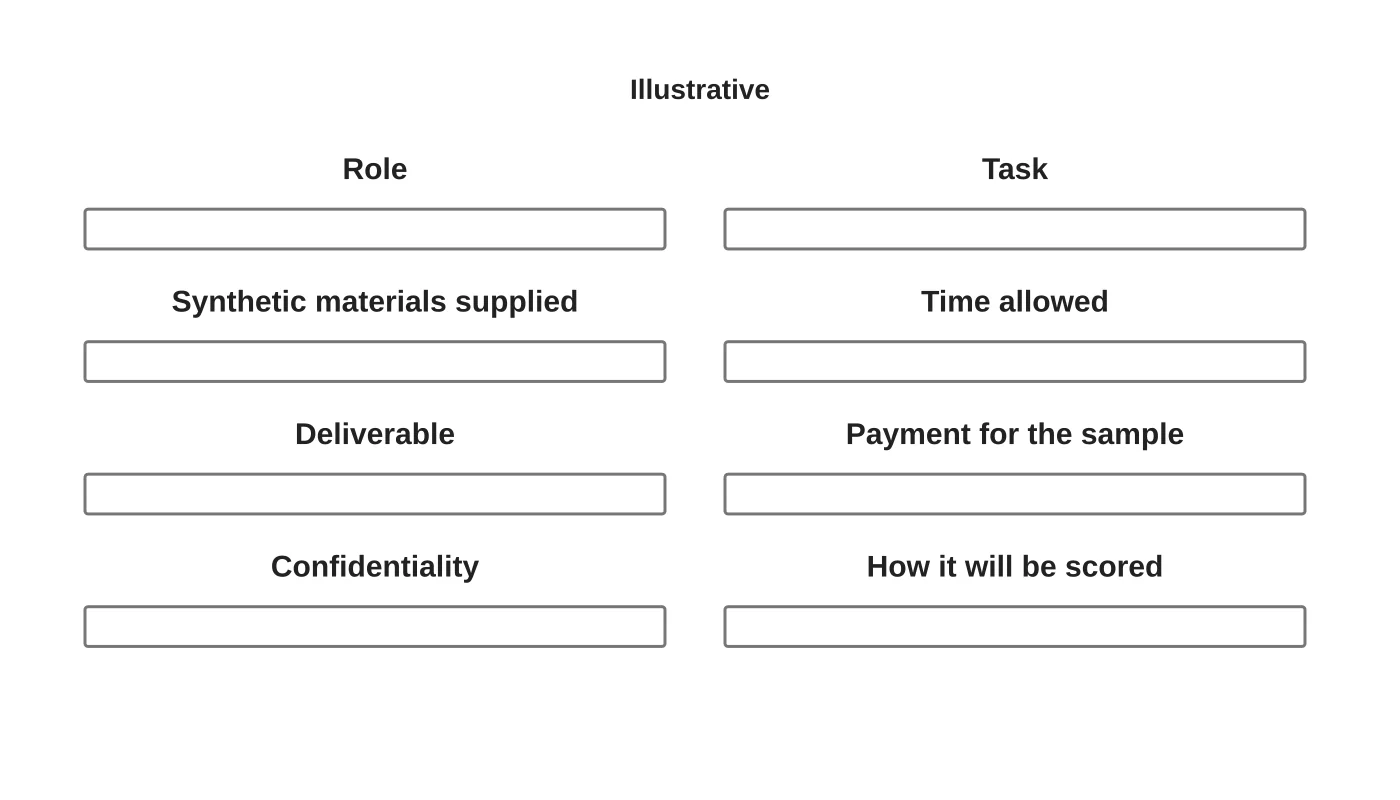
State the task, the time allowed, the deliverable and how it will be scored. Say that the sample is paid and agree the rate before they start. Say what happens to the work: it is not used for your business. Keep instructions realistic, with a small gap or ambiguity so you can see whether the candidate asks sensible questions.
Step 4: define the scoring
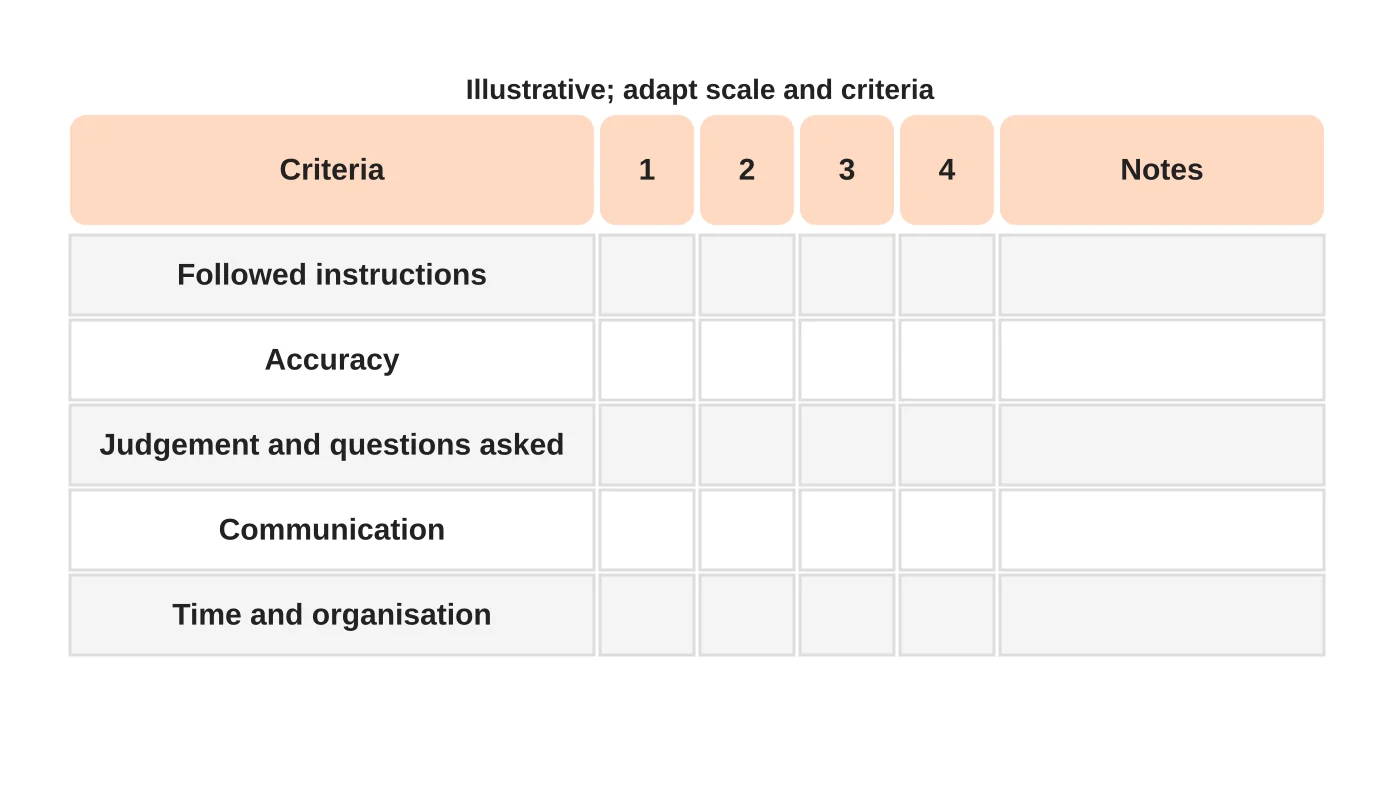
Use the same criteria for every candidate: following instructions, accuracy, judgement, communication and organisation. Define what a strong, acceptable and weak result looks like before reviewing. Have two reviewers score separately where possible, then compare. Do not score on accent or style that does not affect the work.
Step 5: review judgement and communication
Look beyond whether the task is complete. Did they flag the unclear part? Did they report what they did and did not finish? Did they handle sensitive information carefully? A candidate who asks a good question or admits a limit may be more valuable than one who guesses.
Step 6: give feedback and decide
Tell every candidate the outcome. Share brief, honest feedback if possible. Record your decision and the evidence. Use the result alongside references and an interview, not on its own. Plan the next step with a 30-day onboarding plan and set performance measures using a KPI scorecard.
Frequently asked questions
How long should a sample be?
Short enough to be fair, long enough to show how the person works.
Should I pay everyone?
Paying for time is fairer and gives you better candidates.
Can I reuse the sample?
Yes, with fresh synthetic data each time.
What about candidates with different tools?
Define what you require and offer a way to complete it.
Sources
Plan your hiring approach
Web Design Davao’s outsourced staffing team can discuss how a candidate evaluation could work for your role. Get in touch.


