Quick answer
A good headline is clear, specific, relevant and honest. It promises something useful and filters for the right reader, so it should say who the page is for or what result they get. Put the main phrase near the start, keep search titles around 60 characters, and make the first sentence stand alone.
- Replace generic headings like ‘Welcome’ or ‘Our services’ with the question or result a customer cares about.
- Open with the problem in the reader’s words, the answer, a specific scene or a checkable promise.
- Avoid opening with a dictionary definition, a long history or lines like ‘We are excited to announce’.
Every page you publish has about a second to say “this is for you”. A visitor decides from the headline and the first line whether to read on, call or leave. Weak openings waste good pages.
Stop the Scroll: The Bold Strategy That Gets You Noticed in a Noisy World makes the case for standing out in a noisy feed. This guide applies the idea to your website, your blog posts and your social posts, without clickbait.
What a headline has to do
A headline is a promise and a filter. It promises something useful, and it filters for the right reader. If it tries to please everyone, it speaks to no one. A tradesperson in Davao does not need “Welcome to our website”. They need “Same-day aircon repair in Davao City”.
Two other jobs matter on the web. In search results, your title is what people compare. On the page itself, your headline must confirm they are in the right place.
Four tests for a headline
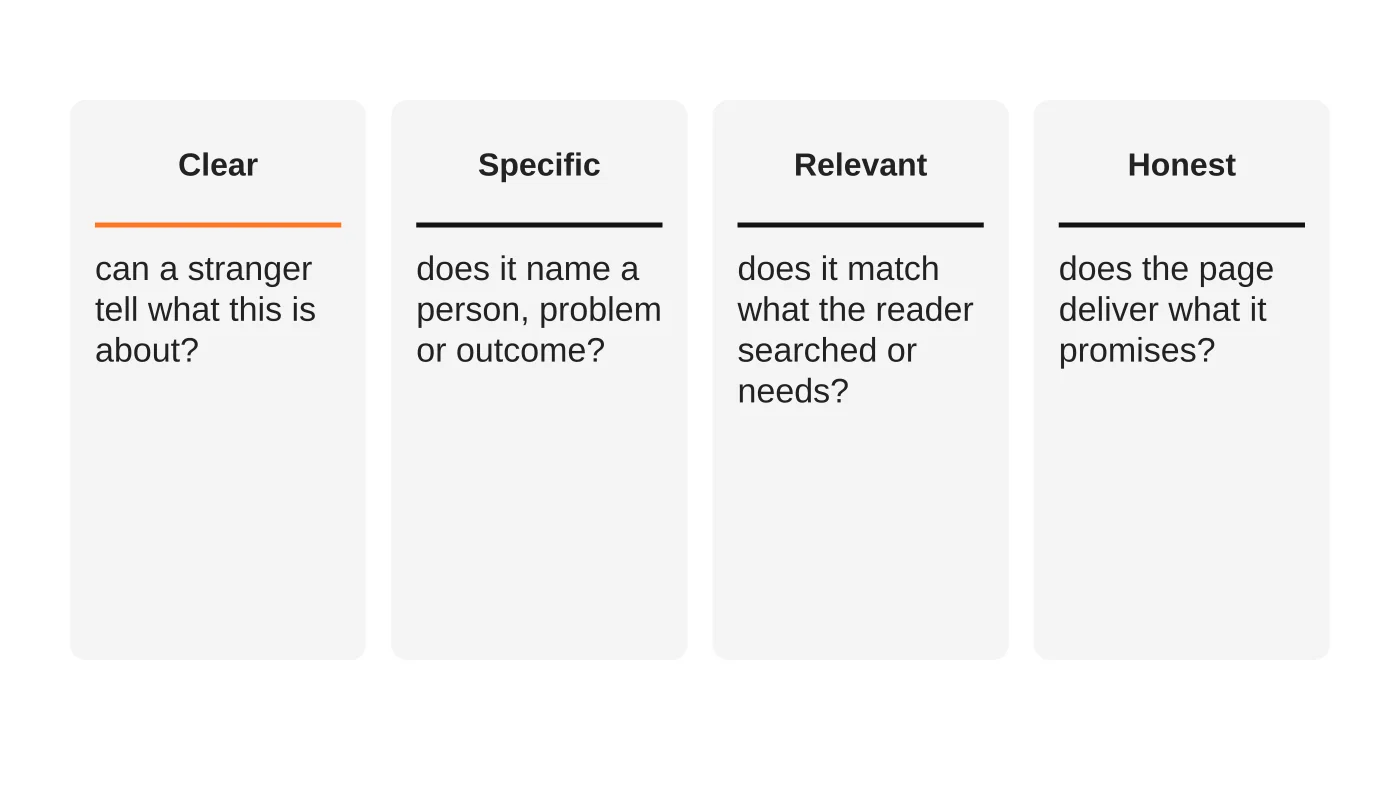
- Clear. If someone saw only the headline, could they say what it is about?
- Specific. A named person, problem, place or outcome beats a general claim.
- Relevant. It should match what the reader searched or needs. See how to use keywords.
- Honest. The page must deliver. Exaggeration brings clicks and returns visitors immediately, which hurts you.
Formulas that work without gimmicks
- Outcome for a person: “Book more repeat clients for your Davao salon”.
- Problem and fix: “Why your contact form emails go to spam, and how to fix it”.
- Number and promise: “Seven checks before you launch a new website”.
- Question the reader is asking: “How long does SEO take for a Davao business?”
- Plain how-to: “How to write a briefing note for a virtual assistant”.
Choose the one that fits the content. Do not force a number or a question onto every post.
Rewrites
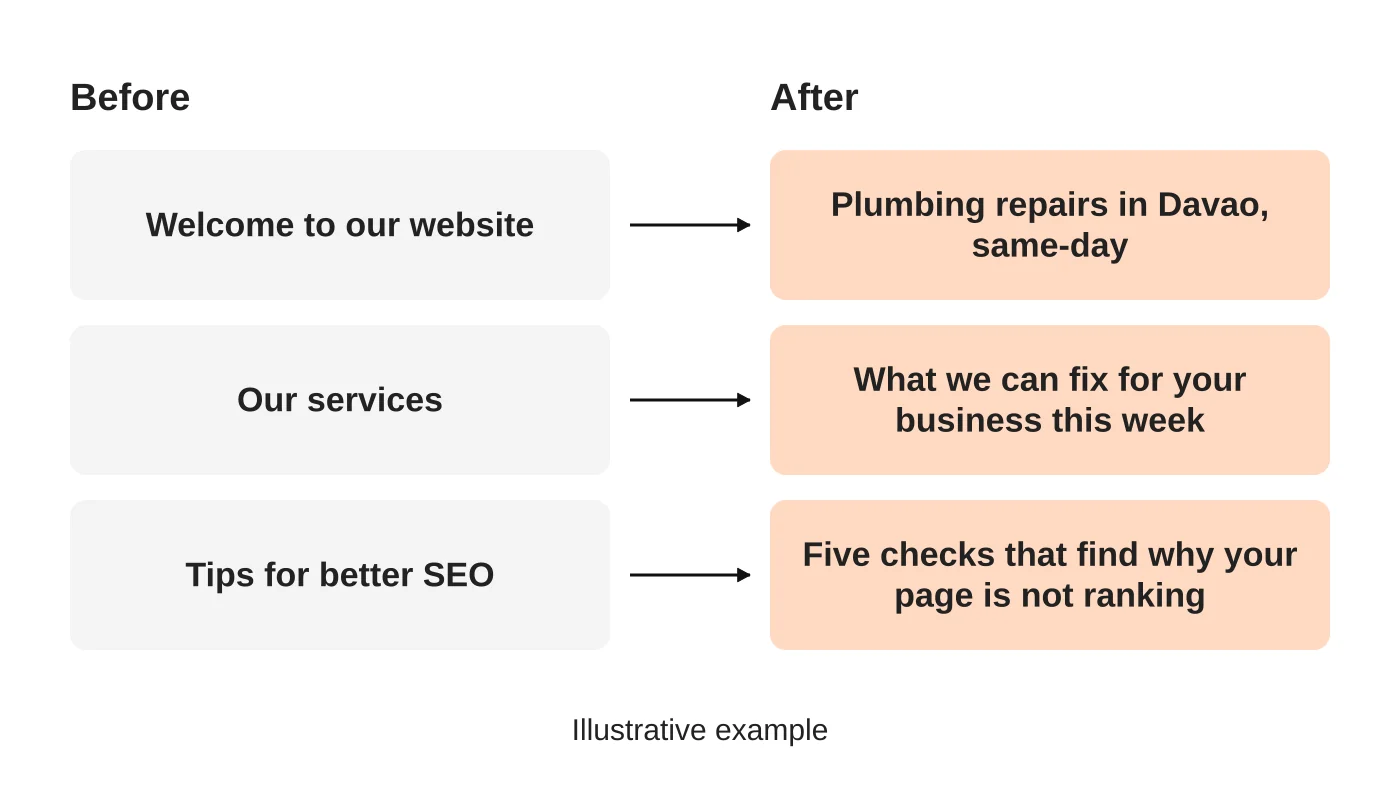
Look at your own site’s top ten pages. How many say “Welcome”, “Our services” or “Home”? Replace each with the question or result a customer cares about. Keep your main search phrase in the title and near the start, but write it for a person.
The opening lines matter as much
The first two sentences decide whether the reader continues. Good openings do one of four things:
- State the problem in the reader’s words.
- Give the answer straight away. This helps readers and also suits search engines and AI assistants that pull direct answers. See AEO and GEO for small business.
- Show you understand the situation with a short, specific scene.
- Make a clear, checkable promise about what the page will cover.
Avoid starting with a dictionary definition, a long history or a general statement about “in today’s fast-paced world”.
Headlines for different places
- Home page: say what you do, for whom and where, in one line. Add one clear next step.
- Service pages: name the service and the outcome. See why website copy attracts the wrong customers for choosing the right audience.
- Blog posts: answer a real question. Put the main phrase in the title and a clear promise in the first paragraph.
- Social posts: the first line is your headline. Lead with the idea, not with “We are excited to announce”.
- Email subject lines: short, honest and specific. See the free subject line tool on our tools page.
A quick checklist before you publish
- [ ] The headline passes the four tests.
- [ ] The main phrase appears naturally in the title.
- [ ] The first sentence stands alone.
- [ ] The page keeps its promise within the first screen.
- [ ] One clear next step is visible without scrolling.
- [ ] The title is under about 60 characters if it will show in search results.
Then measure. See social media metrics that matter and turning analytics into decisions to learn which headlines work for your audience.
Frequently asked questions
Is clickbait ever fine?
It can raise clicks, but it lowers trust and increases quick exits. For a business that sells on trust, it rarely pays.
How long should a headline be?
Long enough to be specific, short enough to scan. For search titles, around 60 characters avoids truncation.
Should I test headlines?
Yes, when you have enough traffic. For smaller sites, compare similar posts and watch which earns more clicks and enquiries.
Do I need to use my keyword exactly?
Use your main phrase naturally. Do not stuff it.
What about AI tools for headlines?
They help generate options. A person should pick one and check it is honest and specific. See using AI as a marketing assistant.
From the Wired for Growth newsletter
This guide builds on Stop the Scroll: The Bold Strategy That Gets You Noticed in a Noisy World from Duarne Bernhagen’s LinkedIn newsletter, Wired for Growth.
Get your key pages rewritten
Web Design Davao’s content and copywriting team can rewrite your headlines and page openings. Ask about a copy review.