

Quick answer
For a small business, the social media numbers that matter are those closest to revenue: leads such as enquiries, calls, messages and bookings, and customers traced back to social. Reach and engagement, especially saves, shares and replies, help as signals. Follower counts are background only, because they are easy to inflate and do not show intent.
- Use a unique tracking link for each channel and campaign, and ask new customers how they heard about you.
- Match the metric to your goal: reach for awareness, saves and shares for consideration, enquiries for sales.
- Keep a one-page monthly report covering what you posted, enquiries from social, the strongest post and one thing to try.
A large following feels good. It is also easy to buy, easy to inflate and weakly linked to revenue. Why Follower Counts Don’t Matter — And What Actually Does argues that follower counts do not matter and that something else does. For a small business, that something else is whether social media produces enquiries, bookings and sales.
This guide shows which numbers to watch, which to treat with care and how to build a simple monthly report you will read.
Why follower counts mislead
- They count people who followed once, not people who are interested now.
- They are not the same as reach. Most posts are seen by a fraction of followers, and some by non-followers.
- They can be bought. Large numbers with little engagement are common.
- They do not show intent. A thousand followers outside your service area are worth less than fifty nearby prospects.
Do not ignore follower counts completely. Treat them as background, and put your effort into the numbers that sit closer to money.
From vanity to value
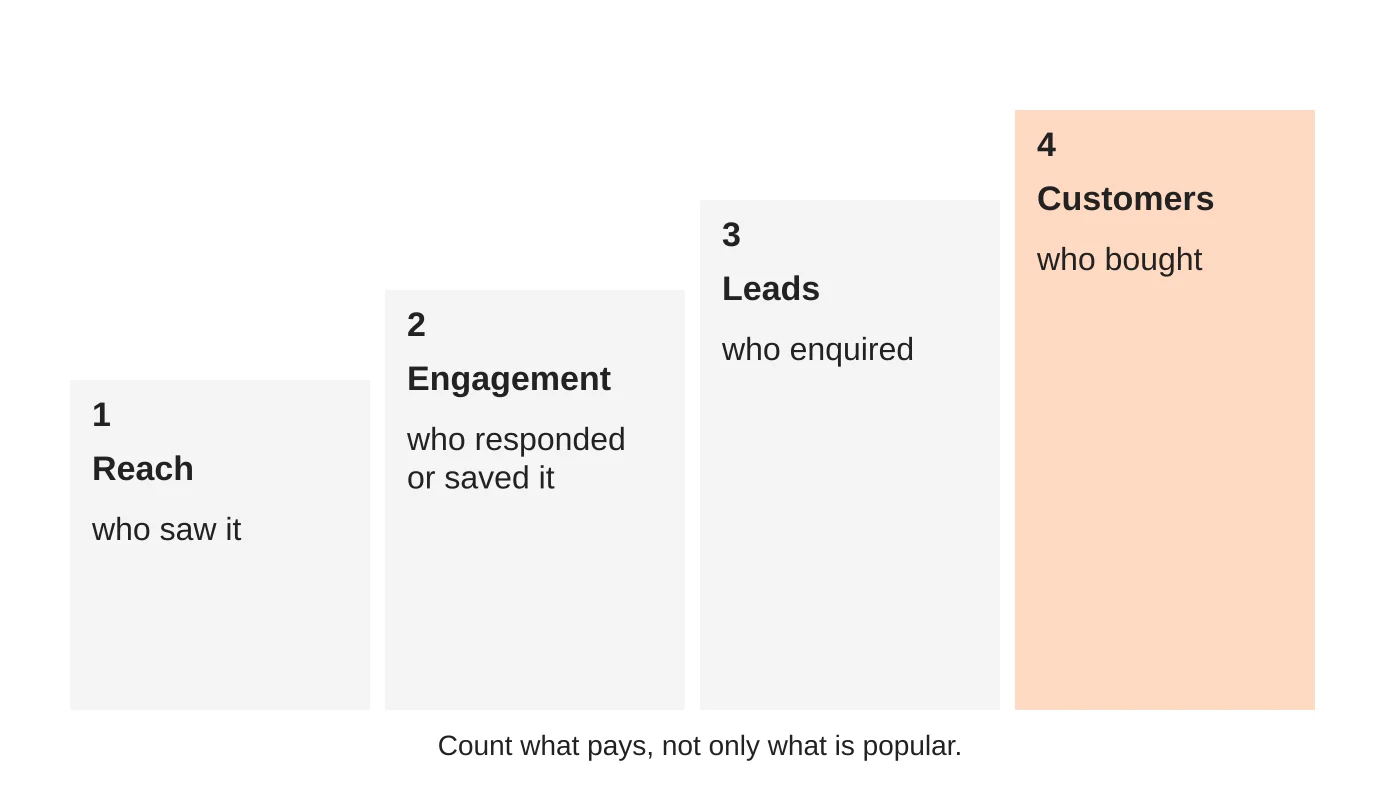
Think of metrics as a ladder. The higher the rung, the closer it is to revenue, and the harder it is to measure.
Reach
How many different people saw your content. Useful for checking whether your posts are being shown at all. Watch the trend, not a single post.
Engagement
Saves, shares, comments and replies show that content mattered. Saves and shares are stronger signals than likes. Replies and direct messages are stronger still, because they start conversations.
Leads
Enquiries, calls, messages, bookings and sign-ups that start on social media. This is the number that matters most to a small business. Set up ways to see it, such as a dedicated link for each channel, a short form question (“How did you hear about us?”) and a note when a message arrives from a social platform.
Customers
Sales and repeat business traced back to social. For many small businesses this is a rough record kept by hand. That is fine. A weekly note is better than no record.
Related reading: How to Use Emojis Effectively on Social Media.
What to track each month
- Posts published and which formats.
- Reach and saves or shares for your top five posts.
- Profile and link clicks. These show interest in you, not only the post.
- Messages and comments that are real enquiries.
- Enquiries and sales you can trace to social.
- Cost per lead, if you boost posts or run ads.
Add a short note: what do you think worked and why? Interpretation matters more than the data.
Messages are often leads, so learn how to turn social media messages into tracked enquiries.
Tag your links so you can see results
Use a unique tracking link for each channel and campaign so your website analytics can show which post brought a visit and an enquiry. Use consistent labels. See turning analytics into decisions for the basics.
Match your goal to your metric
- Awareness goal: reach, new profile visits and branded searches.
- Consideration goal: saves, shares, link clicks and email sign-ups.
- Sales goal: enquiries, bookings, orders and cost per lead.
- Reputation goal: reviews, mentions and the tone of replies. For local businesses, Google reviews often matter more than social followers.
If you do not know your goal, you cannot pick a metric. Decide it first.
A one-page monthly report
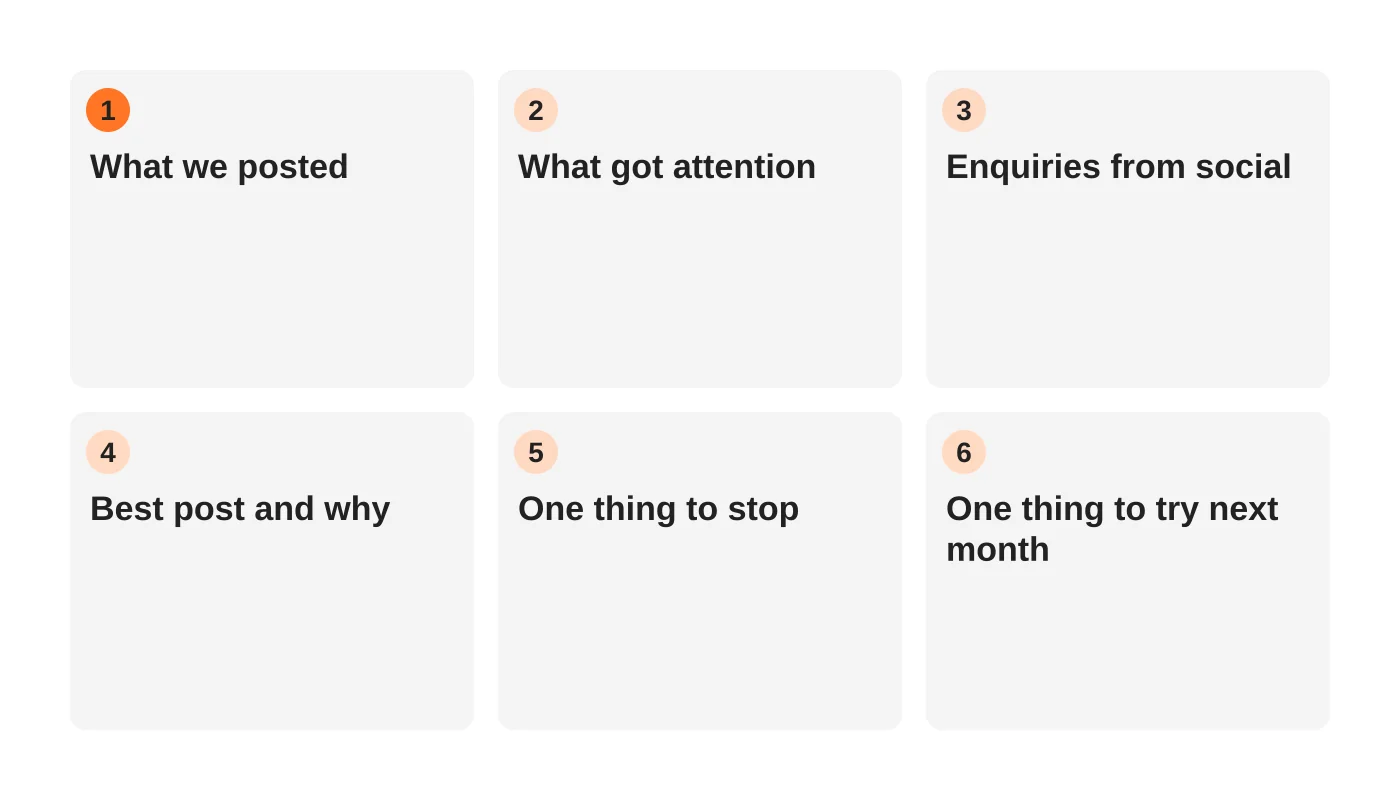
Keep it to one page so someone reads it. Include what you posted, what got attention, enquiries from social, the best post and why, one thing to stop and one thing to try next month. Share it with whoever manages your social media, whether in-house or a virtual assistant. How to delegate to a virtual assistant explains how to brief and review that work.
Content that earns the right numbers
Metrics follow content. Post things your customers actually ask about, and plan a rhythm you can keep. A 90-day content plan and a repurposing workflow help you do that without burning out.
When you are ready to spend, compare organic posts, boosted posts and Ads Manager.
Mistakes to avoid
- Chasing followers with giveaways that attract the wrong audience.
- Comparing yourself to large brands with different goals.
- Judging a post in the first hour.
- Changing strategy every week.
- Forgetting to link social activity to your website and enquiry form.
Frequently asked questions
Which platform should I focus on?
Where your customers already are, and where you can post consistently. One platform done well beats five done badly.
How often should I post?
As often as you can maintain with quality. Consistency beats volume.
Are likes useless?
Not useless, but weak. Saves, shares and replies say more.
How do I track leads from social?
Use tracking links, ask new customers how they found you and note messages that start on social platforms.
When should I pay for ads?
When you have a clear offer, a landing page that converts and a way to measure leads.
From the Wired for Growth newsletter
This guide builds on Why Follower Counts Don’t Matter — And What Actually Does from Duarne Bernhagen’s LinkedIn newsletter, Wired for Growth.
Need help with your social reporting
Web Design Davao’s content and social media team can set up tracking and a monthly report that shows leads. Ask about social media support.


