
Quick answer
Respond to negative social comments by classifying them first: abusive or spam, private information, fair complaint, or question. Never confirm someone is a patient or customer in public, acknowledge fair complaints and offer a private channel, and escalate threats, claims of harm, legal wording and media enquiries to a manager. Do not delete fair criticism.
- Give staff a written escalation contact, a time limit and sample replies before they are needed.
- Do not argue, blame or use sarcasm, and offer a clear next step on a private channel.
- Log each negative comment and review monthly for patterns, then fix the cause in the service or website.
Negative comments will appear. How you respond is seen by everyone reading. Staff who have no guide may delete, argue or make things worse. This guide gives a decision tree and escalation rules for teams in clinics, resorts and service businesses.
The examples are fictional and make no legal claims. Check legal and privacy requirements for your sector. This is general information, not legal advice. Check your situation with a qualified adviser. Reviews on Google are a different channel. See fake reviews and their risks.
Step 1: classify the comment
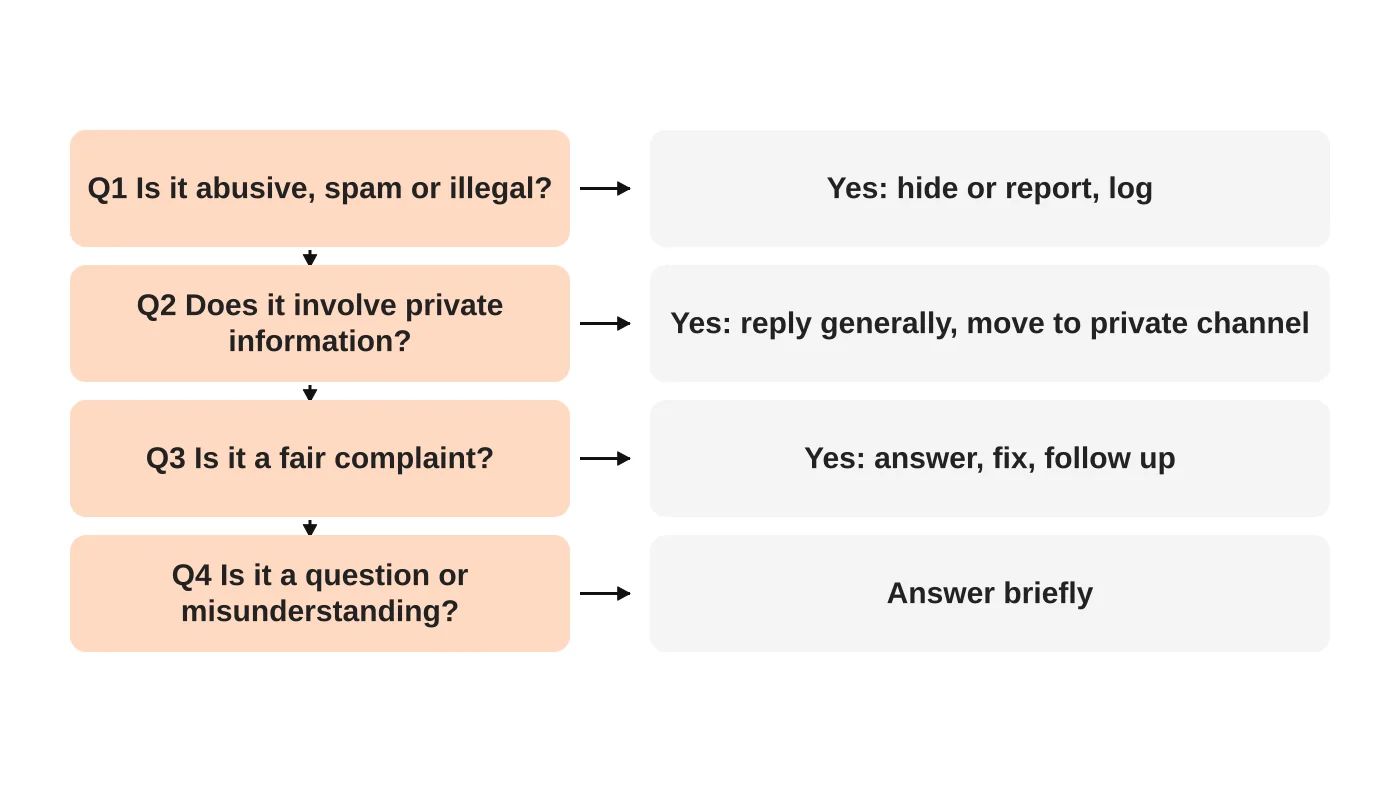
- Abusive, spam or illegal: hide or report according to the platform’s rules and your policy. Keep a record.
- Contains private information: do not repeat or confirm it publicly.
- A fair complaint: acknowledge, take it seriously and move to resolution.
- A question or misunderstanding: answer briefly and clearly.
Step 2: protect private information
Never confirm that someone is a patient or customer, and never discuss details of a case in public. For a clinic, a reply that confirms a relationship may itself disclose private information. Use a general reply and invite the person to contact you privately. Do not ask for sensitive details in public comments.
Fictional example reply: “Thank you for telling us. We take this seriously. Please contact us on [number or email] so we can look into it with you directly.”
Step 3: answer or escalate
Decide which comments staff can answer alone and which go to a manager. Escalate: threats, claims of harm, legal wording, media enquiries, repeated complaints and anything involving safety or privacy. Give staff the escalation contact and a time limit. See a social media approval workflow for how approval works day to day.
Step 4: write good replies
- Respond promptly and politely, in your normal voice.
- Acknowledge the experience without admitting liability for things you have not checked.
- Offer a clear next step and a private channel.
- Do not argue, blame or use sarcasm.
- Follow up in the thread when resolved, if the person agrees.
Do not delete fair criticism to hide it. Hiding complaints often makes them louder. Hide or remove only what violates your policy or the platform’s rules.
Step 5: log patterns and fix causes
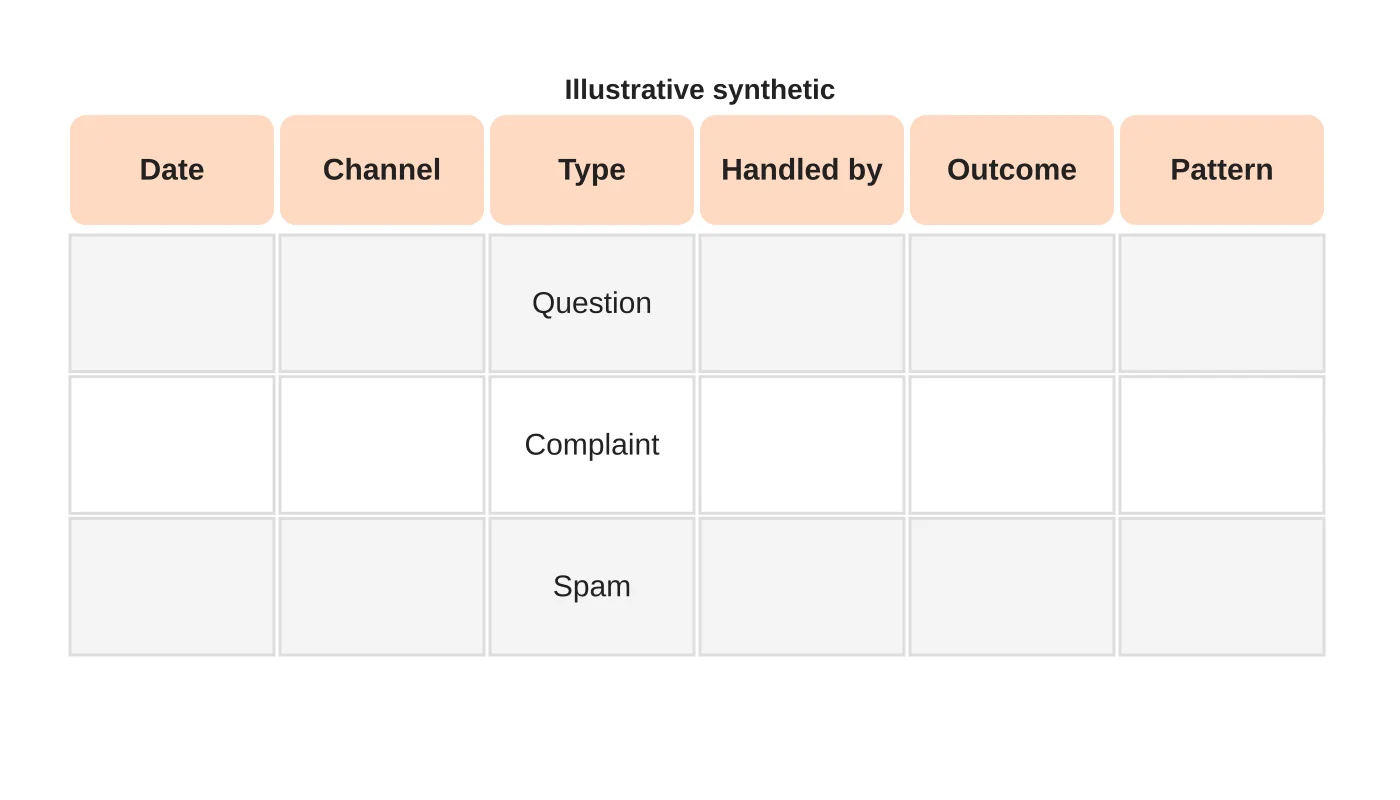
Record each negative comment: date, type, who handled it and the outcome. Review monthly for patterns, such as confusion about prices, long waits or unclear policies. Fix the cause in the service or on the website, not just the reply. See client communication and escalation for how staff should handle client contact.
Step 6: prepare before you need it
Write the policy, the escalation contacts and sample replies in a short document. Train staff. Review after any incident. See social media marketing strategies.
Frequently asked questions
Should I reply to every negative comment?
Reply to those that deserve it. Do not feed trolls.
Can I delete a comment?
Where it breaks your published rules or the platform’s. Otherwise answer it.
What about fake complaints?
Report them and keep evidence. Reply calmly if needed.
Do I need a social media policy?
A short one helps. Keep it in plain language.
Sources
Prepare your team
Web Design Davao’s social media team can discuss a comment response guide for your business. Get in touch.