
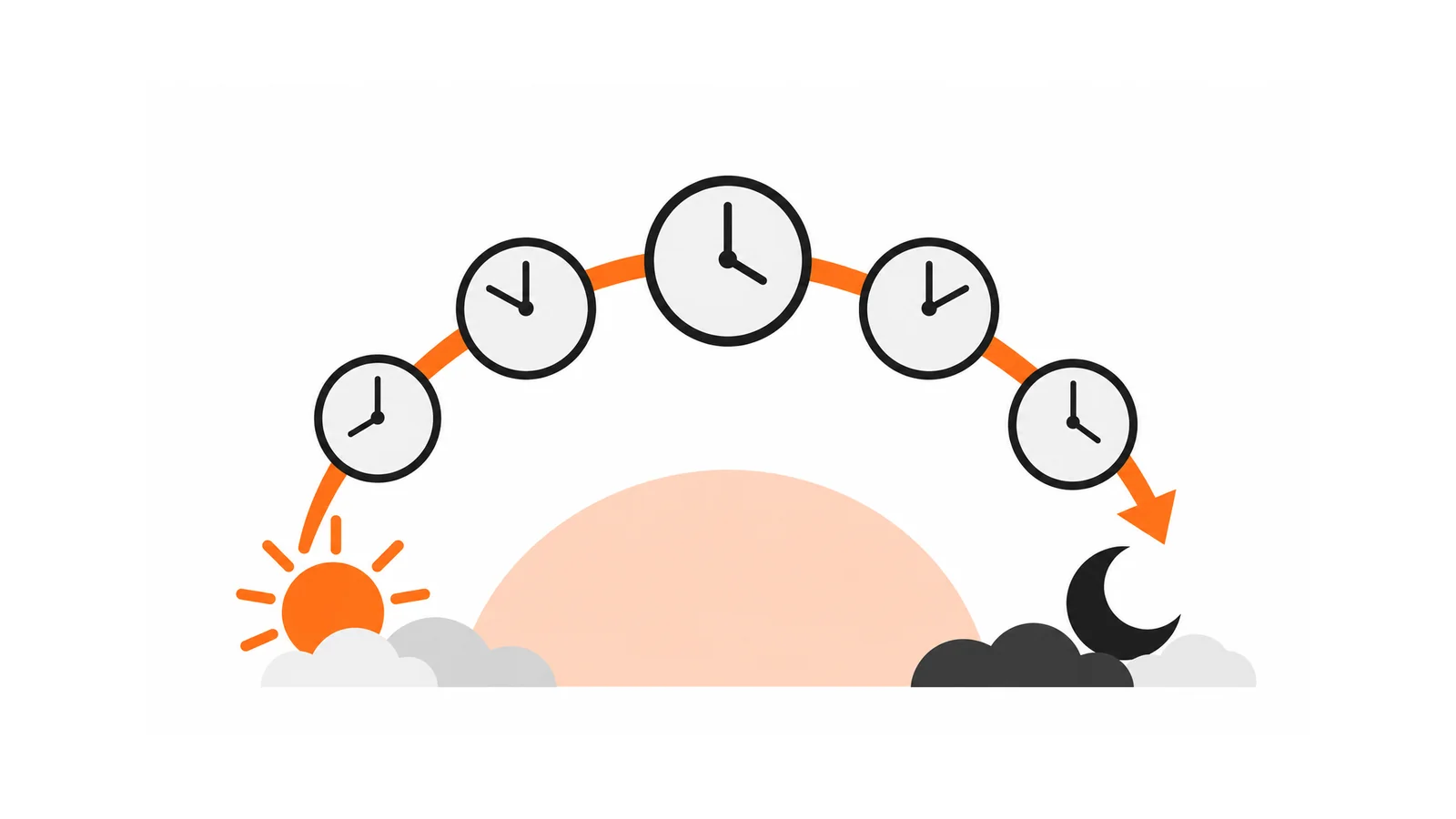
Quick answer
To extend MSP support hours with a Philippine team, build the plan around actual staffed shifts, not hoped-for ones. Map each client’s time zone and daylight saving, write down handover and on-call boundaries, plan for absences and outages, and describe coverage honestly to clients. Avoid 24/7 language unless a documented rota supports it.
- Use a time-zone calendar tool and check dates around daylight saving changes, because the Philippines does not observe it.
- Write a shift-change handover covering open tickets, pending client replies, scheduled changes and anything risky.
- Decide who acts and how clients hear if a technician is sick, power fails or the PSA is down.
The appeal of a Philippine team for an MSP is often simple: part of your queue can be worked while your local engineers are asleep or busy. The challenge is turning that into a coverage plan that survives daylight saving, absences and outages.
This guide is for MSP owners and service desk managers, with Australian clients as the default. The shift plan is illustrative. It avoids any 24/7 claim. See escalation and handover for what happens at the edges.
Start with client time zones and daylight saving
List each client’s location and business hours. Australian states differ, and some observe daylight saving while others do not. The Philippines does not observe it, so the offset between your clients and the team changes during the year. Use a time-zone tool with a calendar and check the dates around the changes, rather than hard-coding a fixed difference.
Plan around actual staffed shifts
Decide the shifts the team really works, not the ones you wish they did. Ask:
- What hours are staffed and by how many people at each point?
- What happens at meal breaks, public holidays and typhoon or power disruptions?
- Is any shift extended or shifted in the daylight saving period, and who agrees that?
Only promise clients what has been confirmed. Avoid “24/7” language unless a documented rota supports it.
Define queue handover and on-call boundaries
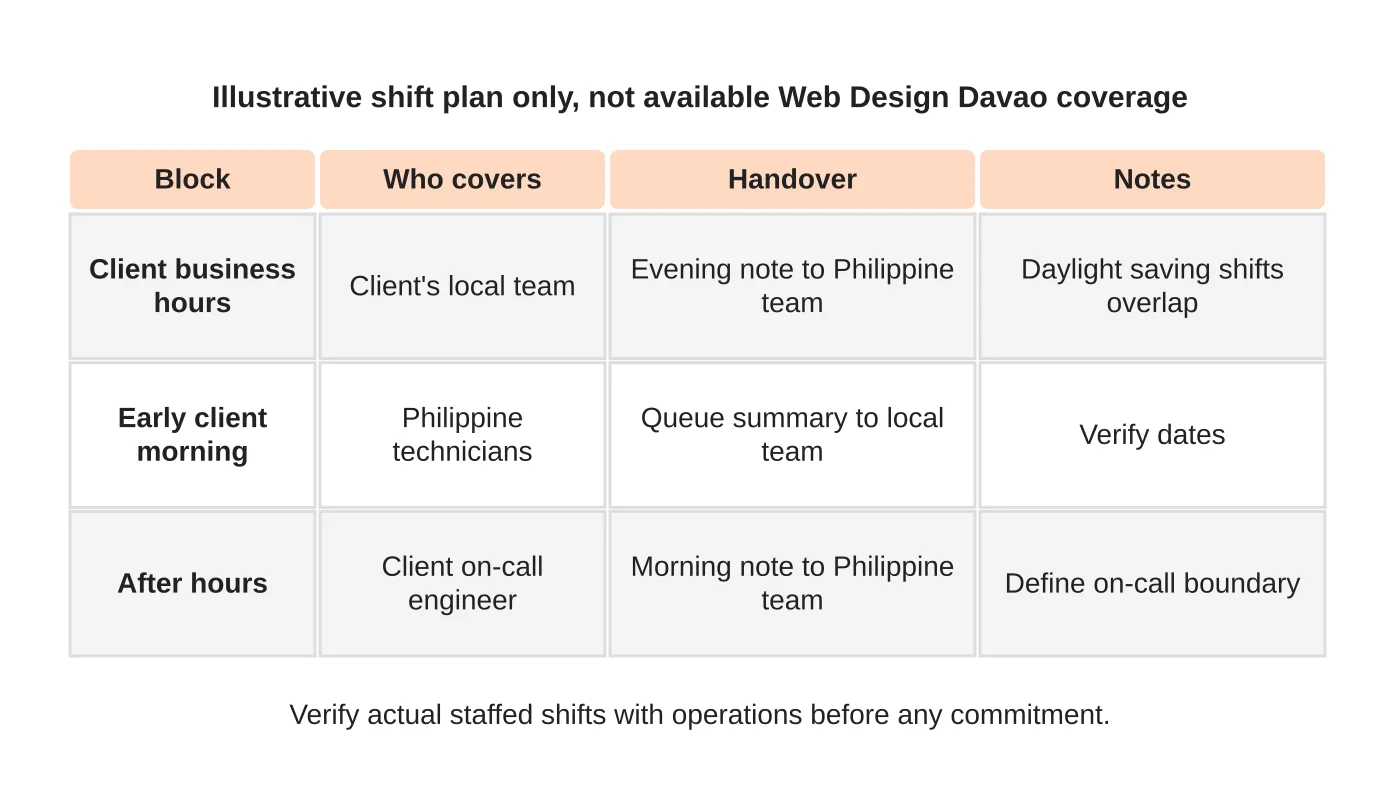
A shift change needs a written handover: open tickets, pending client replies, scheduled changes and anything risky. Define who owns which queue at each hour and how handover is recorded. Separate the service desk from on-call duties: an on-call engineer is a named person with authority to act on out-of-hours incidents, and the desk escalates to them by an agreed route. Decide what the offshore team may do between shifts, and what must wait.
Plan for absence and outage scenarios
Write short scenarios and decide the response in advance:
- A technician is sick at the start of a shift.
- The office loses power or internet. See how redundant connectivity supports operations and power-outage readiness, once evidence supports their use.
- The PSA or RMM platform has an outage.
- A major incident starts near shift end.
For each, name who decides, how clients hear and what the fallback is. See backup coverage when an assistant is away for the underlying approach.
Tell clients what coverage means
Describe hours, response expectations and escalation in the service description. Say which tasks are handled by whom outside local hours. Do not imply a response time the team cannot sustain. Review the plan after daylight saving changes and each quarter.
Frequently asked questions
Why does daylight saving matter when using a Philippine support team?
Australian states differ, and some observe daylight saving while others do not. The Philippines does not observe it, so the offset between your clients and the team changes during the year. Check the dates with a calendar tool rather than hard-coding a fixed difference.
Can I promise clients 24/7 coverage?
Only promise what has been confirmed. Avoid 24/7 language unless a documented rota supports it. Decide the shifts the team really works, how many people are staffed at each point, and what happens at meal breaks, public holidays and typhoon or power disruptions.
What should an MSP handover between shifts include?
A written handover of open tickets, pending client replies, scheduled changes and anything risky. Define who owns which queue at each hour, how handover is recorded, and keep the service desk separate from on-call duties, where a named person can act on out-of-hours incidents.
Sources
Talk through the role
Send us your ticket categories, tool stack, required hours and escalation structure so we can discuss the role. Learn about our outsourced staffing service or get in touch.


