
Quick answer
A multi-location business usually works well with one website that has a location hub and a real page for each branch, with details true for that branch only. Write shared content once, have branches check local content, keep listings and hours consistent, name owners centrally and locally, and measure by location.
- Do not create pages for areas where you have no real presence, or copy pages with only the suburb changed.
- Give each branch its own address, hours, phone, services, parking and access details, and a clear action.
- Review enquiries, calls and bookings by branch against capacity, and investigate underperforming branches before changing pages.
A business with several branches has a website problem a single-location business does not have: customers need to find the branch that serves them, while the business needs consistent standards, accurate details and a way to manage them. This guide covers the structure, the location pages, the shared and local content, and the governance that keeps it accurate. It makes no promise about rankings or enquiries.
Web Design Davao does not know your branches or operations. Details of each location must come from the people who run it.
1. Decide the site structure
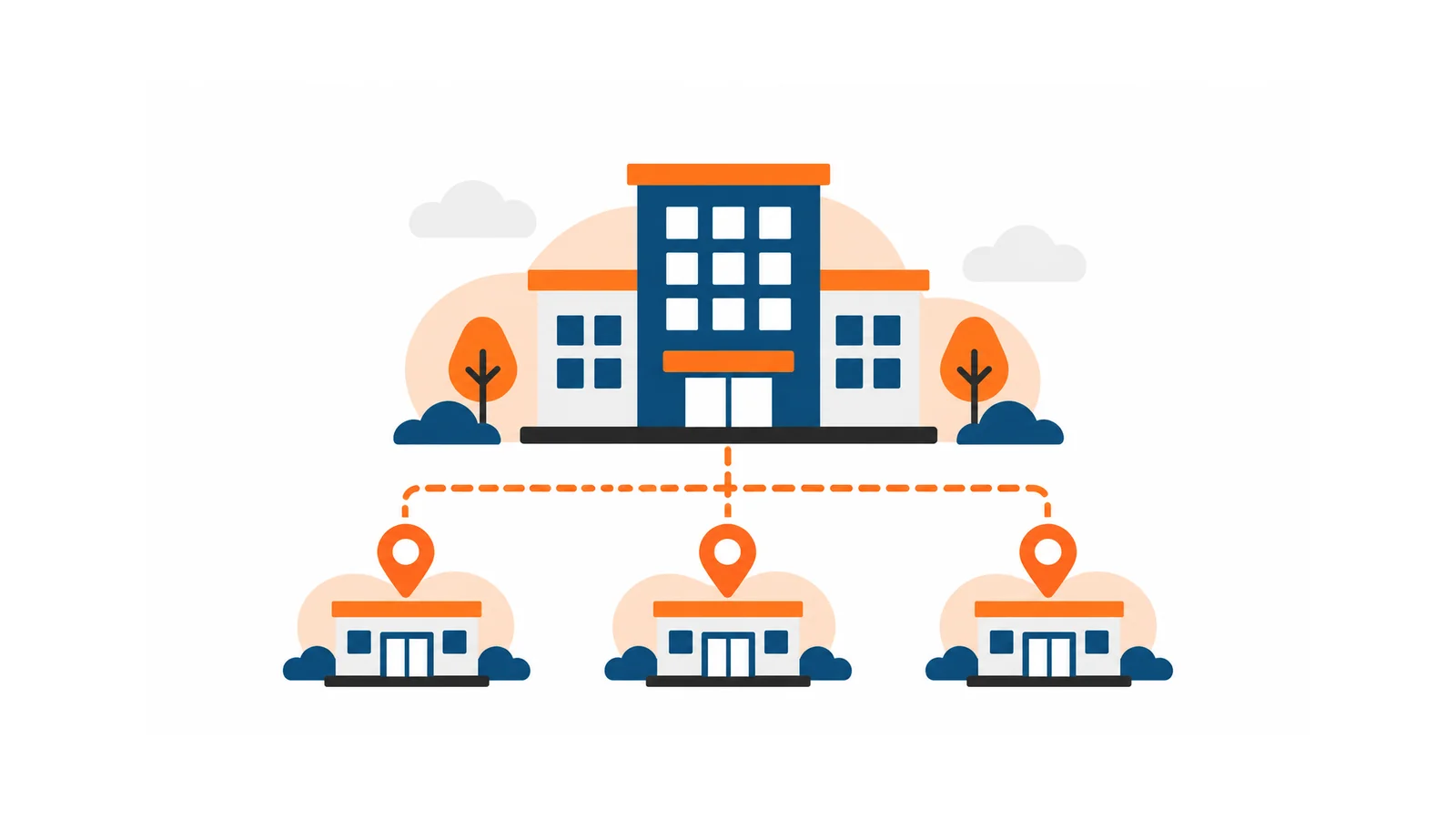
Choose between one site with a page per location, or separate sites. For most multi-location businesses, one site with a hub page and a page per real location is simpler to manage and easier for customers to follow. Separate sites need extra work to keep consistent and are rarely justified.
2. Build a location hub and location pages
The hub lists locations and helps the visitor choose, by area, by service or on a map. Each location page should carry details that are true for that branch only: address, hours, phone, services offered there, staff or team information if approved, parking and access, and a clear action. Do not create a page for an area where you have no real presence.
3. Separate shared and local content
Shared content, such as brand, services and policies, is written once and reused. Local content is written by or checked with the branch. Do not copy one page across branches with only the suburb changed; see location page content.
4. Keep listings and details consistent
Each branch needs an accurate Google Business Profile and consistent name, address, phone and hours across directories; see multi-location listings. Update holiday hours and changes promptly.
5. Assign governance
Name a central owner of standards and a local owner for each branch. Define who approves changes and how often details are checked. See governance and reporting.
6. Measure by location
Track enquiries, calls and bookings by branch, and compare against capacity. Investigate branches that underperform before changing pages.
Multi-location site architecture
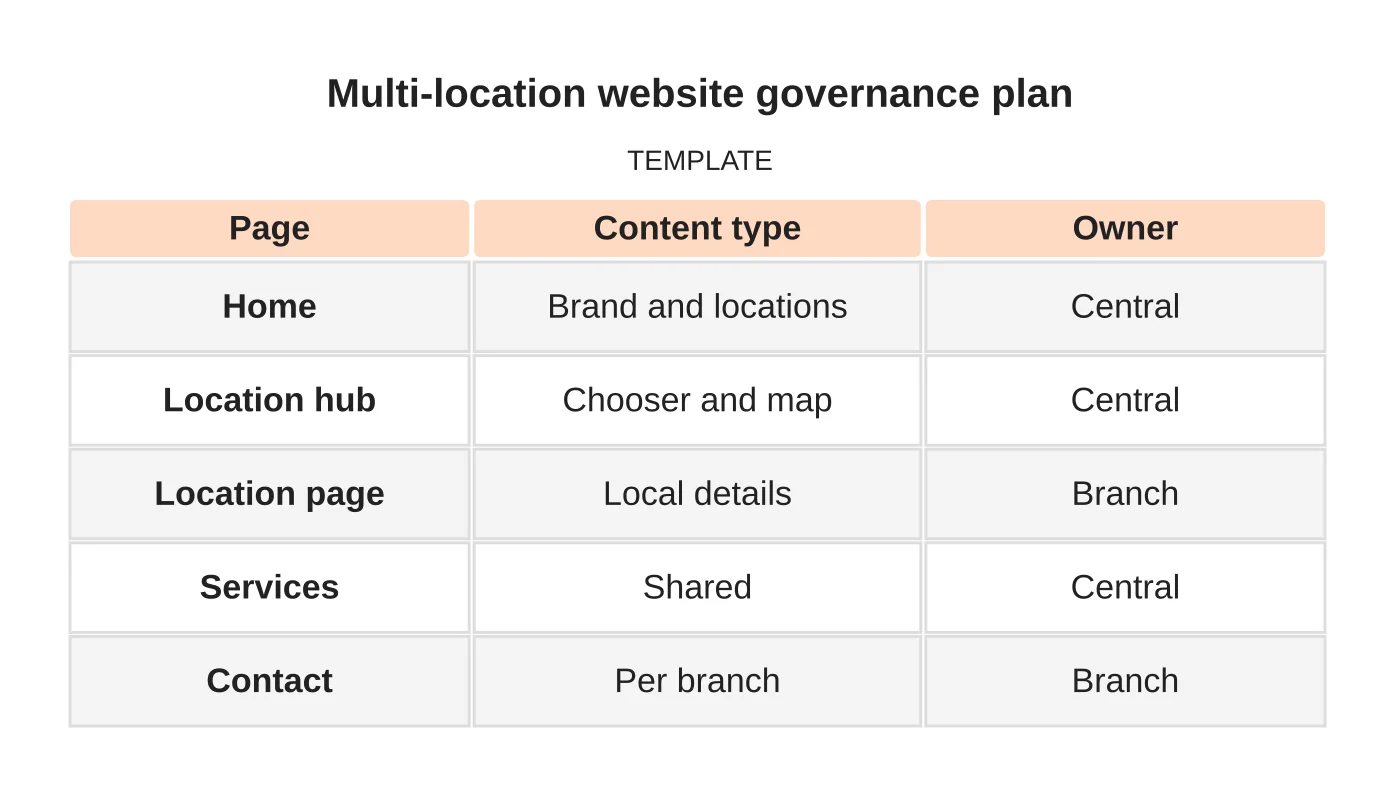
| Page | Content type | Owner |
|---|---|---|
| Home | Brand and locations | Central |
| Location hub | Chooser and map | Central |
| Location page | Local details | Branch |
| Services | Shared | Central |
| Contact | Per branch | Branch |
Common mistakes
- Pages for areas with no presence.
- Copied text with swapped suburb names.
- Outdated hours.
- No local owner.
- One phone number for every branch.
Questions multi-location businesses ask
Should each branch have its own site? Usually not. One site is easier to keep accurate.
Can a service area business use location pages? Only for areas you genuinely serve and with content that is real.
Related: franchise websites add franchisee and brand-control questions.
Next step
Request a website review or discuss the pages and enquiry workflow your business needs. Read about our web design service or contact us.
Frequently asked questions
Should each branch have its own website?
Usually not. One site with a hub page and a page per real location is simpler to manage and easier for customers to follow. Separate sites need extra work to stay consistent and are rarely justified.
What should a location page include?
Details true for that branch only: address, hours, phone, services offered there, approved staff information, parking and access, and a clear action. Local content should be written by or checked with the branch, not copied with a swapped suburb name.
Who keeps location details accurate?
Name a central owner of standards and a local owner for each branch. Define who approves changes and how often details are checked, and update holiday hours and changes promptly. Each branch also needs an accurate Google Business Profile.
Sources and notes
Last updated 21 November 2026. This guide is general information based on Web Design Davao’s web design and digital marketing practice. It cites no statistics and makes no promise about rankings, enquiries or contracts. Web Design Davao is not licensed or certified in this industry, so check technical, safety, legal and regulatory matters with a suitably qualified professional. Examples are templates or illustrations, not client results.


