Quick answer
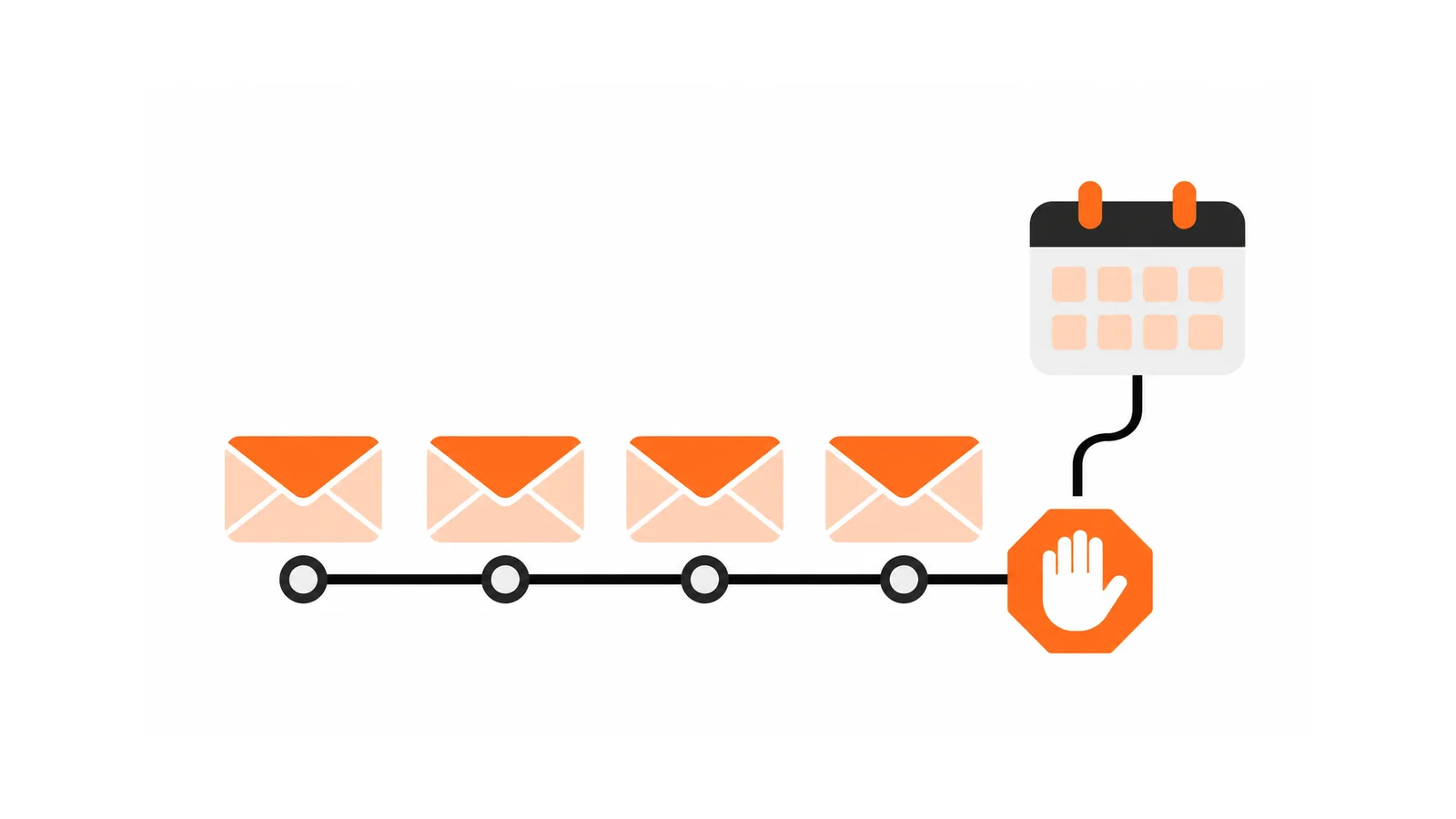
A four-email sequence can follow up an enquiry without pressure: confirm the request immediately, send useful preparation on day 1, check gently on day 4 and close the request on day 10. Stop the sequence when the person replies, books or opts out. The timing is an assumption to test, and email consent rules apply.
- Email only people who asked; an enquiry is not consent to join a marketing list, so ask separately.
- Route replies to the enquiry owner, and have a person answer urgent or sensitive replies the same day.
- Send from a monitored address with proper sender authentication, track replies, bookings and opt-outs, and avoid fake urgency.
Most service businesses answer an enquiry once and hope. Some then chase too hard. A short, permission-aware email sequence helps people who asked, without pressure, and lets staff stay in charge of the conversation.
This guide is for clinics and professional firms. The emails below are examples, and the timing is an assumption to test. Email rules and consent requirements apply, so take advice. This is general information, not legal advice. Check your situation with a qualified adviser.
Principles
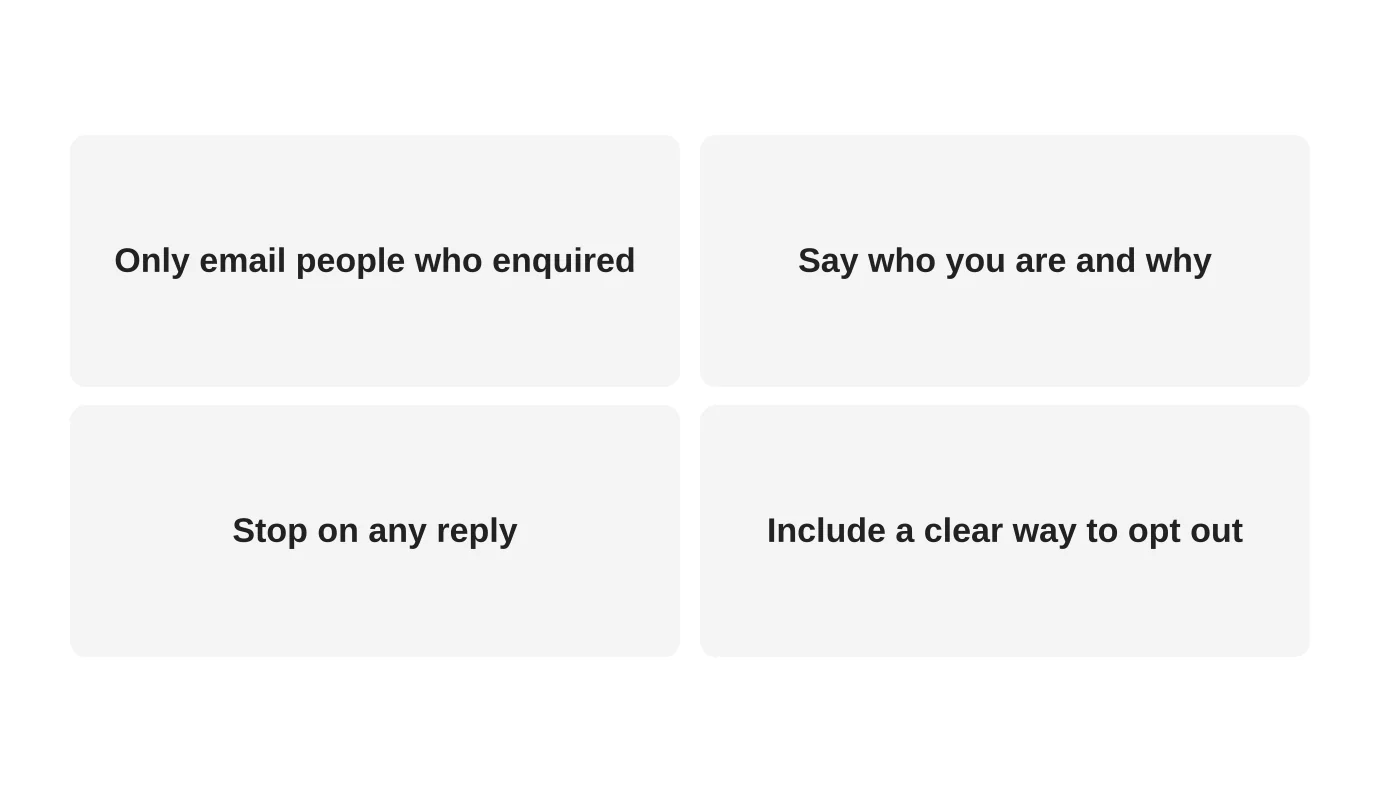
- Email people who asked. An enquiry is not consent to join a marketing list. Keep this sequence to following up their request.
- Be a person. Sign with a real name and role.
- Be useful. Each email should help the person decide or prepare.
- Stop on reply. If they reply, book or opt out, the sequence ends and a person takes over.
For the form side, see connecting your website to a CRM. For the wider funnel, see digital sales funnels.
A four-email sequence
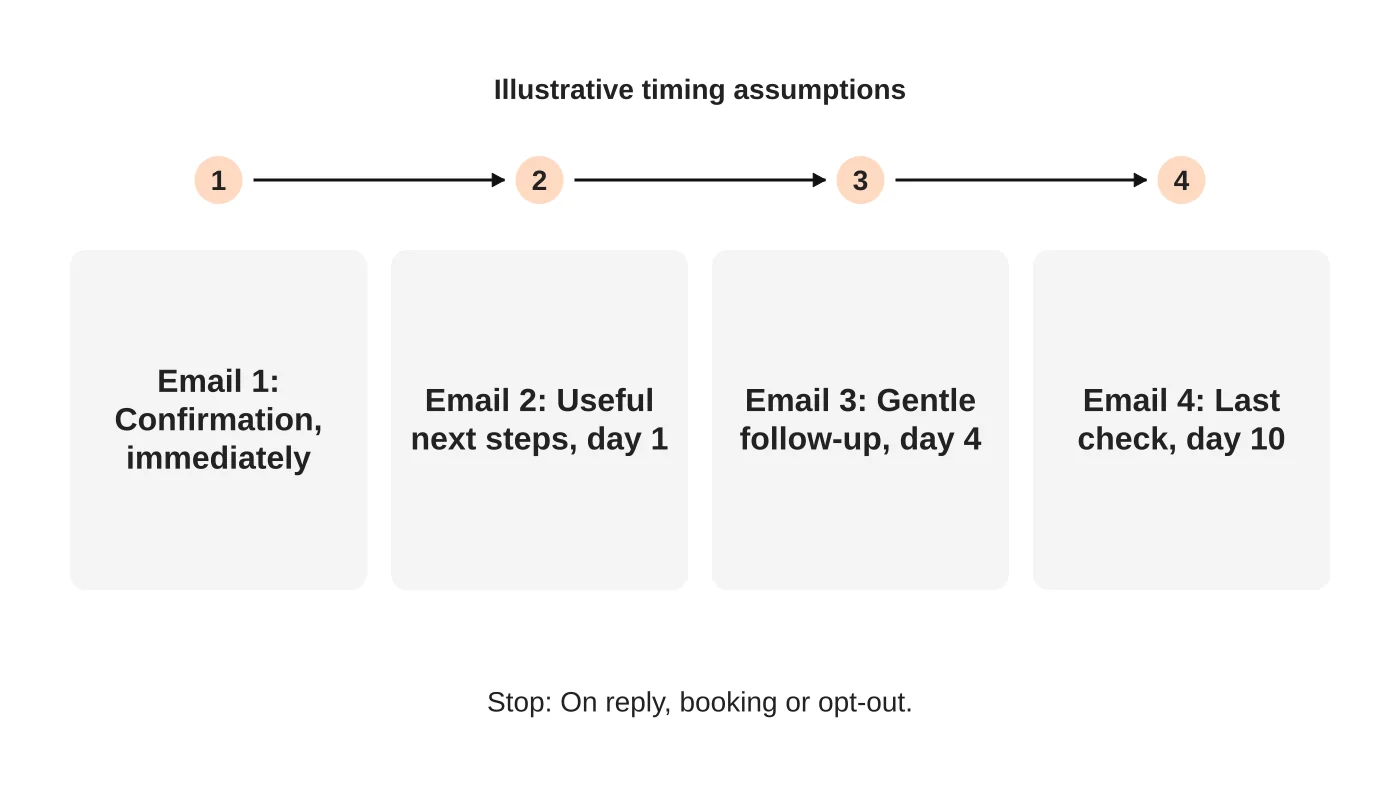
Email 1: confirm the enquiry (immediately)
Say you received it, what happens next and when a person will reply. Include a phone number for urgent matters. Do not include sensitive details from the form.
Subject: We received your request
Hello [Name], thank you for contacting [Business]. We received your request about [service]. [Staff name] will reply by [time you can meet]. If it is urgent, call [number].
Email 2: useful next steps (day 1)
Send something that helps them prepare: what to bring, how the first meeting works or a short guide. Offer two ways to book.
Email 3: gentle follow-up (day 4)
Ask if they still need help. Offer to answer a question. Make it easy to say no.
Email 4: last check (day 10)
Say you will close the request unless they reply, and invite them to contact you any time.
Handle replies and escalation
Route every reply to the owner of the enquiry. Pause the sequence when a person replies or a consultation is booked. Set a rule for urgent or sensitive replies, such as complaints or health matters, so a person responds the same day.
Deliverability and authentication
Emails need proper sender setup so they reach the inbox. See SPF, DKIM and DMARC for small business email. Send from a monitored address, not a no-reply one.
Measure the sequence
Track replies, bookings and opt-outs. Review the emails if people reply with confusion or opt out quickly. Compare against enquiries that received no sequence only if you can do so fairly.
What to avoid
- Fake urgency or countdowns.
- Long sequences for a single enquiry.
- Sending the same message to people who already booked.
- Putting health or financial details in email.
Frequently asked questions
Do I need email software?
A CRM or email tool helps with timing and stopping rules. A manual process works at low volume.
Can I add them to my newsletter?
Only with clear consent. Ask separately.
How many emails is too many?
Enough to help, not enough to pressure. Four spaced emails is a starting point to test.
Who writes the emails?
A person who knows the business should write or review them.
Sources
Plan your follow-up
Web Design Davao’s digital marketing team can discuss a follow-up process that suits your team. Get in touch.