

Quick answer
Measure a virtual assistant with a balanced scorecard covering output, quality and reliability, not task counts alone. Define what good looks like, set provisional targets from a few weeks of baseline, sample work regularly, and review blockers before judging. Four to six measures are usually enough, and the assistant should see the scorecard.
- Write quality criteria so two reviewers would agree on whether a reply or record is good.
- When targets are missed, check unclear instructions, missing access, slow approvals and changing priorities before judging the person.
- Avoid measuring hours as a proxy for results, and avoid targets with no baseline.
Counting tasks alone rewards speed over quality, and measuring only quality can hide delays. A balanced scorecard covers output, quality and reliability, and looks at what blocks the person. This guide shows how to build one without inventing numbers.
All targets here are illustrative placeholders. Set yours from your own work. For a cost and return view, see measuring virtual assistant ROI, and for documenting tasks see writing SOPs.
Step 1: define outputs and quality
List what the role produces: replies sent, bookings processed, reports prepared. For each, define what good means. A reply is good if it follows the approved tone, answers the question and escalates when needed. Write the criteria so two reviewers would agree.
Step 2: set realistic targets
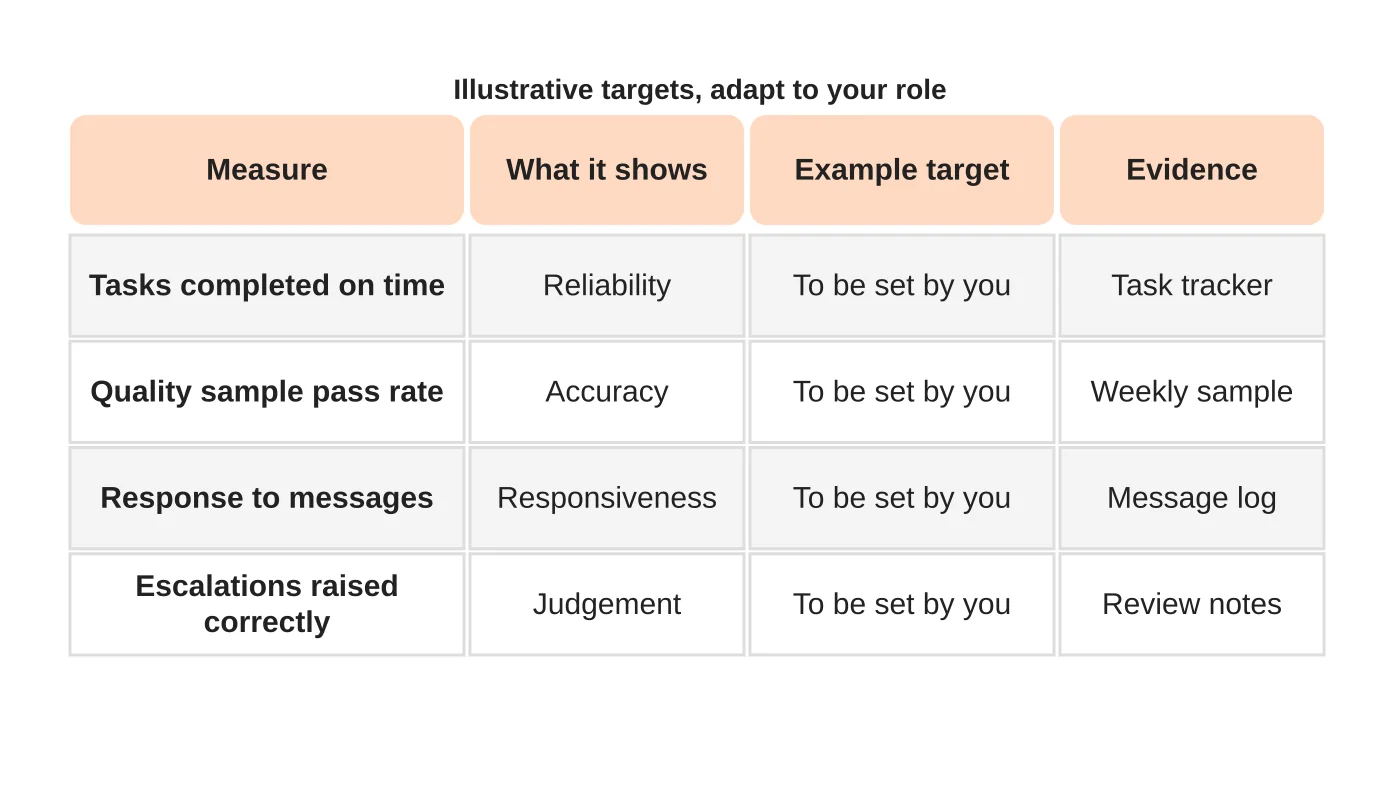
Start with a baseline for a few weeks. Use it to set targets that are challenging but fair, taking into account learning time and task difficulty. Set targets for quality as well as quantity, and avoid targets that push people to skip checks. Label targets as provisional and review them.
Step 3: sample evidence
Do not review everything. Take a regular sample of work, such as a set of messages or records each week, and score it against the criteria. Use the task tracker, message logs and review notes. Keep the sample method consistent so that changes mean something. Remember that data about people should be handled carefully and fairly. This is general information, not legal advice. Check your situation with a qualified adviser.
Step 4: review blockers and improve
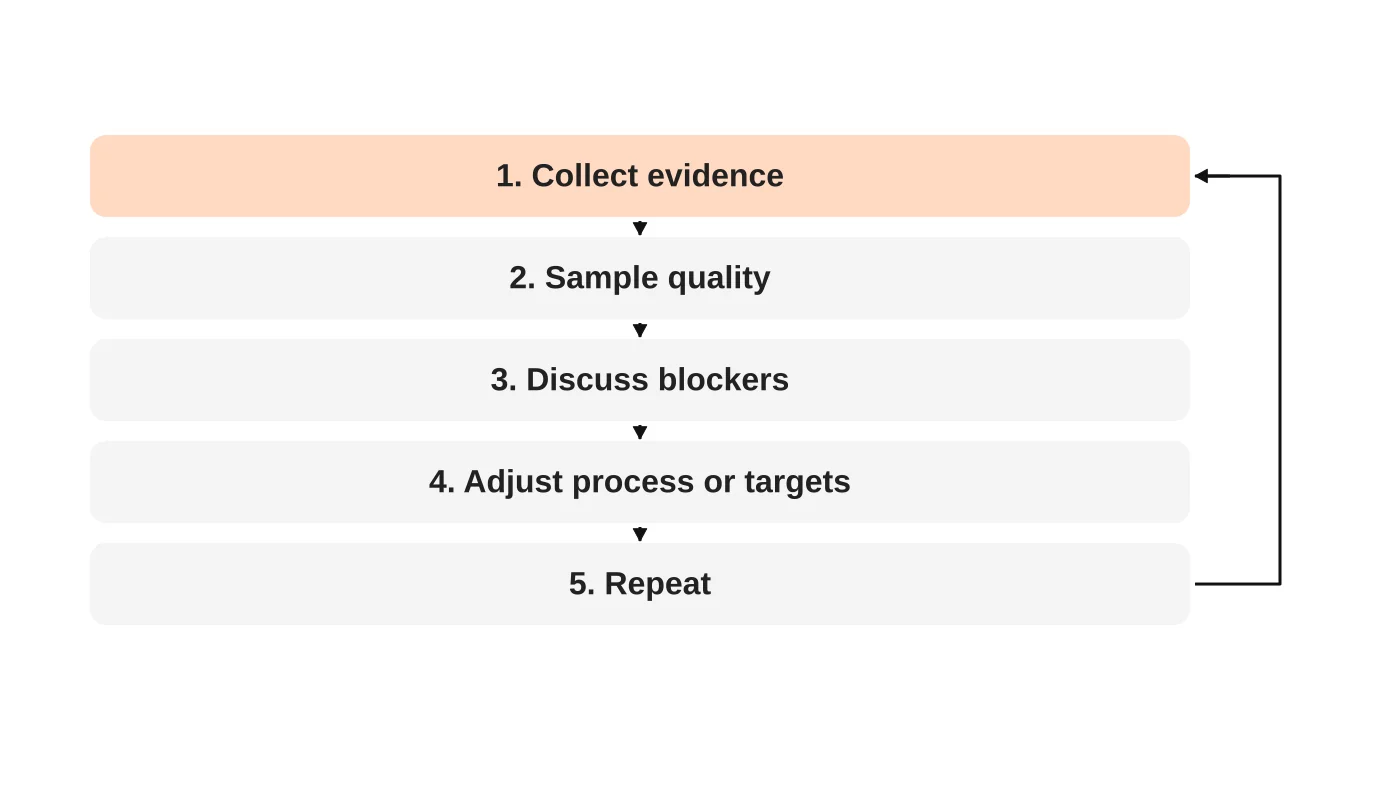
If targets are missed, ask why before judging. Unclear instructions, missing access, slow approvals and changing priorities are common causes. Fix the process first. Record decisions made and what you will change. See the 30-day onboarding plan for early measures.
Step 5: keep it balanced
Combine a few measures: timeliness, quality, responsiveness and judgement. Four to six is usually enough. Share the scorecard with the assistant so it is a tool for improvement, not a surprise. Review it monthly and adjust as the role changes. See a paid work sample for setting the starting standard.
What to avoid
- Measuring hours as a proxy for results.
- Targets with no baseline.
- Using the scorecard only when something goes wrong.
Frequently asked questions
How many KPIs should I use?
Few. Four to six balanced measures are easier to act on.
Should I share the scorecard?
Yes. It works best when understood and discussed.
Can I compare assistants?
Only where the roles and conditions are similar.
What if quality and speed conflict?
Decide which matters most for the task and say so.
Sources
Set up a fair scorecard
Web Design Davao’s outsourced staffing team can discuss how to measure and review outsourced support. Get in touch.