

Quick answer
Most beliefs that keep owners stuck on outsourcing are habits of thought, not facts. Cost is only one benefit, quality depends on selection and briefing, and control comes from outcomes and check-ins. Time zones, security and lock-in can all be managed with written scope, owned accounts and agreed exit terms.
- Judge cost per finished outcome, not hourly rate, and request a written scope covering tools, supervision and exit terms.
- Start small with one recurring task and a clear definition of done, then widen the scope as trust grows.
- Own your domains, tools and data, set a weekly review and use individual logins with least-privilege access.
Ask ten founders about outsourcing and you will hear ten horror stories. Rarely will you hear the full detail. Most failures have fixable causes, and most of the beliefs that keep owners stuck are habits of thought rather than facts.
Here are twelve common myths, grouped by theme, with a straight answer to each and a practical fix. Where something is experience or opinion rather than evidence, we say so.
Why founders trade horror stories
Stories travel because they are vivid. A single missed deadline from a poor hire becomes “outsourcing does not work.” Meanwhile the quiet successes, where a team takes over routine work and the owner finally has time to think, rarely get retold.
Many failures also share one cause. As Why Most Outsourcing Fails: Hidden Costs of Half-Control observes, outsourcing often fails when the owner hands over tasks but keeps half the control: unclear ownership, constant interruptions and decisions that never leave the owner’s head. Keep that in mind as you read the myths.
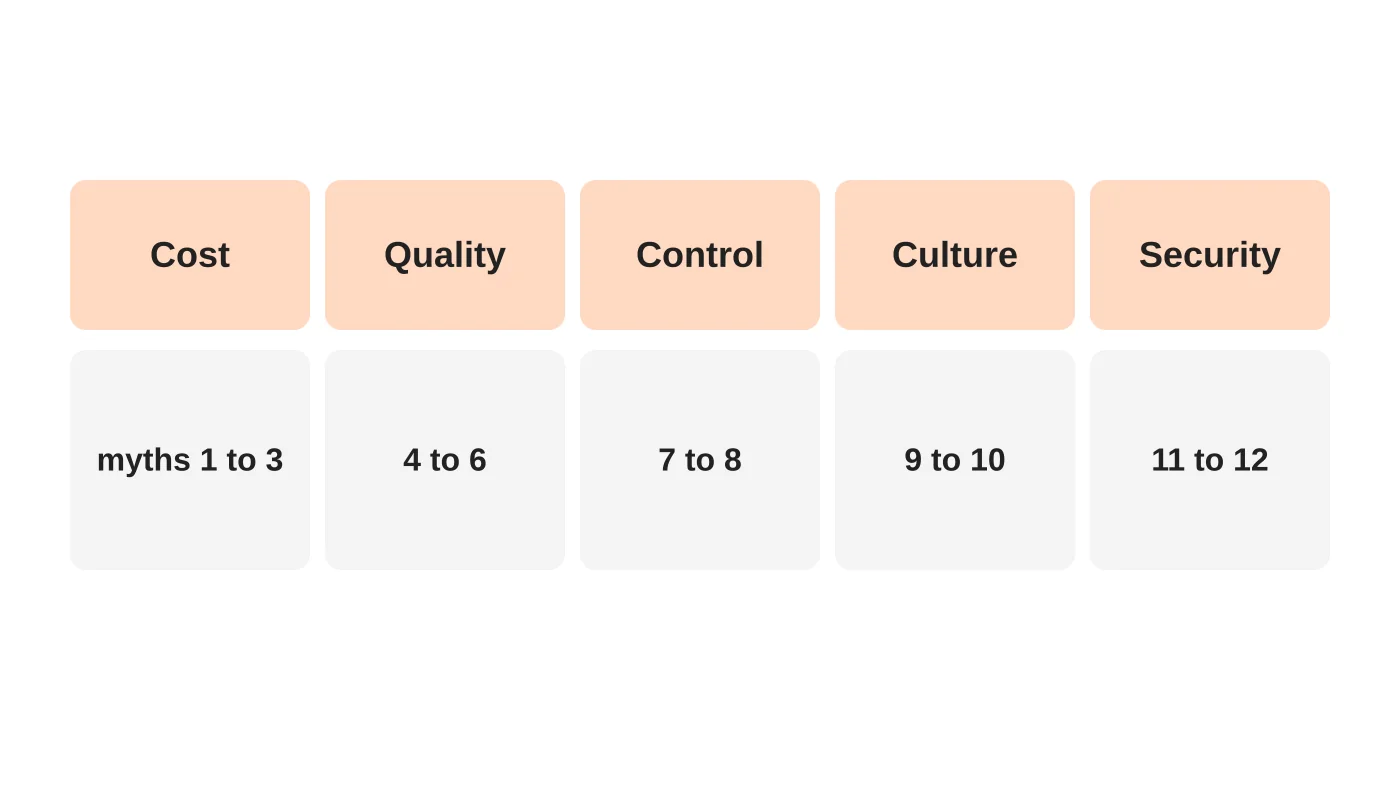
Cost myths
Myth 1: Outsourcing is only about saving money
What is true: lower cost is one benefit, but treating it as the only one invites poor choices. The cheapest option can cost more once rework and turnover are counted. See how much a virtual assistant costs in the Philippines.
The fix: judge cost per finished outcome, not hourly rate.
Myth 2: A low rate means low quality, and a high rate means high quality
What is true: price alone predicts neither. Quality depends on selection, training, clear briefs and supervision.
The fix: run a short paid trial on a real task and judge the work.
Myth 3: Hidden fees make outsourcing more expensive than hiring
What is true: fees can be hidden if you do not ask. A clear proposal lists what is included.
The fix: request a written scope that covers tools, equipment, supervision, backup cover and exit terms.
Quality myths
Myth 4: Offshore staff cannot do skilled work
What is true: the Philippines has a large pool of skilled people in design, development, marketing, finance and customer support. The work you can delegate is limited more by your preparation than by location.
The fix: start with a role description focused on outcomes, then match skills to it.
Myth 5: Communication will always be a problem
What is true: communication problems usually come from unclear instructions and no feedback routine, which happen with local staff too.
The fix: write a short briefing for each task. Our guide to delegating to a virtual assistant includes a template.
Myth 6: I will spend more time explaining than doing it myself
What is true: the first few weeks do cost time. After that, a documented process saves hours every week.
The fix: record each task once, in writing or on video, and reuse it. If you are not sure you are ready, see what to fix before you hire a virtual assistant.
Control myths
Myth 7: I will lose control of my business
What is true: you give up doing the task, not deciding what matters. Control comes from outcomes, check-ins and access you manage.
The fix: set a weekly review and keep ownership of your key accounts.
Myth 8: Outsourcing means handing over everything
What is true: the best arrangements start small. You hand over one process, learn from it, and widen the scope as trust grows.
The fix: begin with a single recurring task with a clear definition of done.
Culture myths
Myth 9: Time zones make it unworkable
What is true: time-zone gaps need planning, not avoidance. Davao shares a time zone with Western Australia and is close to the Australian east coast, and many teams schedule overlap windows for the US.
The fix: agree core overlap hours and use written updates for everything else.
Myth 10: Outsourced staff will not care about my business
What is true: engagement follows the same drivers anywhere: clear goals, recognition, fair treatment and a sense that the work matters.
The fix: include your outsourced team in your goals, give feedback and say thank you.
Security myths
Myth 11: My data is safer if everyone is in one office
What is true: security depends on controls, not geography. Individual logins, least-privilege access, a password manager and a clean exit process protect you wherever people sit. Our offboarding checklist shows how to do that.
The fix: insist on written security practices from any provider and set up access properly from day one.
Myth 12: If it goes wrong, I am locked in
What is true: lock-in comes from poor contracts and from not owning your own accounts.
The fix: own your domains, tools and data, and agree exit terms before you start.
What good outsourcing looks like
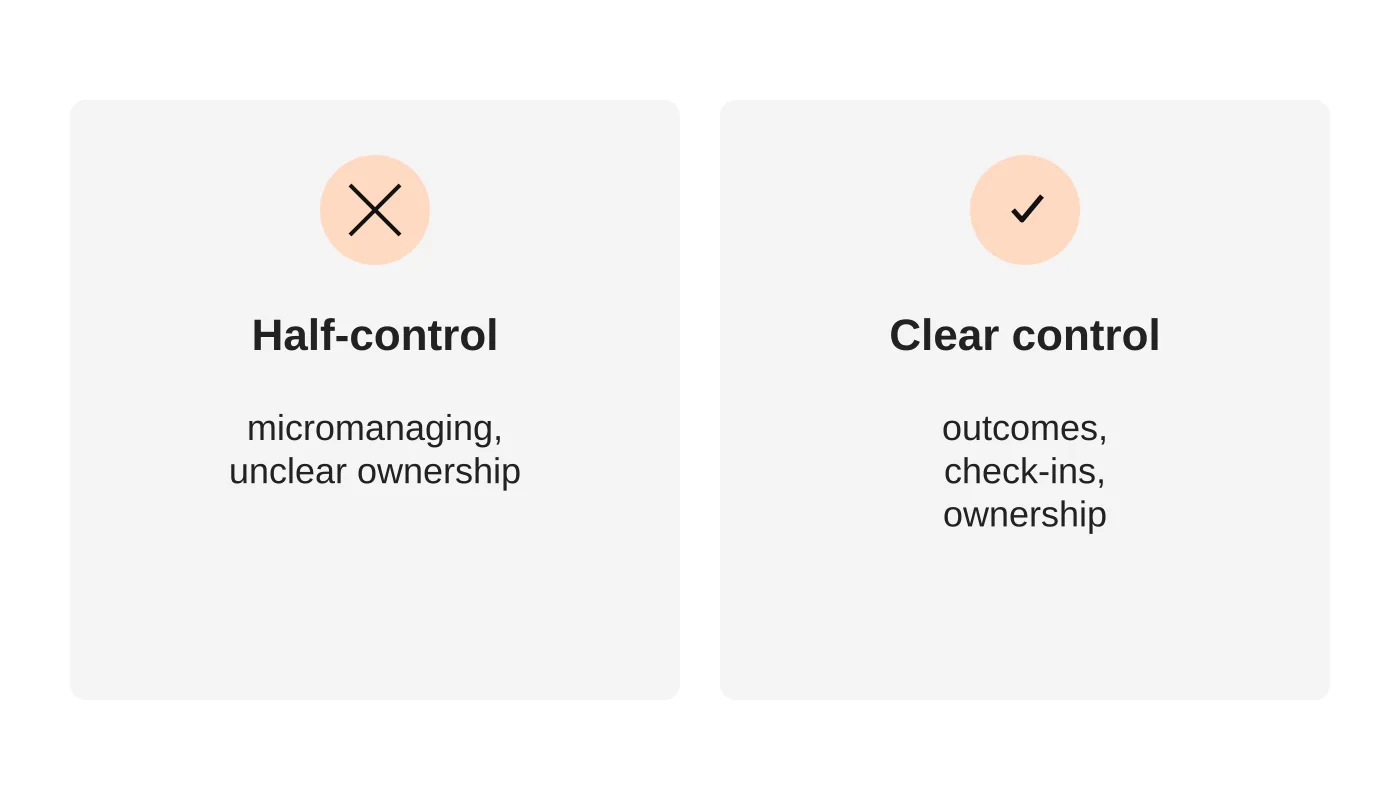
Good arrangements share a few traits:
- A clear definition of the work and what “done” looks like.
- One named owner on each side.
- A regular rhythm for feedback and review.
- Documented processes, so knowledge is not locked in one person’s head.
- Controlled access that you can switch off.
- A willingness to improve the arrangement rather than blame the model.
For more on blending people and technology, read why hybrid teams are the smartest way to scale and the complete guide to outsourcing digital marketing.
Frequently asked questions
Is outsourcing right for a very small business?
Often yes, when the owner is stuck on repeatable tasks. Start small, with a clearly defined scope.
What should I outsource first?
Start with repeatable, well-documented work: inbox management, scheduling, data entry, reporting or social posting.
How do I know it is working?
Track a few measures from the start: tasks completed, errors found, response time and hours you get back.
What if it does not work out?
Plan for it. Own your accounts, keep documentation, and use a trial period so an exit is cheap and clean.
Can AI replace outsourcing?
AI handles some tasks well, but most businesses still need people to supervise, decide and handle the exceptions. Many teams combine both.
From the Wired for Growth newsletter
This article answers the themes in The 12 Myths of Outsourcing (That Keep Founders Stuck) from Duarne Bernhagen’s LinkedIn newsletter, Wired for Growth, in our own words and with practical fixes. The issue Why Most Outsourcing Fails: Hidden Costs of Half-Control explains why outsourcing often fails through half-control.
Start with a small trial
If you are curious but cautious, talk to Web Design Davao about a short trial arrangement. Our virtual staffing service starts with a clearly scoped task, managed supervision and access you control.