Quick answer
Many B2B suppliers are better served by a clear product catalogue with a quote request than by an online store. A catalogue shows products and documents, while orders and payment happen offline. A store adds prices, stock, delivery, payments and returns, so choose it only if your team can run those reliably.
- Lean towards catalogue and quote if pricing is negotiated, stock is not real-time accurate or delivery costs are complex.
- Move in stages: catalogue and quote request, then a reorder list for known customers, then online ordering for stable products.
- Ask five good customers how they reorder today and what slows them down before choosing.
Many suppliers hear that they “should be online” and assume that means a shop with a shopping cart. For some businesses it does. For many B2B suppliers, a clear catalogue with a quote request is simpler, safer and closer to how customers actually buy.
This guide helps you decide, using your own answers instead of assumptions. It does not state conversion rates or claim one model is better. No statistics are used.
Define the two models
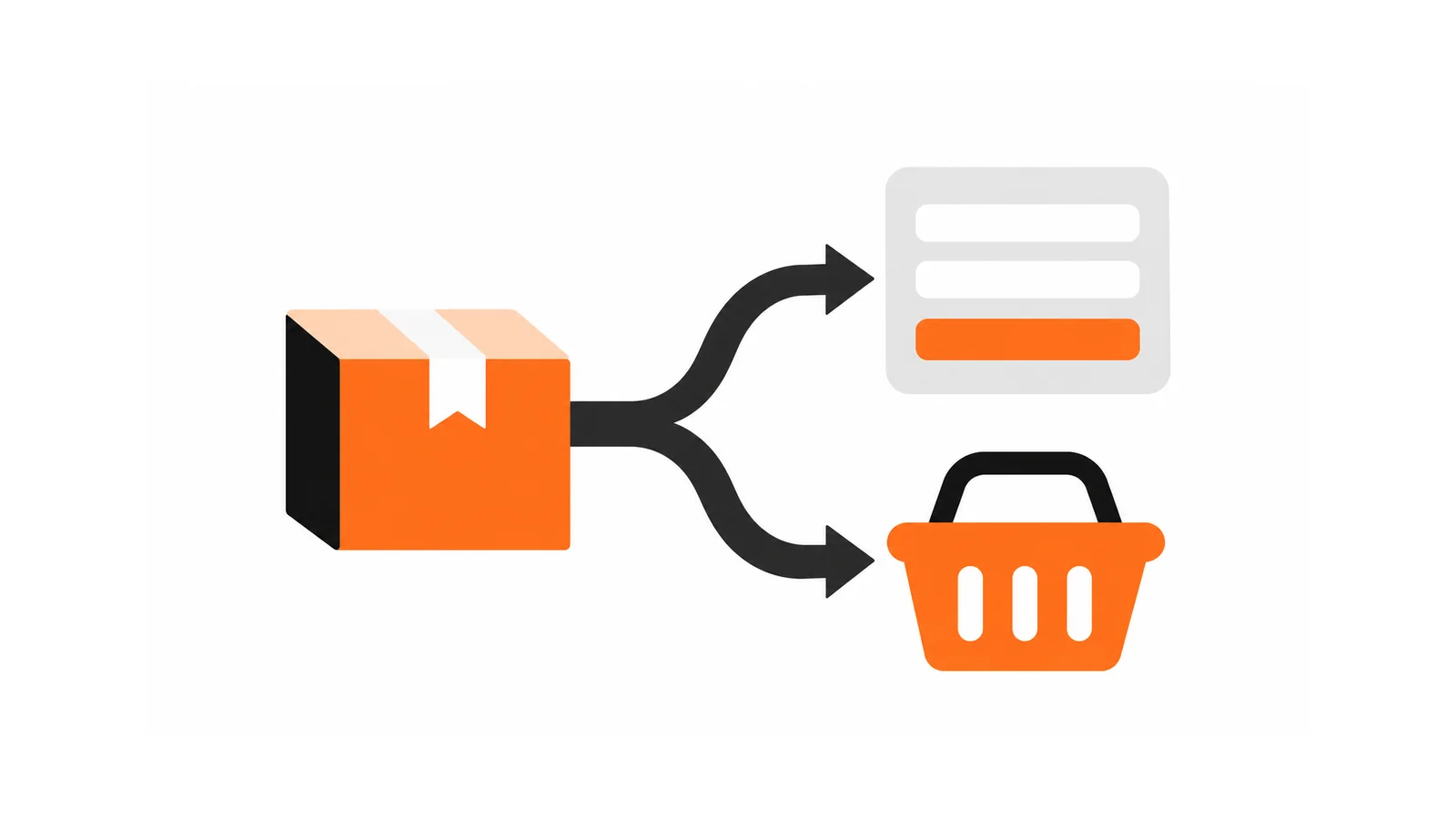
- Catalogue website: shows products, specifications and documents. Buyers contact you for price, availability and terms. Orders and payment happen offline.
- Online store: shows prices and availability. Buyers add to a cart, pay or place an order, and choose delivery.
A catalogue is mainly information and enquiries. A store is information plus transactions, stock, delivery, payments and returns.
Read next: What’s the Right Website for my Business?
Answer these questions
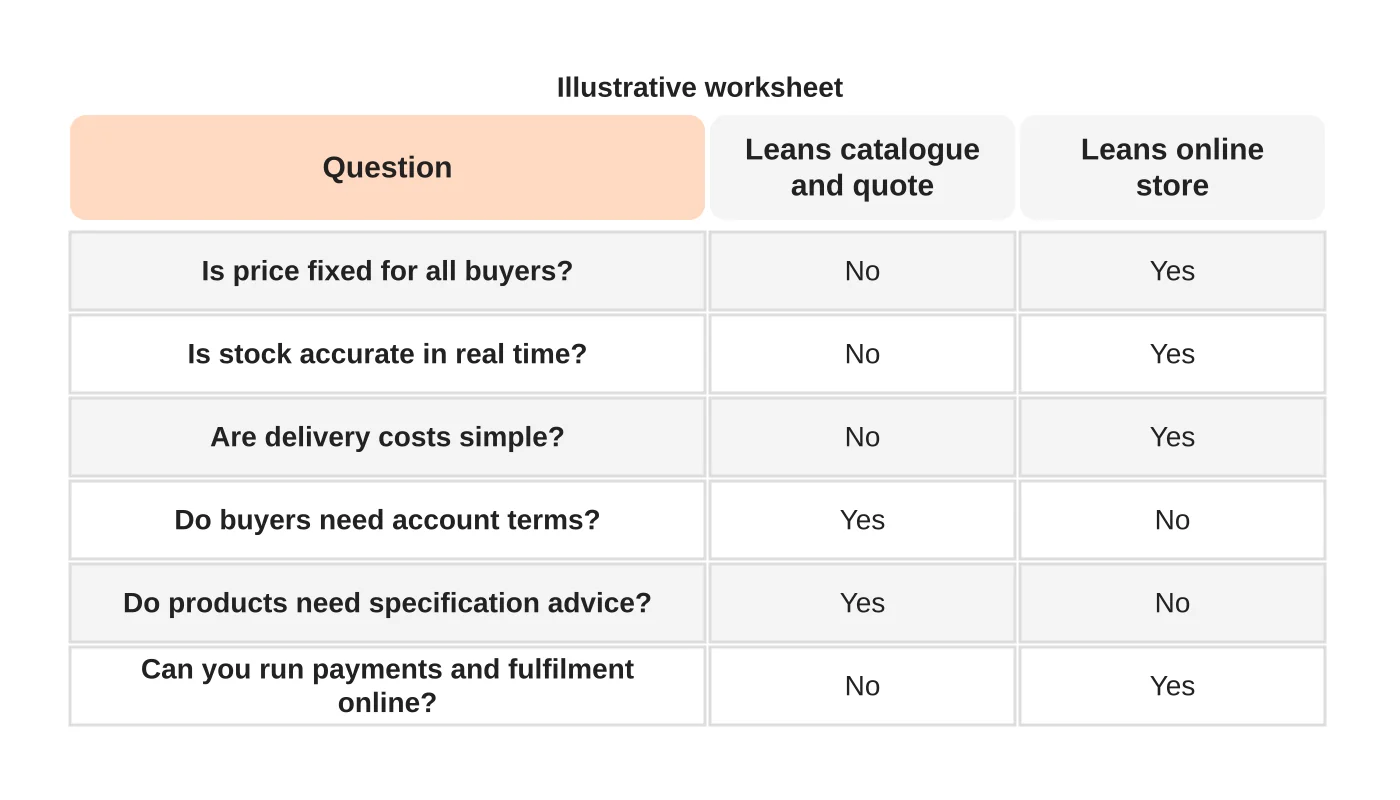
The table is a worksheet. Answer each question for your business, honestly. If most answers lean one way, start there.
- Is price the same for every buyer? Tiered, negotiated or project pricing leans to catalogue and quote.
- Is stock accurate in real time? If not, showing availability can mislead.
- Are delivery costs simple? If they depend on weight, distance or location, an online checkout is harder.
- Do buyers need account terms? Credit terms and approvals favour quote or account workflows.
- Do products need advice? Technical products often need a conversation.
- Can you run online payments and fulfilment reliably? Packing, dispatch and returns need people and process.
Read next: How Much Does a Business Website Cost in the Philippines? What You Are Actually Paying For.
Count what an online store requires
An online store adds ongoing work:
- Accurate stock and price data.
- Payment setup and reconciliation.
- Delivery rules and rates.
- Order handling, packing and returns.
- Customer support.
- Security, privacy and terms.
Be honest about whether your team can run these. A store that shows wrong stock or slow dispatch hurts your reputation. See product pages for shoppers and AI assistants for product page needs either way. This is general information, not legal advice. Check your situation with a qualified adviser.
A hybrid approach
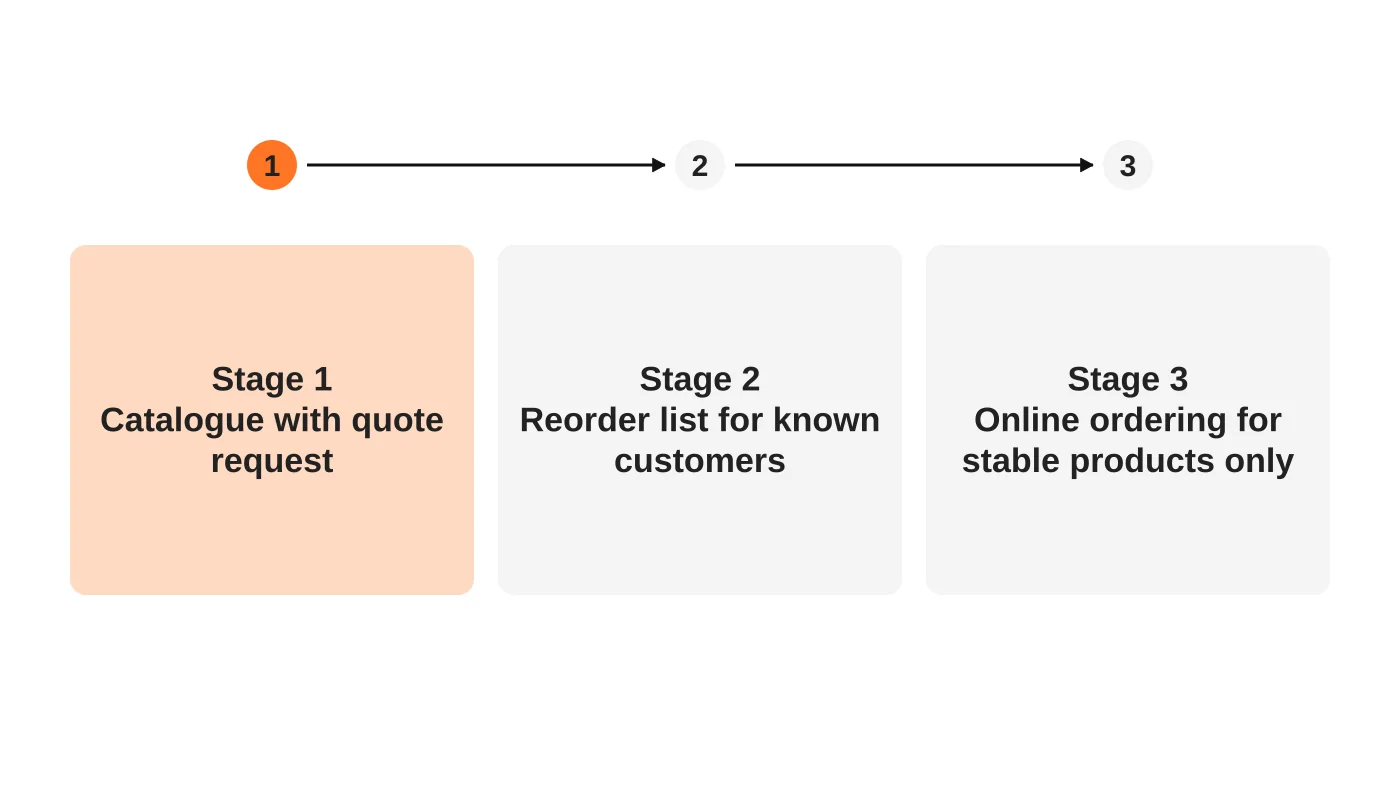
You do not have to choose forever. A common path is:
- Start with a catalogue and quote request. See wholesale request for quote websites.
- Add a reorder list for known customers.
- Add online ordering for stable products where stock and price are reliable.
Each stage should be justified by a real need, such as many repetitive small orders.
Read next: How to Build a Request-for-Quote Website for Wholesale Customers.
Make the catalogue good first
Whichever you choose, you need clean data and good pages. See product pages for shoppers and AI assistants, from PDF catalogue to website and category page SEO.
Think about your customers
Ask five good customers how they reorder today and what slows them down. If they email a purchasing officer a list, a quote or reorder form may beat a cart. If they want to order at night, online ordering may help.
Plan the decision review
Choose a date to review after launch. Look at enquiries, order sources, support questions and costs. Decide whether to expand. See digital marketing for Davao suppliers and distributors.
Frequently asked questions
Is a catalogue site outdated?
No. It is the right tool where buying involves advice, terms or custom pricing.
Can I take card payments on a catalogue site?
You can add payment for invoices or deposits if you have a secure method. Do not collect card details in forms.
Should I put prices on a catalogue?
If they are stable and honoured. Otherwise explain how to get a quote.
What about marketplaces?
They can reach buyers but with their own costs and rules. Treat them as another channel and compare, as in direct versus platform bookings.
Sources
Choose the right model
Web Design Davao’s web design team can discuss which model suits your products and customers. Get in touch.