

Quick answer
To find the tasks to hand off first, log every task you do for five working days, noting time, frequency, how it felt and whether someone else could do it. Score each task, rank the top ten by hours saved a month, then hand off the two easiest high-value tasks with a short written procedure.
- Record each task, how long it took, how often it happens and whether it was energising, neutral or draining.
- Rank your top ten by multiplying time per task by frequency, because frequent small tasks often cost the most.
- Hand off only the two easiest high-value tasks first, and decide in advance how you will use the freed hours.
You Are the Bottleneck puts it bluntly: you are the bottleneck. In most small businesses, work waits for the owner to approve it, answer it, fix it or decide it. The owner is busy, the team is waiting and growth stalls.
You do not fix that with a vague promise to “delegate more”. You fix it by finding the specific tasks that cost you time and do not need you. This audit takes one week of notes and about an hour of analysis.
Signs you are the bottleneck
- Work waits for your approval, even small items.
- You answer the same questions repeatedly.
- You do tasks that others could do, because it is quicker than explaining.
- You work evenings on admin while sales or strategy slips.
- Your team asks “what do you want me to do?” more than they act.
If two or more fit, the audit is worth doing.
Step 1: log a week
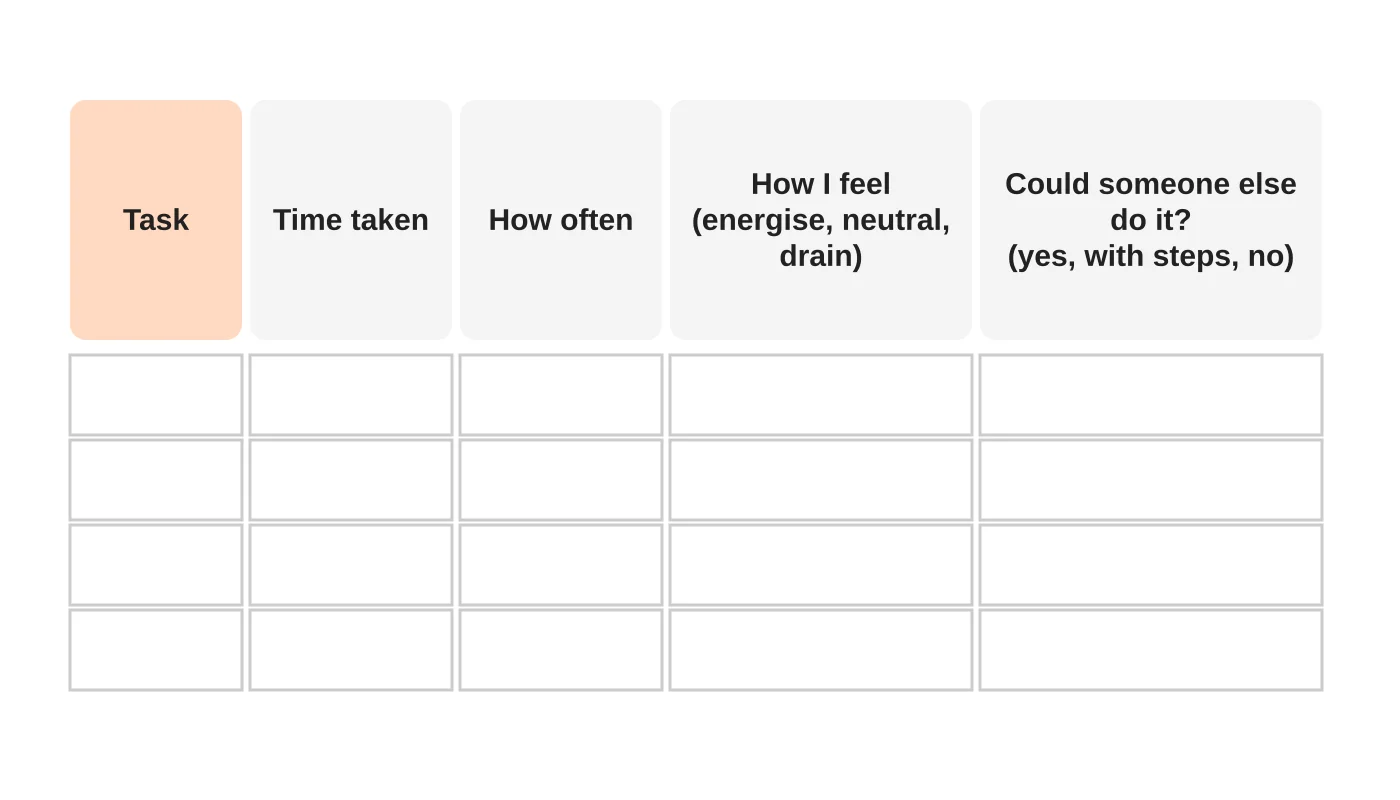
For five working days, write down every task you do, however small. Keep a note beside your computer or a simple spreadsheet. For each task record:
- What it was.
- How long it took.
- How often it happens (daily, weekly, monthly).
- How it felt: energising, neutral or draining.
- Could someone else do it? Yes, yes with written steps, or no.
Do not tidy as you go. The messy list is the point.
Step 2: score each task
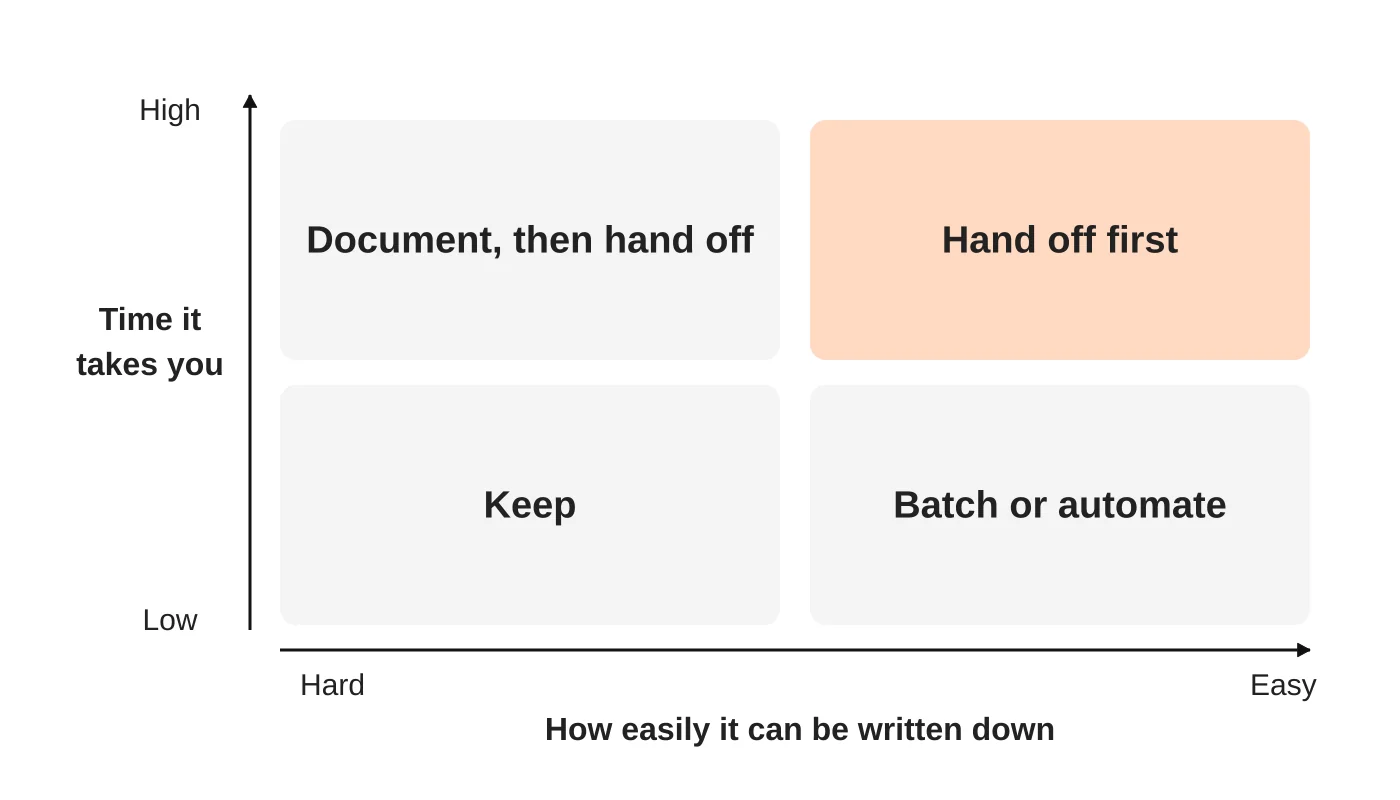
At the end of the week, place each task on the grid.
- High time, easy to write down: hand off first. Examples: invoicing, scheduling, inbox sorting, data entry, social posting, basic research.
- High time, hard to write down: document it, then hand off. Examples: client onboarding, quoting.
- Low time, easy to automate or batch: automate or do it once a week. Examples: recurring reports, reminders.
- Low time, needs you: keep. Examples: pricing decisions, hiring, key relationships.
Draining tasks that others could do go up the list, because they cost energy as well as time.
Step 3: pick your ten
List the top ten tasks that sit in the “hand off first” or “document, then hand off” boxes, ranked by hours saved a month. Multiply time per task by how often it happens. Most owners are surprised: the tasks that cost the most are usually small and frequent, not large.
For each of the ten, write one line: what “done” looks like, who could do it and what they would need to start.
Step 4: hand off the first two, not all ten
Do not hand over everything at once. Pick the two easiest high-value tasks and write a short procedure for each. See how to write SOPs and how to delegate to a virtual assistant for the briefing note and ownership levels.
If you use outside help, check you are ready first with before you hire a virtual assistant. If the right answer is not a person but a tool, see hire, automate or outsource.
Step 5: protect your time
Handing off tasks only helps if you spend the saved time well. Decide in advance what the freed hours are for: selling, planning, strategy, rest. Without a plan, the hours refill with new admin.
Watch for the hidden bottlenecks
- Approvals. Replace “ask me” with a rule: below this amount, you decide and tell me.
- Information. Put answers in a shared document so people stop asking you.
- Decisions. Give people ownership of small outcomes with clear limits.
- Perfectionism. If the work is 80 per cent right and safe to send, let it go.
Make it a habit
Repeat the audit every quarter. Needs change, and new bottlenecks appear. Over time, the aim is a business that keeps moving when you are away. If you manage a remote or offshore team, managed or self-managed models compare who carries the management load, and how to measure the ROI of a virtual assistant shows how to confirm the hand-off paid off.
Frequently asked questions
What if nobody can do it as well as I can?
Then it needs better instructions and a review step. Aim for good enough, not identical.
How do I know what to keep?
Keep what needs your judgement, your relationships or your authority.
Will handing off tasks cost me control?
Not if you set clear outcomes, a review rhythm and sensible access limits.
What if my team is already stretched?
Then remove or batch work first, and consider outside help for documented tasks.
How much time will it save?
It depends on the tasks. Track your own numbers before and after rather than trusting a general figure.
From the Wired for Growth newsletter
This guide builds on You Are the Bottleneck from Duarne Bernhagen’s LinkedIn newsletter, Wired for Growth.
Need a hand with the hand-off
Web Design Davao’s virtual staffing team can help you turn your top ten into briefs and start with a trained assistant. Talk to us.


