

Quick answer
In the first month, delegate rule-based, repetitive tasks you can explain clearly: inbox sorting and calendar scheduling, document and record upkeep, then follow-ups and weekly reporting. Set approval boundaries for each task, train in order from easy to more judgement, and hold back sensitive financial access, personal accounts and decisions that need your judgement.
- Track your tasks for one week, noting repeats, duration and whether they feel easy, tedious or draining.
- Decide whether the assistant acts alone, drafts for approval or only prepares, then loosen review on evidence.
- Write each task as a short procedure, and agree the reporting format and the day it arrives.
Most owners who hire an administrative virtual assistant fail the first month for one reason: they do not know what to hand over. They give vague instructions, or only the tasks they dislike, or everything at once. A short, deliberate list of first tasks works better.
This guide is about task selection. For the milestones and the manager’s routine in the first 30 days, see the 30-day onboarding plan. Scope is agreed per role.
Start with a week of honest tracking
For one week, note the tasks that repeat, how long they take and how they feel: easy, tedious or draining. Look for work that is rule-based, repetitive and does not need your judgement. That is where delegation succeeds first. See how to delegate to a virtual assistant for the underlying approach.
Inbox and calendar
These are common first tasks because the rules can be made explicit. Examples:
- Sort the shared inbox into folders and flag what needs you.
- Draft replies to routine enquiries from approved wording.
- Schedule, confirm and reschedule meetings within your availability rules.
Give clear boundaries: what the assistant may send alone, what needs your approval and what they never touch. Do not hand over your personal inbox on day one.
Related reading: Managing Event Venue Enquiries with Administrative Support.
Document and record upkeep
Keeping records current is valuable and low-risk: updating contact details, filing documents with consistent names, maintaining a client list, keeping templates tidy. Provide examples of how you want files named and organised. This builds familiarity with your business before they handle anything sensitive.
Follow-ups and reporting
Once routine tasks are stable, add follow-ups: reminders on unpaid invoices using your approved wording, check-ins on quotes, chasing missing information. Then reporting, such as a weekly summary of enquiries, tasks done and items waiting for you. Agree the format and the day it arrives.
Related reading: Following Up Solar Quotes: A Workflow for CRM and Administrative Support.
Set approval boundaries and training order
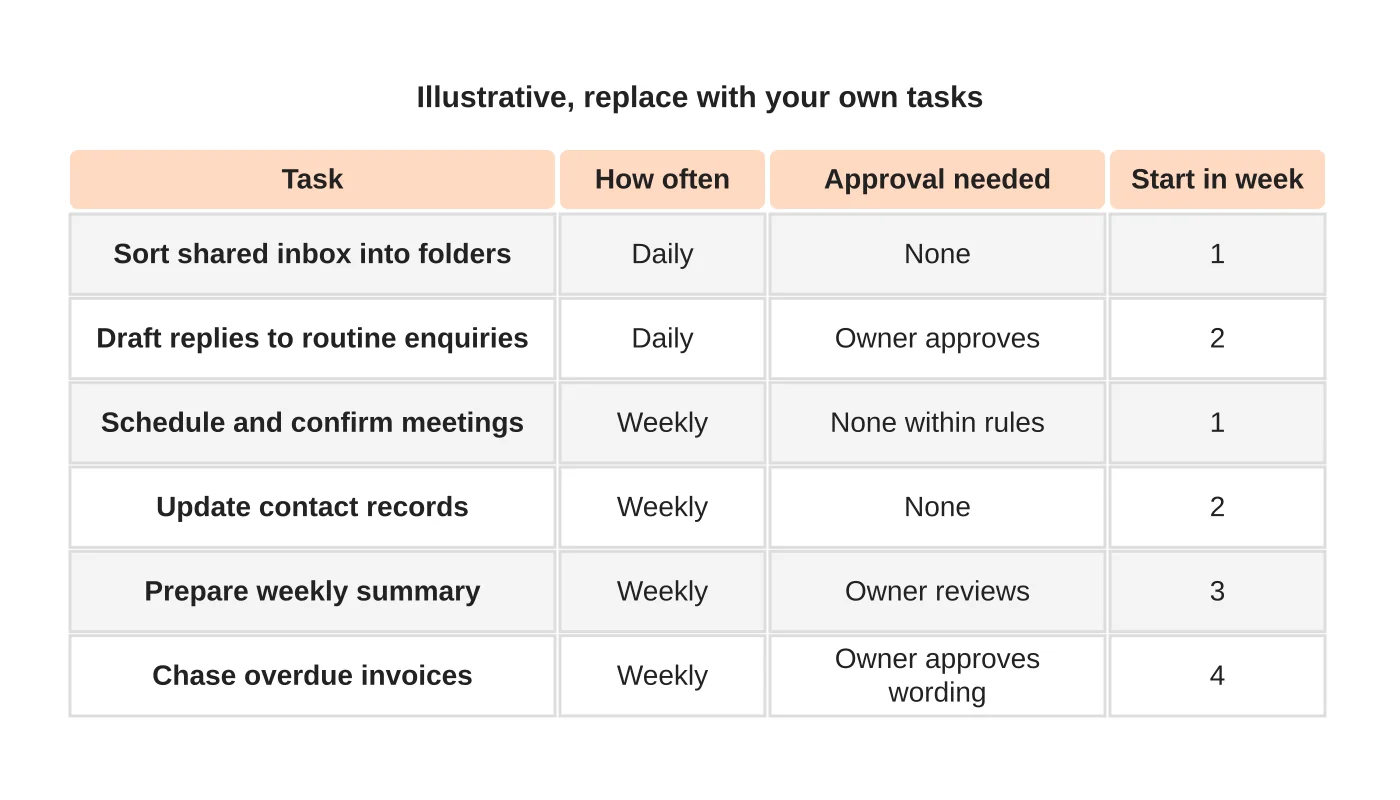
Decide, for each task, whether the assistant acts alone, drafts for approval or only prepares. Start with more review and loosen it on evidence. Order the training: easy and rule-based tasks first, then ones with more judgement. Write each as a short procedure. See how to write SOPs a virtual assistant can follow.
What not to delegate yet
Hold back in the first month: sensitive financial access, personal accounts, decisions that need your judgement and anything you cannot explain clearly. Add them later when trust is built. See a role-based access checklist.
Review at the end of the month
Compare the worksheet with what happened. What worked, what did not and what to hand over next? The aim is a stable base of tasks, not maximum delegation in 30 days. For capacity decisions after that, see part-time, full-time or shared support. For the broader role picture, see offshore operations assistants.
Frequently asked questions
What should I hand over first?
Start with inbox and calendar work, where rules can be made explicit, such as sorting the shared inbox, drafting routine replies from approved wording and scheduling meetings within your availability rules. Then add document upkeep, follow-ups and reporting.
What should I not delegate in the first month?
Hold back sensitive financial access, personal accounts, decisions that need your judgement and anything you cannot explain clearly. Do not hand over your personal inbox on day one. Add these later when trust is built.
How do I review the first month?
Compare your task worksheet with what happened: what worked, what did not and what to hand over next. The aim is a stable base of tasks, not maximum delegation in 30 days.
Sources
Talk through the role
Send us your recurring task list and required hours so we can help shape the role. Learn about our outsourced staffing service or get in touch.


