

Quick answer
To find out why a competitor outranks your service page, record the exact search, then compare both pages fairly: purpose and intent, services and scope, proof, local details, page experience, next step and freshness. Look beyond the page at your Business Profile and reviews, then fix the gaps most likely to help the searcher, starting with the highest.
- Search results vary by person, place and time, so record the date, location and what appears as a sample.
- Compare page purpose: a guide competing with a sales page, or the reverse, signals an intent mismatch.
- Do not copy the competitor’s page or guess their links and traffic; record changes and allow time before judging.
“Why is my competitor above me?” is the most common SEO question service businesses ask. Appearance alone does not answer it. A competitor may have a better match to the searcher’s need, clearer proof or a stronger local presence. This guide gives a worksheet to compare two pages honestly and decide what to fix.
It is a structured comparison. Do not infer traffic or authority from how a page looks. No outcome is promised.
Step 1: record the search
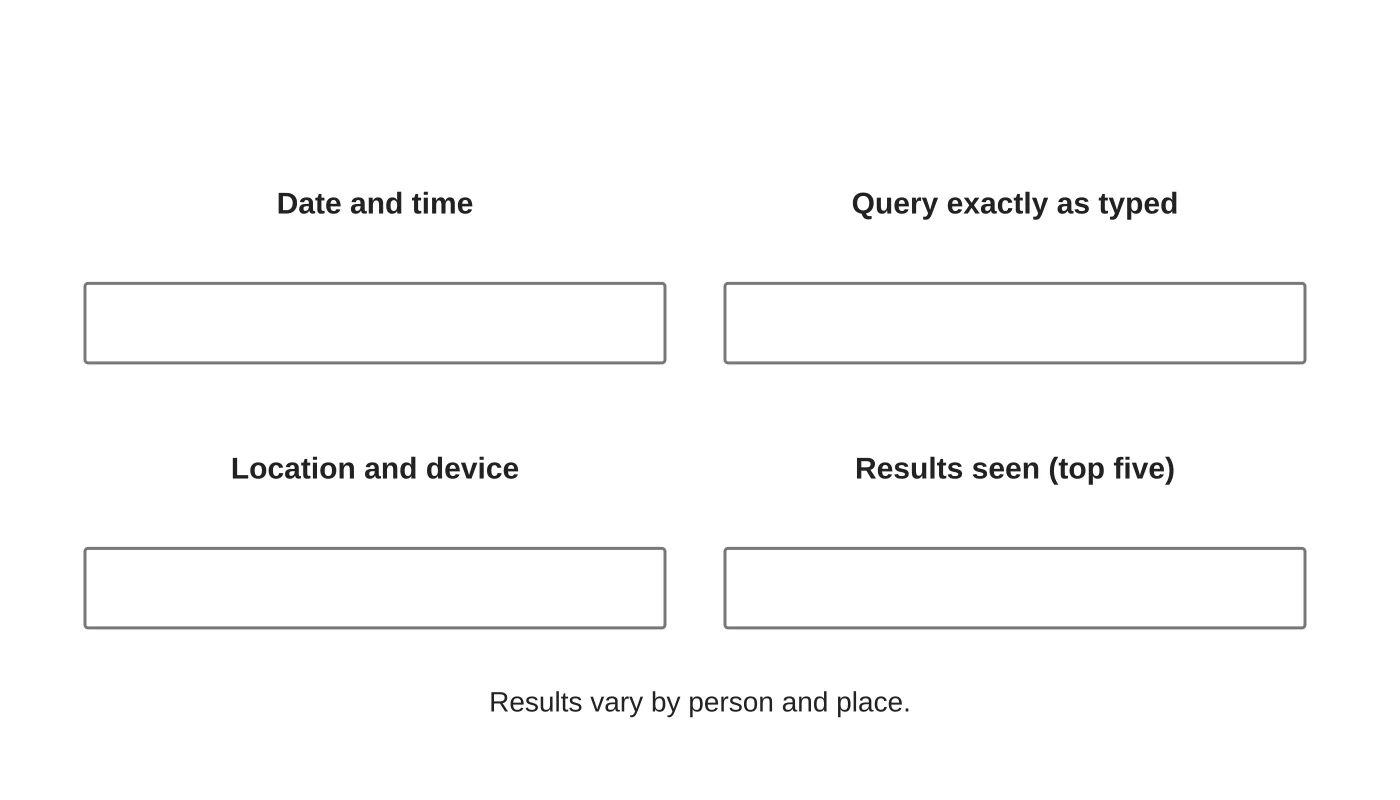
Search the exact query a customer would use, on a phone and desktop if relevant, and write down the date, location and what appears. Search results vary by person, place and time, so treat your record as a sample. Note the page types at the top: service pages, maps, directories, guides. See service page or blog article to judge intent.
Step 2: compare page purpose
Is their page built for the same intent as yours? If the query is commercial and yours is an essay, that is a gap. If theirs is a guide and yours a sales page for a query that wants to learn, that is another.
Step 3: fill in the worksheet
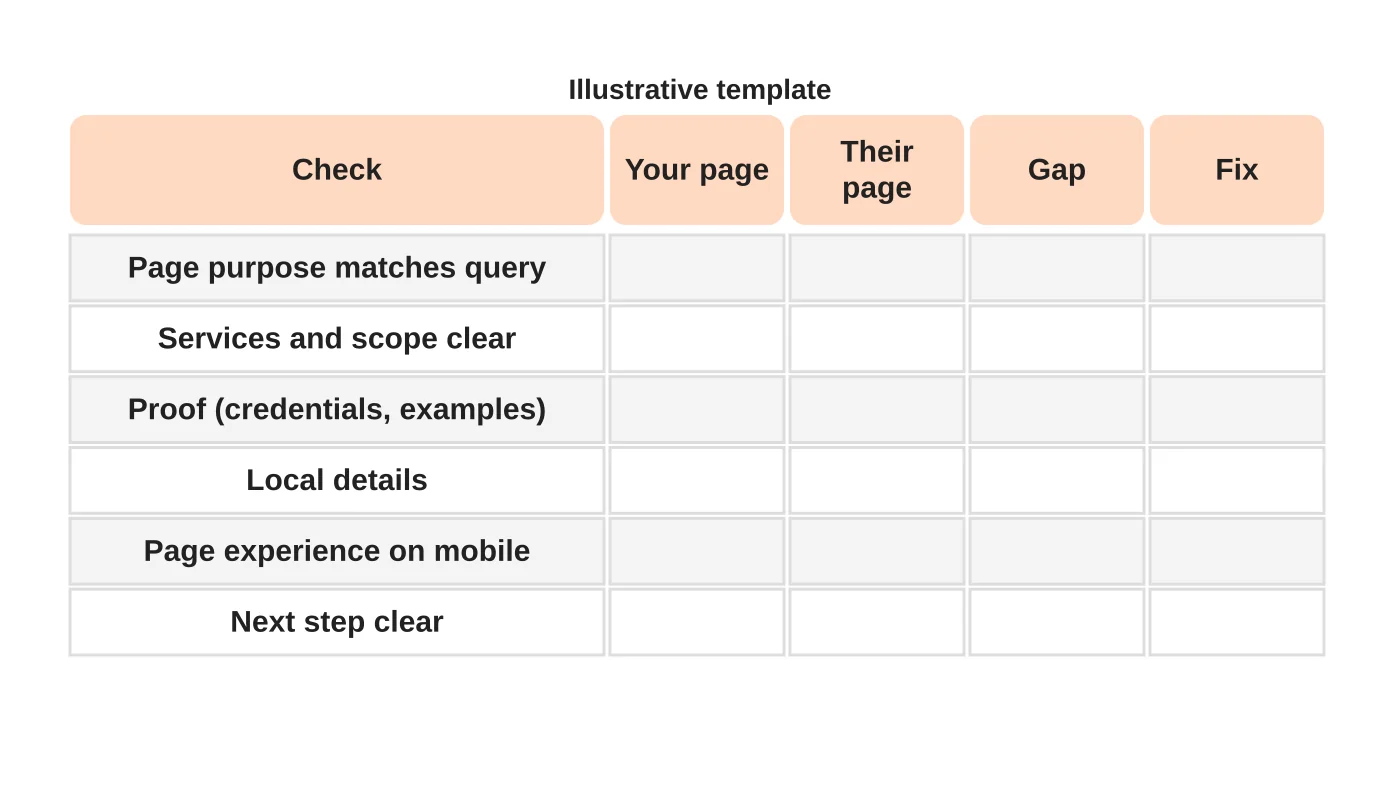
For each row, write what each page does and what the gap is.
- Services and scope: Is it clear what is included and for whom?
- Proof: Credentials, verified examples, named people and real photos.
- Local details: Address, service area and hours, matched with the Business Profile.
- Page experience: Speed and usability on a phone. See website speed.
- Next step: A clear way to enquire.
- Freshness: Dates and current details.
Be fair. Where they do better, say so.
Step 4: look beyond the page
A page does not rank alone. Check your Business Profile, reviews and the rest of your site’s coverage of the topic. See the Business Profile guide and the local SEO structure guide. Do not guess at their links or traffic without data. A paid tool can estimate some of it, but treat estimates as estimates.
Step 5: prioritise fixes
Score each gap by how likely it is to help the searcher and how easy it is to fix. Start with the highest. Typical fixes: align the page with the query’s intent, add missing scope or proof, fix mobile usability, update details and improve links from related pages. See SEO best practices and how to use keywords.
Step 6: change one thing at a time where you can
Record what you changed and when. Allow time before judging. See how long SEO takes.
Frequently asked questions
Should I copy the competitor’s page?
No. Copying produces a weaker duplicate. Improve how well yours serves the searcher.
Do I need an SEO tool?
Not for this exercise. Tools can add data, but your own observation comes first.
What if they have more reviews?
Earn genuine reviews over time. Never buy them.
What if nothing is wrong with my page?
Then the gap may be elsewhere, such as location or brand strength. Be patient and measure.
Sources
Compare your pages
Web Design Davao’s digital marketing team can discuss a comparison review for your key service pages. Get in touch.