Quick answer
Buy off-the-shelf software when the problem is common and a product covers most of what you need. Consider custom or a hybrid build when friction repeats, costs real money and your way of working is a point of difference. Compare the total cost of getting the work done over three years, not licence against build.
- Price the current way, including staff hours on workarounds, errors, rework and delay, before asking for any development quote.
- Consider a hybrid: keep products that work and build only the missing piece, such as a quoting tool.
- Before building, confirm you have a person who will own the application and can afford ongoing maintenance and security.
Software decisions are usually made by comparing prices: a monthly subscription against a development quote. That comparison is unfair to both sides. The subscription is only the visible cost, and a custom build is only part of what you would pay over time.
This guide gives a small business owner a way to decide between buying, building or combining the two, with a three-year cost framework and a checklist.
The real question: where does your advantage come from?
For years the default advice was that buying beats building. Often that is still right. If a proven product solves most of your problem cleanly, buy it.
Three ideas from the newsletter explain why the question needs more care now:
- That Cheap Software Might Be Your Most Expensive Workflow argues you should judge software by what it costs to operate around, not only to buy.
- Your Software Stack Shouldn’t Look Exactly Like Everyone Else’s points out that when everyone uses an identical stack, no one gains an advantage from it.
- Why Are You Changing Your Business to Fit the Software? asks why so many businesses change how they work to suit the software, rather than the other way round.
The deciding factor is not whether custom software is fashionable. It is whether the way you work is a source of advantage, and whether a generic tool lets you keep it.
When off-the-shelf is the right choice
Buy when the problem is common and the product fits.
- Accounting, payroll, email, basic CRM and standard e-commerce are well served by mature products.
- Your process is similar to other businesses in your sector.
- You value support, updates and a large user community.
- The product covers about 90 per cent of what you need cleanly.
- You cannot justify the cost of maintaining your own software.
A suitable product is usually faster, cheaper to start and lower risk. Do not build something just because you can.
Signals that custom will pay off
Look for friction that repeats and costs real money.
- Staff keep spreadsheets alongside the software to fill gaps.
- The same information is typed into two or three systems.
- Customers wait because someone has to piece data together by hand.
- You cannot offer a service level or quote speed that your competitors can.
- Your process is a genuine point of difference and the software forces it into a generic shape.
- You are paying for several tools and an integration layer to make one workflow.
- Reporting needs a rebuild every month.
If these appear thousands of times a year, they add up. If they happen twice a month, live with the workaround.
A three-year cost framework
Compare total cost of getting the work done, not licence against build.
Step 1: Price the current way
- Subscriptions and licences.
- Hours of staff time spent on workarounds, copying and correcting, multiplied by an internal hourly cost.
- Cost of errors and rework.
- Cost of delay: slow quotes, late invoices, lost enquiries.
Step 2: Price the alternative
- Build cost (one-off).
- Hosting, monitoring and security.
- Support and maintenance (ongoing). See who looks after a web app after launch.
- Any subscriptions you keep.
- The effort to change how people work.
Step 3: Compare over three years
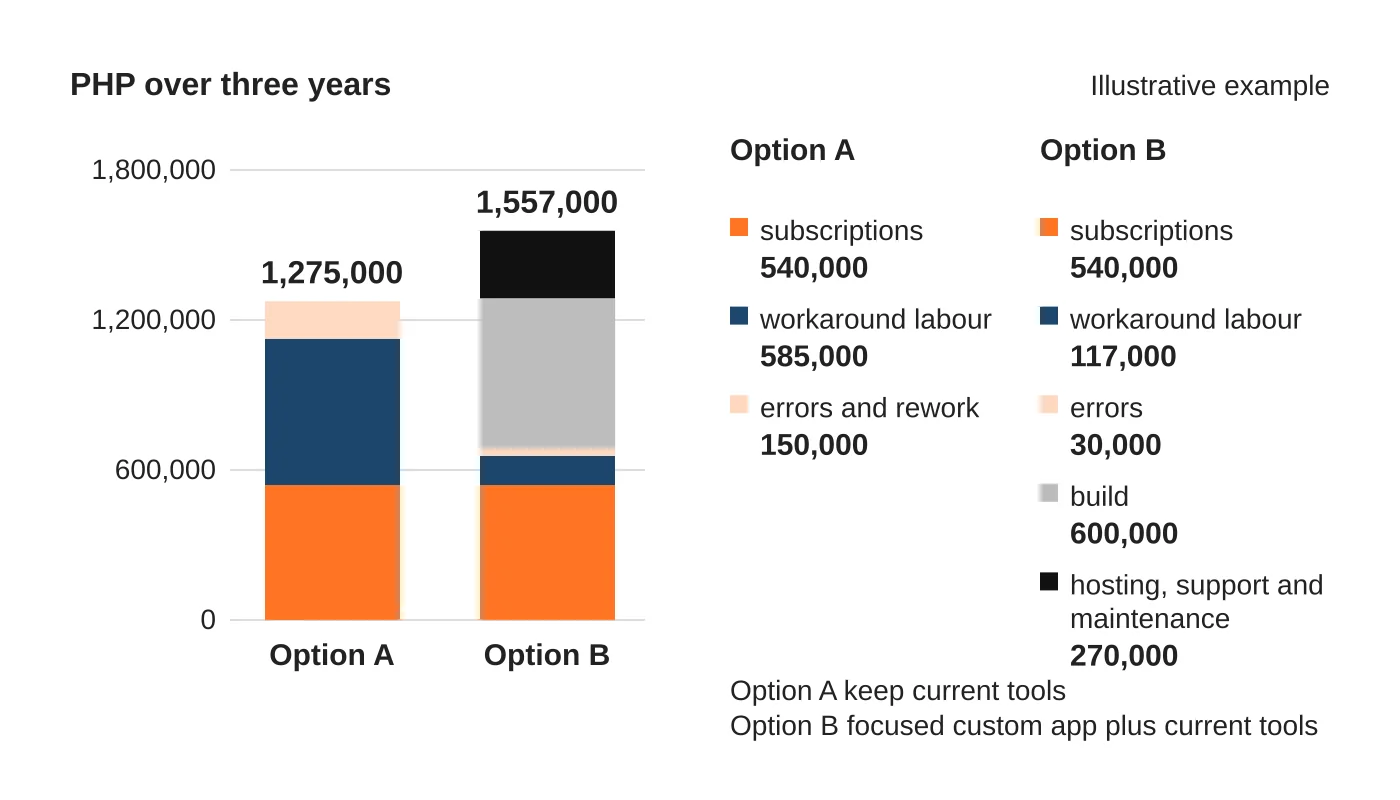
The numbers below are illustrative, not quotes, to show the method. Replace them with your own.
| Item (three years) | Option A: keep current tools | Option B: focused custom app plus current tools |
|---|---|---|
| Subscriptions | PHP 540,000 | PHP 540,000 |
| Workaround labour (e.g. 6 staff x 30 min/day) | PHP 585,000 | PHP 117,000 |
| Errors and rework | PHP 150,000 | PHP 30,000 |
| Build | PHP 0 | PHP 600,000 |
| Hosting, support and maintenance | PHP 0 | PHP 270,000 |
| Three-year total | PHP 1,275,000 | PHP 1,557,000 |
In this example Option A is cheaper over three years. Change the assumptions, for example by doubling the labour saved or adding customer-facing benefits such as faster quotes, and the answer can reverse. That is the point: the decision turns on your workflow cost, which is why you should calculate it before asking for a quote. Our guide to the hidden cost of cheap software shows how.
Include benefits that do not appear on an invoice: faster response, fewer mistakes, better customer experience and the ability to handle more work with the same team.
If visitors keep asking what things cost, consider whether a website price calculator or estimate tool suits your business.
Hybrid options
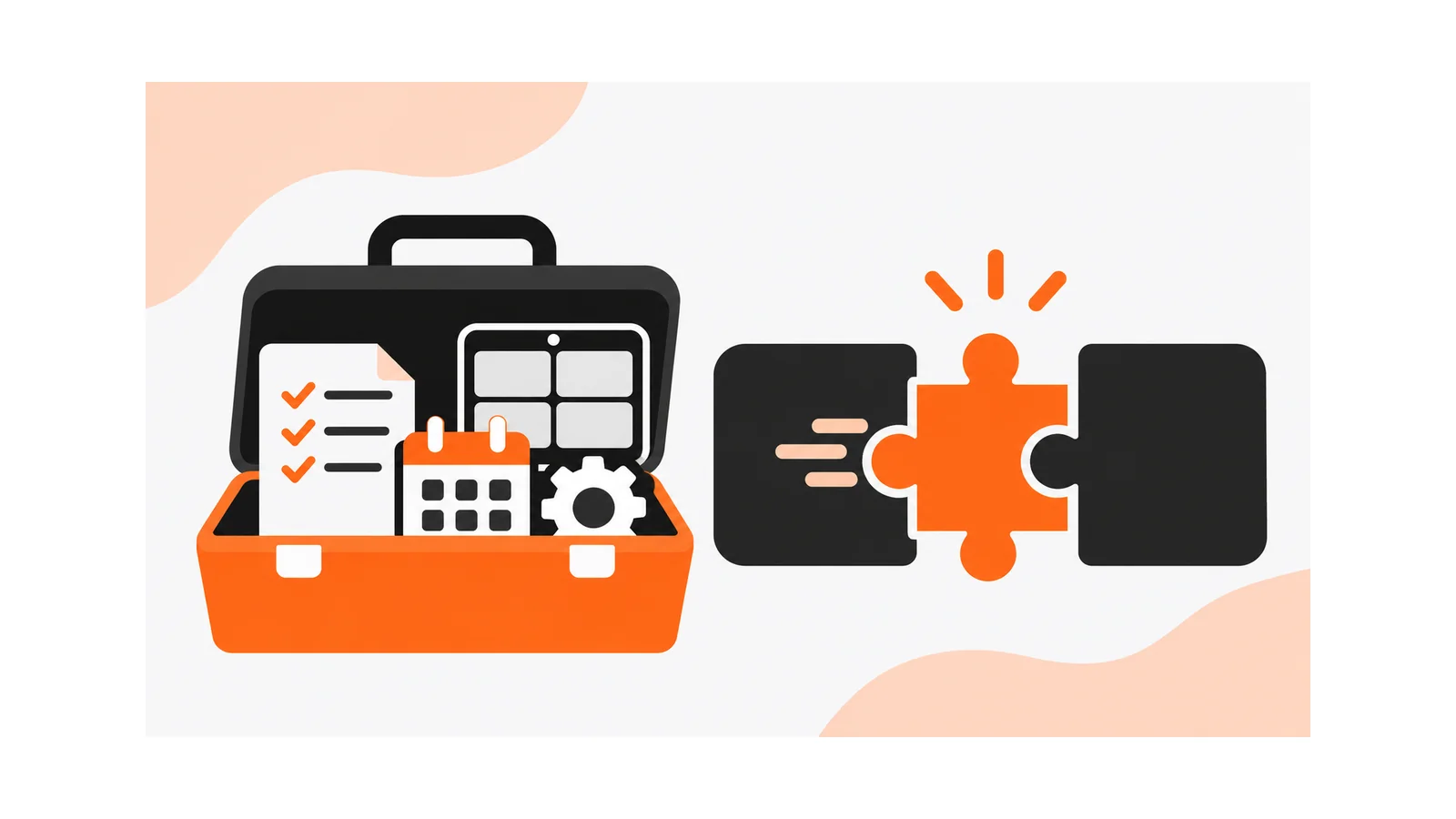
Buy-or-build is a false choice. A third route is to keep the products that work and build only the missing piece.
- A quoting tool or customer portal in front of your existing systems.
- An internal operations app that pulls data from several tools into one screen.
- A scheduling layer or management dashboard.
- A mobile app for field staff that writes back to your main system.
- Low-code or integration tools for simple links between products.
A focused application does not have to replace your stack. It can make the stack behave like one system, which changes the economics.
If clients need to share files or track work with you, compare a client portal with email first.
Typical Davao and Philippine scenarios
- Clinic scheduling: a generic booking tool handles appointments but not referral tracking, recalls and patient reminders in the way the clinic works. A small custom layer could sit on top.
- Distribution business: orders arrive by message, are re-keyed into an accounting system and chased manually. A simple order-intake app that writes to accounting can cut re-entry.
- Tourism booking: a tour operator juggling availability, vendors and payments across several tools may benefit from one booking and itinerary app.
These are illustrations of the pattern, not claims about any particular business.
Decision checklist
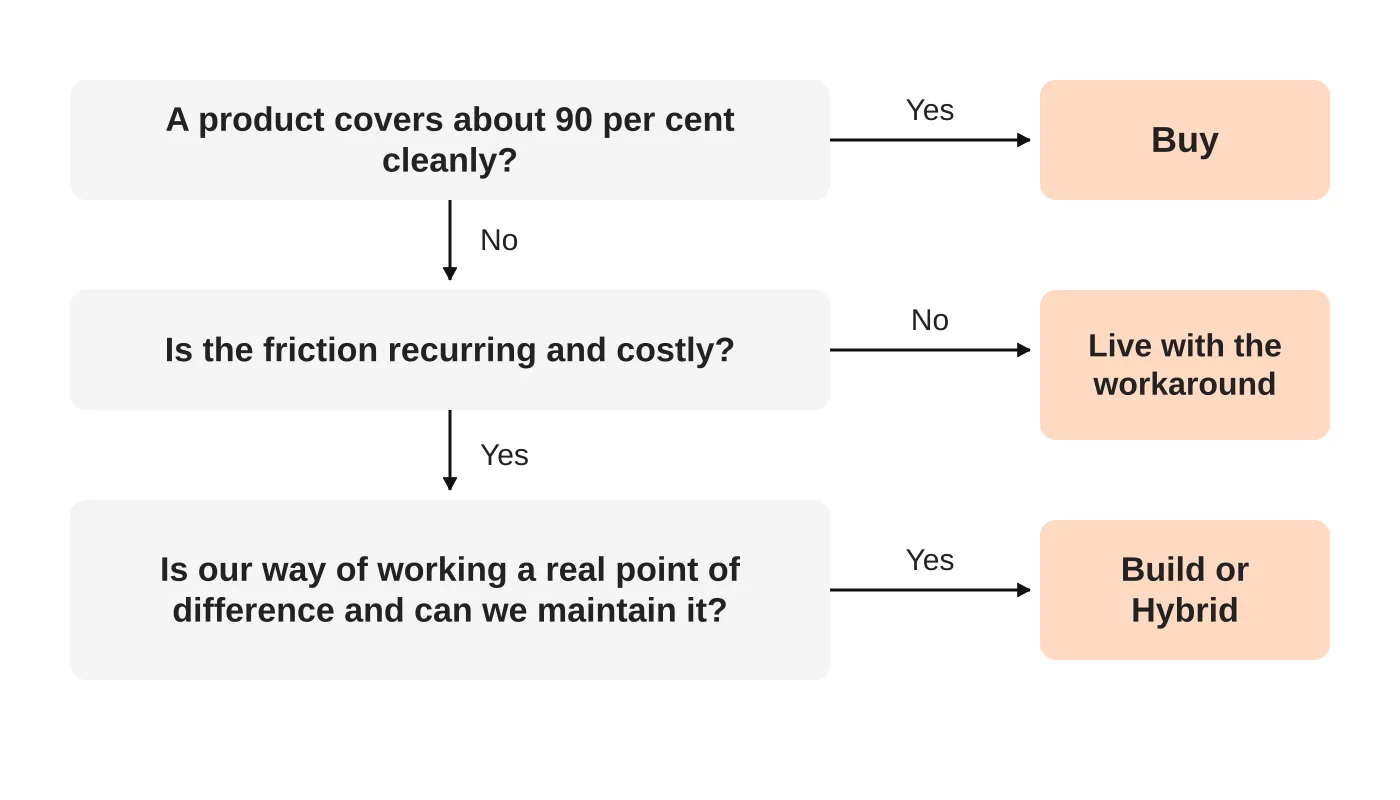
Answer yes or no:
- [ ] A product exists that covers most of what we need without constant workarounds.
- [ ] The friction is recurring, expensive and important to how we operate.
- [ ] Our way of working is a point of difference we want to keep.
- [ ] We can afford ongoing maintenance and security, not only the build.
- [ ] We have a person who will own the application.
- [ ] We have priced the total cost of the current way over three years.
If the first box is yes and the next three are no, buy. If the friction is real and the work is distinctive, explore a focused build or a hybrid. If you cannot say who will own it, fix that first. For help planning growth-ready systems, read how to plan a website that can grow with your business, building scalable websites and the older comparison custom website vs template.
Frequently asked questions
Is custom software always more expensive?
The upfront cost is higher than a subscription, but over several years the total can be lower if it removes expensive manual work. Run the comparison with your numbers.
Can AI make custom software cheap?
AI tools and modern frameworks can speed up development, but you still pay for design, testing, security, hosting and maintenance.
What if the developer disappears?
Insist on documentation, code ownership and a handover plan, and keep a support arrangement in place.
How long does a focused custom app take?
It depends on scope. A narrow tool can be scoped and delivered much faster than a platform. Ask for a staged plan so you see value early.
Should I replace my CRM or accounting software?
Rarely. Keep systems that work well and build around the gaps.
From the Wired for Growth newsletter
This guide draws on three issues of Duarne Bernhagen’s LinkedIn newsletter, Wired for Growth: That Cheap Software Might Be Your Most Expensive Workflow, Your Software Stack Shouldn’t Look Exactly Like Everyone Else’s and Why Are You Changing Your Business to Fit the Software?.
Book a free scoping call
Web Design Davao’s custom web design and development team can help you work out whether to buy, build or blend. Book a free scoping call and bring one workflow that frustrates your team.