

Quick answer
Website copy attracts the wrong customers when it tries to appeal to everyone and so says nothing specific. Fix it by completing one sentence: we help a specific customer achieve a specific outcome by a stated method, with proof. Then rewrite the homepage, service pages and About page around it.
- Test the sentence for specificity, difference, believability and choice: good positioning also says who you are not for.
- Structure service pages as promise, problem, approach, proof and one clear call to action.
- Make every claim checkable by listing the evidence you can show, and remove or soften claims you cannot support.
Many websites do the same thing: they try to appeal to everyone, so they say nothing in particular. The result is enquiries that do not fit, price shoppers, time-wasters and a quiet absence of the customers you really want.
This guide shows how to spot vague messaging, run a simple positioning test and rewrite the three pages that matter most: the homepage, service pages and About page.
Symptoms of vague messaging
You probably have a messaging problem if:
- Enquiries are mostly outside your ideal size, budget or type of work.
- Your homepage opens with “welcome” or a list of every service you offer.
- Your copy could be pasted onto a competitor’s site with only the logo changed.
- Visitors ask questions your site should already answer.
- You win on price more than on fit.
- Your team describes the business differently from the way the site does.
Several newsletter issues make related points. Why Safe Content Attracts the Wrong Buyers argues that safe content attracts the wrong buyers. Stop Offering Everything — You’re Diluting Your Impact says offering everything dilutes your impact. Most marketing is made for your CEO, not your customer. observes that much marketing is written for the boss rather than the customer, and Playing it safe is making you invisible. warns that playing it safe makes you invisible. Together they describe the same trap: copy designed to avoid offending anyone, which also fails to attract anyone.
The positioning test
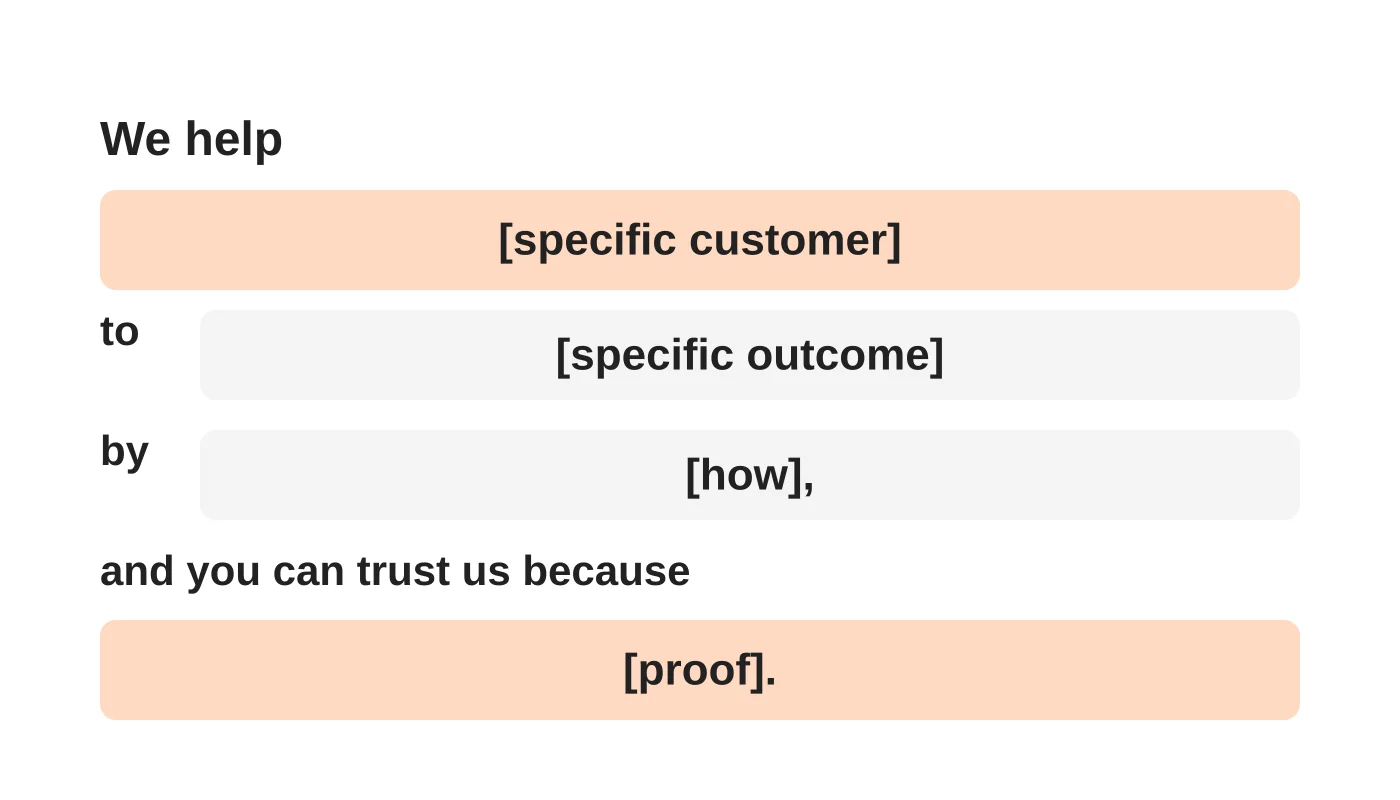
Try to complete this sentence in plain words:
“We help [specific type of customer] to [specific outcome] by [how we do it], and you can trust us because [proof].”
Then check it against four questions:
- Specific? Could a stranger picture the exact customer?
- Different? Could a competitor say the same thing word for word?
- Believable? Is there proof on the page, such as results, examples or process?
- Chosen? Does it exclude someone? Good positioning says who you are not for.
If you cannot finish the sentence, the problem is positioning, not copywriting. Decide who you serve best before you write another word.
Rewrite a homepage section
An illustrative example for a fictional Davao web agency. The “before” is typical, not a real client.
Before
Welcome to our company! We offer a wide range of web design, SEO, social media, hosting and IT services for businesses of all sizes. We are passionate about delivering quality and excellent customer service. Contact us today for a free quote.
What is wrong: it lists services, not outcomes. It does not say who it is for. “Passionate” and “quality” are claims every competitor makes. It gives no reason to choose this firm.
After
Websites for Davao clinics and professional firms that turn visitors into booked appointments. We design, build and look after your site so patients and clients can find you, trust you and book online in under two minutes.
Why it works: it names the customer, states the outcome, describes how, and points to proof. It also turns away people who want something else.
If paid clicks bring the wrong people, work through this Google Ads lead quality checklist.
Read next: Accounting Firm Website Checklist: Services, Expertise and Consultation Enquiries.
The service page messaging pattern
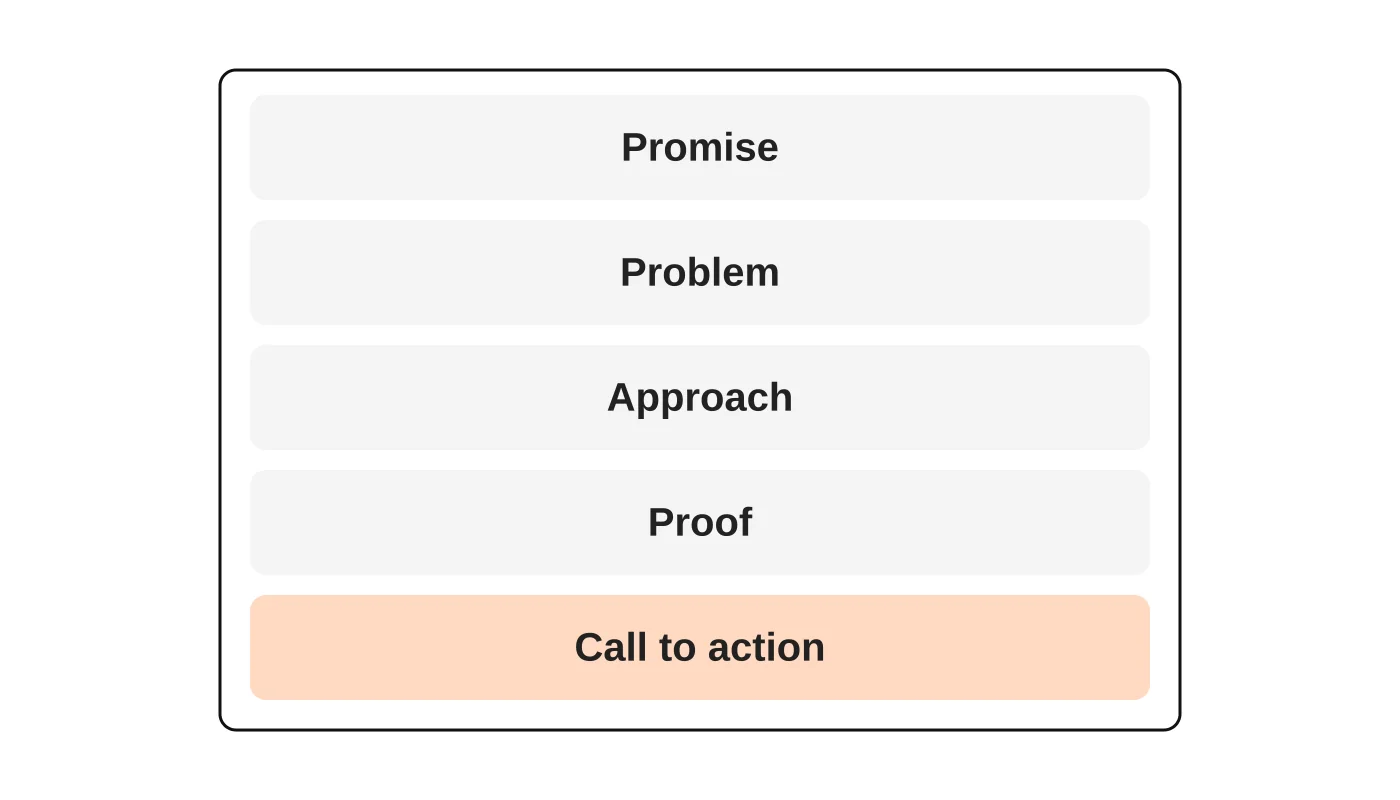
Use the same structure on each service page:
- Promise: what the customer gets, in their words.
- Problem: the situation that sends people to you. Describe it so they nod.
- Approach: how you work, in a few clear steps.
- Proof: case studies, results, reviews, credentials and examples.
- Call to action: one clear next step, such as booking a call.
Avoid listing features without saying what they mean for the customer. Replace “we use the latest technologies” with what that achieves: faster pages, fewer problems, easier edits.
Read next: How to Structure Clinic Service Pages for Clearer Appointment Enquiries.
The About page
Visitors read the About page to decide whether to trust you. Make it about them, then about you:
- Start with the problem you solve and why you care about it.
- Show real people and real work.
- Tell a short story of how you do things differently.
- Include credentials and experience that matter to the customer.
- Be careful with figures. Only state numbers you can prove. Unsupported or implausible statistics damage trust faster than modest honest ones.
Proof elements that build trust
- Named case studies with a result, not just a logo.
- Testimonials with a name, role and, where possible, a photo.
- Reviews on Google and other independent platforms.
- A clear description of your process and what clients should expect.
- Guarantees you will actually honour.
- Transparent information about pricing or how pricing works.
For more on turning clicks into enquiries, see how conversion-focused copywriting turns clicks into clients, why your website should be more than a digital brochure and the power of UX.
Read next: How to Build Resort Pages for Weddings, Team Building and Group Bookings.
A quick audit you can do today
Open your homepage and answer in writing:
- Who is this for? Is it obvious within five seconds?
- What do we do for them, in outcome terms?
- Why should they believe us?
- What should they do next?
- Who would be better served elsewhere, and does the page say so?
Share the page with someone outside your business and ask them to say back what you do. If their answer is off, that is where to start.
Example: make every claim checkable
Professional-firm visitors look for signs you are real, qualified and careful. For each claim on your site, write the evidence you can show. If you cannot show any, remove or soften the claim.
| Claim | Evidence you can show | Where it goes |
|---|---|---|
| Registered and licensed | Certificate number or registry link | Near the top of the About page |
| Experienced team | Dated team profiles | Team page |
| Confidential | A stated process and a privacy notice | Footer and consultation form |
| Responsive | A published reply time you actually meet | Contact page |
Show named people, real photographs, a plain explanation of your process, and your address. Do not use badges that you cannot explain, or testimonials without consent. Check your professional body’s rules before using testimonials.
This is general information, not legal advice. Check your situation with a qualified adviser.
If your customers read in more than one language, start with planning a multilingual website in the Philippines.
Frequently asked questions
Will narrowing my message lose me business?
You will lose some poor-fit enquiries, which is the point. Clear positioning usually raises the share of enquiries that suit you.
Do I need to pick one niche?
Not necessarily, but pick a primary audience for each page. You can serve several groups with separate pages.
How long should homepage copy be?
Long enough to state the promise, the problem, the approach, proof and next step. Clarity matters more than length.
Can I use AI to write my copy?
You can use it to draft, but the positioning decisions must come from you. Generic prompts produce generic copy.
How do I know the new copy works?
Track enquiry quality, conversion rate and the questions prospects ask before and after the change.
From the Wired for Growth newsletter
This guide draws together themes from several issues of Duarne Bernhagen’s LinkedIn newsletter, Wired for Growth: Why Safe Content Attracts the Wrong Buyers, Stop Offering Everything — You’re Diluting Your Impact, Playing it safe is making you invisible. and Most marketing is made for your CEO, not your customer..
Get a website messaging review
Web Design Davao’s web design and development team can review your homepage and service pages for clarity and positioning. Request a messaging review and bring the pages you want to improve.


