Quick answer
Hand over starting, varying and tidying work to AI, such as first drafts, headline options, outlines, repurposing and summaries. Keep positioning, facts and claims, customer stories, pricing, sensitive replies and final approval with a named person. AI is weak at knowing your customers, your facts and your promise.
- Brief the AI with the audience, goal, tone, permitted facts and what it must not say.
- Check every statistic, date, price and legal or health claim before publishing, because AI can state wrong things confidently.
- Feed it your own material and add what only you know, so the text does not sound like everyone else.
My Digital CMO: The Smart Marketer’s Secret Weapon Just Got Smarter describes the idea of a digital chief marketing officer: an AI that helps you plan, draft and analyse. For a small business with no marketing team, that is attractive. It is also easy to misuse. Posts that sound like everyone else, claims nobody checked and confidential details pasted into the wrong tool all cost more than they save.
This guide shows what to hand over, what to keep and how to run a workflow that protects your brand.
What AI is good at in marketing
AI tools are good at starting, varying and tidying. They are weak at knowing your customers, your facts and your promise. Use them for:
- First drafts of posts, emails and page sections.
- Options: ten headlines, five subject lines, three angles.
- Outlines for guides and videos.
- Repurposing: turning one article into posts, an email and a script. See the content repurposing workflow.
- Summaries of your own documents, transcripts and customer feedback.
- Planning: a draft content calendar. See planning 90 days of content with AI.
- Admin: meeting notes, reminders and variants for different channels.
Related reading: The Journey to Becoming Brand Marketing Strategists.
What to keep with a person
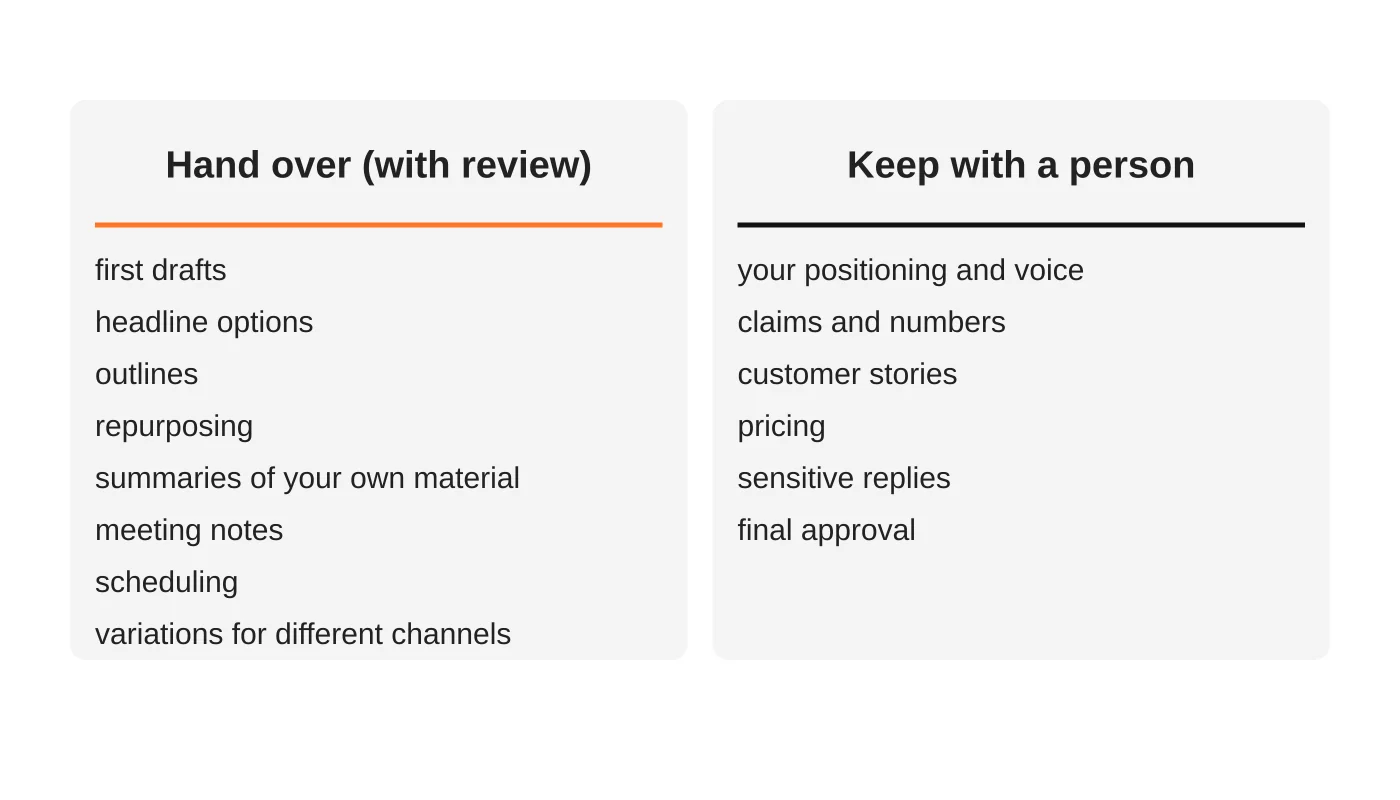
- Your positioning and voice. Decide who you serve and what you promise. See why website copy attracts the wrong customers.
- Facts, numbers and claims. AI can state wrong things confidently. Check every statistic, date, price and legal or health claim.
- Customer stories. Use real ones with permission, never invented ones.
- Pricing and offers.
- Sensitive replies, such as complaints and refunds.
- Final approval. A named person decides what is published.
A safe weekly workflow
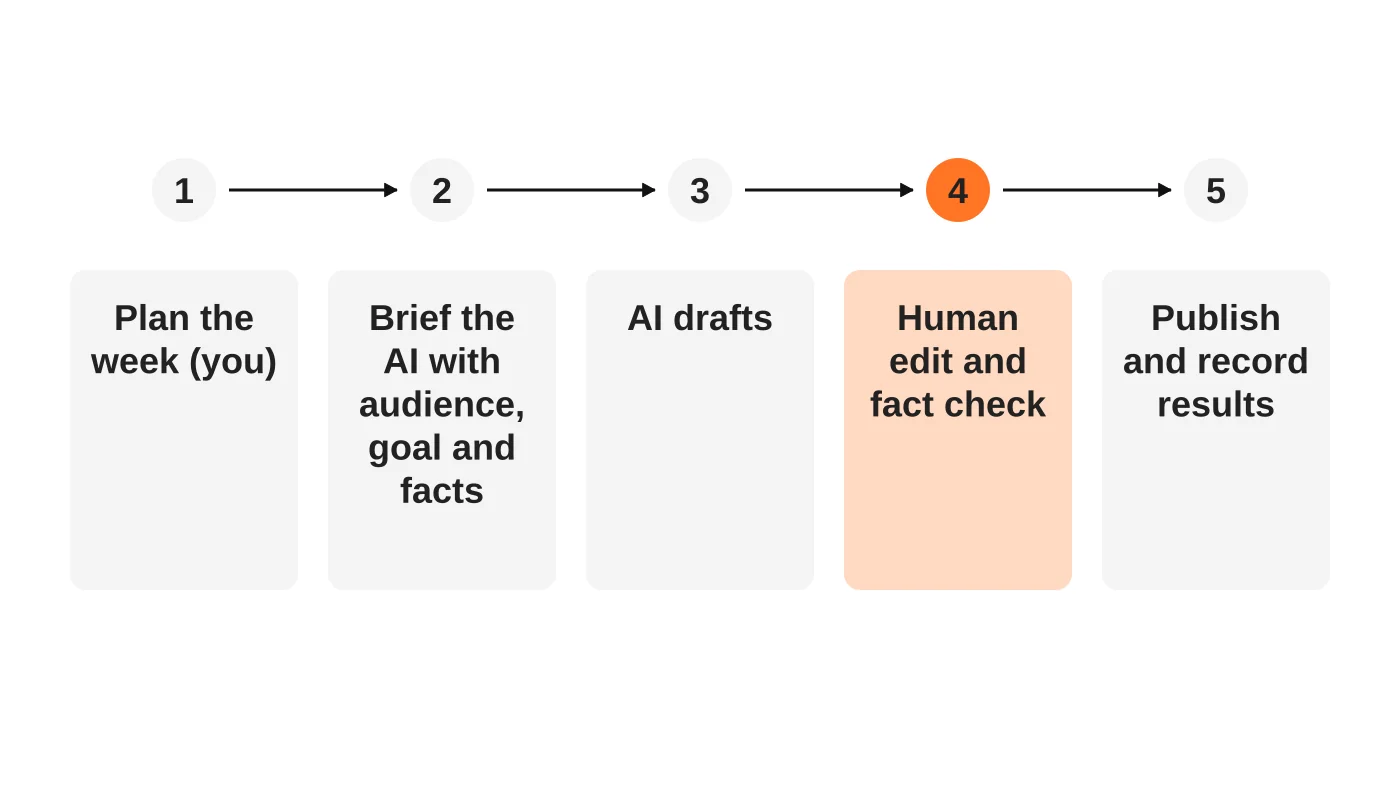
- Plan the week. Choose one idea for the audience this week, tied to a business goal.
- Brief the AI with the audience, the goal, the tone, the facts it may use and what it must not say. A good brief is half the work.
- Let it draft. Ask for two or three options.
- Human edit and fact check. Cut filler, add your own detail, check every claim and make sure it sounds like you.
- Publish and record. Note what you posted and what happened. Feed the results into the next brief.
If a virtual assistant runs this workflow, give them the brief template and a review step. How to delegate to a virtual assistant and how to write SOPs help.
Keep your voice
Most AI text sounds the same unless you supply specifics. To stay distinctive:
- Feed it your own material: past posts you liked, customer questions and your own words from voice notes.
- Add what only you know: a local example, a lesson from a job, an opinion.
- Cut generic phrases. Delete the opener that could introduce any business.
- Read it aloud. If you would not say it, change it.
- Write headlines yourself or edit them heavily. See headlines that get enquiries.
Guardrails for your brand and your customers
- Do not paste confidential information into public tools. Use the three-tier rule in the one-page AI use policy.
- Do not invent testimonials, reviews or case studies. It damages trust and may be unlawful. See the fake reviews problem.
- Disclose where you are required to or where your customers would expect it. [DECIDE: confirm your own policy.]
- Check copyright. Do not publish AI output that copies another source. Run a quick check for text and images you did not create.
- Keep records of tools used for client work.
Measure whether it is working
Track time per piece, edits needed and results: enquiries, replies and clicks. If drafts need heavy rewriting, improve the brief or change the task. See social media metrics that matter for choosing numbers. How to choose AI tools explains how to compare tools before you pay for them.
Where it fits in your wider marketing
AI helps you produce more, but more is not strategy. A clear website, good local presence and strong reviews still do most of the work. See content marketing strategies for Davao businesses and how AI and automation are changing website marketing.
Frequently asked questions
Will Google penalise AI-assisted content?
Google’s guidance focuses on whether content is helpful and people-first, not on how it was produced. Publish useful, accurate content and review it properly.
How much can I automate?
Automate drafting and repurposing. Keep review and publishing decisions with a person.
Which tool should I use?
Choose by the job, the data it touches and cost over twelve months, not by hype.
Can AI do my social media?
It can draft and schedule, but someone has to review, reply and decide what to say.
What is the biggest risk?
Publishing unchecked claims or sounding like everyone else.
From the Wired for Growth newsletter
This guide builds on My Digital CMO: The Smart Marketer’s Secret Weapon Just Got Smarter from Duarne Bernhagen’s LinkedIn newsletter, Wired for Growth.
Get help setting it up
Web Design Davao’s content and social media team can build a workflow that pairs AI drafts with human review. Ask about content support.