Quick answer
Follow up pickleball enquiries by recording every enquiry from every channel in one place, naming one owner and a first-reply target, asking one or two questions before suggesting the next step, sending proportionate reminders and recording the outcome. Reply the same day or next working day, follow up once after a few days, then stop.
- Record the date, channel, name, contact method, question and status for every enquiry in one shared place.
- Send marketing messages only to people who agreed, and give an easy way to stop.
- Track enquiries received, replied within target, booked, played and returned each month to see where people drop off.
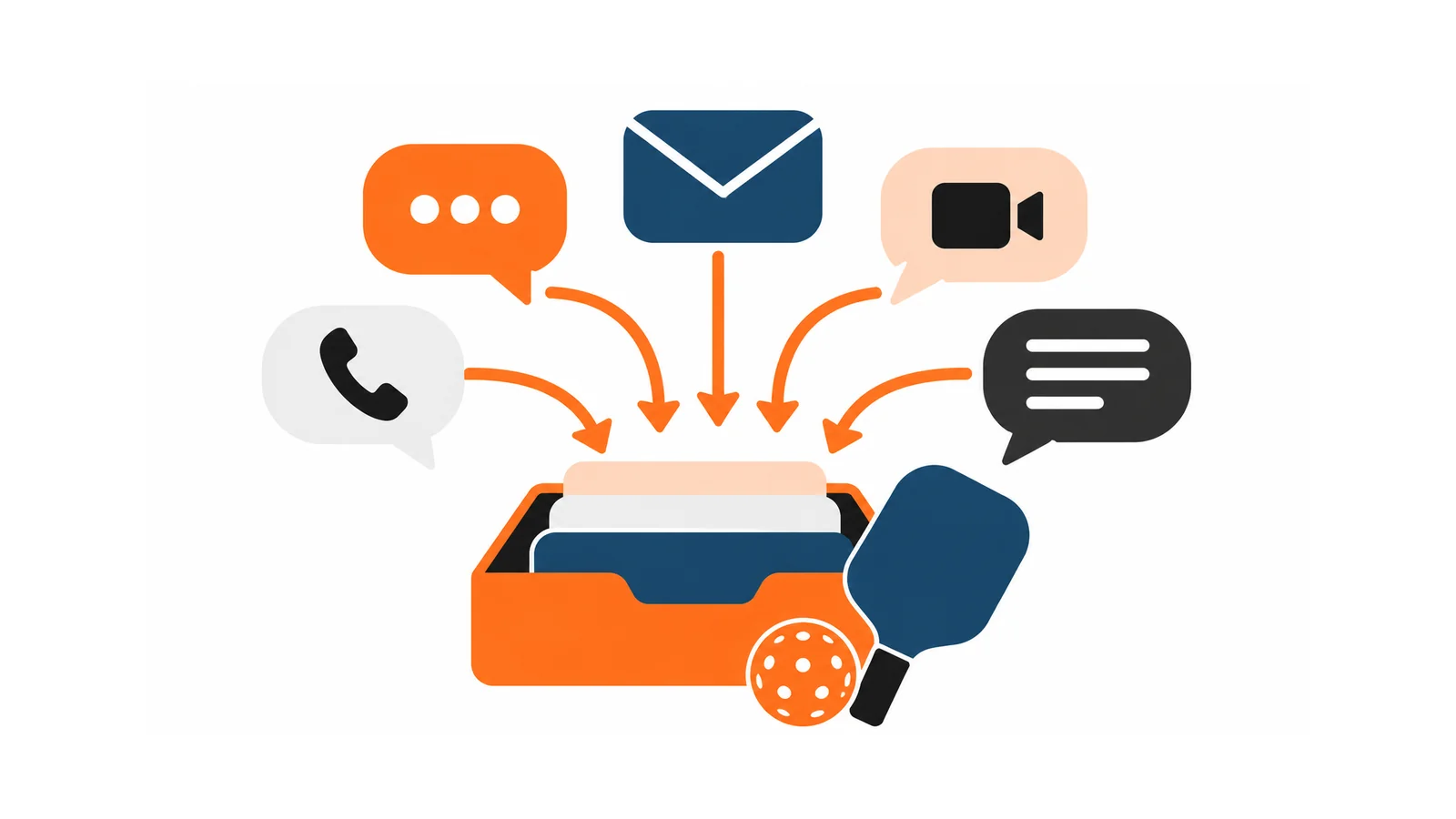
Most pickleball enquiries do not arrive in one tidy place. They come through the website form, Messenger, Instagram, a phone call or a message passed on by a friend. Without a system, some are answered late and others never. This guide gives a simple way to capture them, reply helpfully and turn a first booking into a repeat one.
1. Capture enquiries from website and social channels
List every place a customer can contact you. For each one, decide where the enquiry will be recorded. This can be a shared spreadsheet, a simple customer tool or a shared inbox. The key is that every enquiry has one record, with:
- the date and channel,
- the person’s name and a way to reach them,
- what they asked,
- the current status.
Make your forms short, and tell people what to expect, such as “We usually reply within one working day.” Only promise what you can deliver.
2. Assign an owner and response expectations
Each enquiry needs one named owner, not “the team.” Set a target for the first reply and who covers when the owner is away. Keep an after-hours auto-reply honest, such as “We will reply tomorrow morning.” If you have regular volume, a remote assistant can handle first replies within agreed limits. See how a virtual assistant can support a club’s administration.
3. Confirm needs and suggest the relevant next step
Do not paste the full price list. Ask one or two questions, then point the person to the right next step:
- A newcomer: a trial session and the booking page.
- A group: a private booking and a time that suits them.
- Someone asking about lessons: a coaching enquiry. See coach lesson booking pages.
- A regular player: a recurring slot or membership. See membership websites.
Where bookings happen manually, check availability before offering a time. See online bookings or Messenger.
4. Send proportionate reminders and follow-up
A short follow-up helps; repeated messages annoy. A sensible pattern:
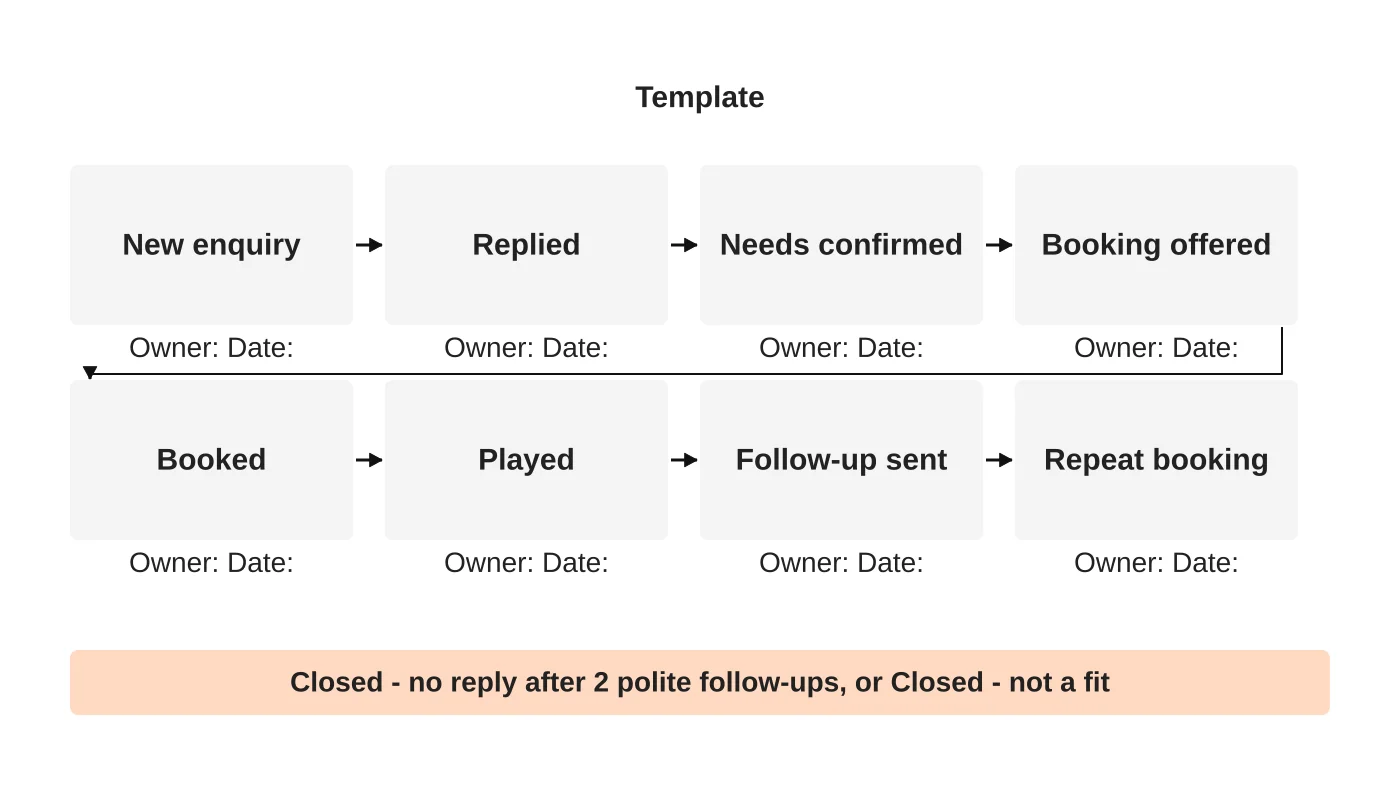
- Reply the same day, or the next working day.
- If you have heard nothing, send one polite follow-up after a few days.
- After a second attempt without reply, close the enquiry and stop.
- After a booking, send a confirmation and a reminder before the session.
- After the session, send a short thanks and an easy next booking link.
5. Respect communication preferences
Only send marketing messages to people who agreed to receive them, and give an easy way to stop. Keep personal details private, including names and booking details, and do not share them outside the people who need them. This is general information, not legal advice. Check your situation with a qualified adviser.
6. Record the outcome and encourage repeat visits
Move each enquiry to a status and record the final outcome. Track a few simple numbers each month: enquiries received, replied to within your target, booked, played and returned. These show where people drop off. See measuring pickleball marketing results.
Three adaptable message examples
These are examples. Change the wording to match your voice, and do not send them automatically without a check.
First reply to a newcomer
“Hi [name], thanks for asking about pickleball at [venue]. We have beginner-friendly sessions on [days]. Would you like to try one? You can see times and book here: [link].”
Gentle follow-up
“Hi [name], just checking whether you still wanted to try a session at [venue]. If it helps, I can suggest a quiet time. If your plans have changed, no problem.”
After the first session
“Thanks for coming to [venue], [name]. We hope you enjoyed it. If you would like to book again, here are the next available times: [link]. Tell us if there is anything we could improve.”
Common mistakes
- Having more than one place where enquiries go.
- Not saying who replies.
- Sending reminders to people who asked you to stop.
- Counting every enquiry as a booking.
The overall plan is in how to market a pickleball court business. For social media enquiries, see a social media content plan.
Next step
Ask us to help plan your enquiry and follow-up workflow, or see our digital marketing service.
Frequently asked questions
How often should I follow up an enquiry?
Reply the same day, or the next working day. If you hear nothing, send one polite follow-up after a few days. After a second attempt without reply, close the enquiry and stop.
What should a first reply say?
Do not paste the full price list. Ask one or two questions, then point the person to the right next step: a trial session for a newcomer, a private booking for a group, or a recurring slot for a regular player.
Can I message everyone who enquired?
Only send marketing messages to people who agreed to receive them, and give an easy way to stop. Keep personal details private and share them only with people who need them. This is general information, not legal advice.
Sources and notes
This workflow is based on our own practice. No conversion rates are claimed, and the message examples are templates.